Politics by Vishvanath, Cover Story
NPP govt.’s “rice and stick” approach
By Vishvanath
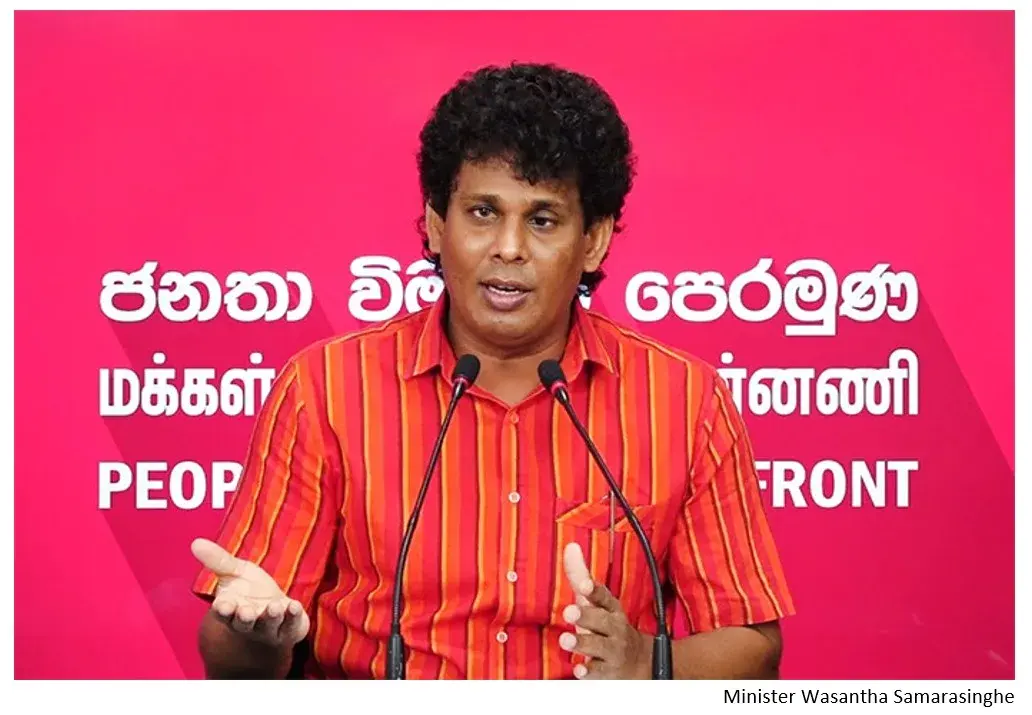
The JVP-NPP government has provided grist to the Opposition’s mill once again. Trade Minister Wasantha Samarasinghe has made quite a stir by offering 20 kilos of rice each to state employees on easy payment terms. The Opposition politicians are berating Samarasinghe and the government for what they describe as an affront to state officials. They claim that before coming to power, the NPP promised to bring Japanese cars within the reach of ordinary state employees, but it has instead chosen to provide bags of rice at concessional prices to government workers.
The government may have sought to kill two birds with one stone—disposing of some of its rice stocks, which are likely to remain unsold and rot, causing huge losses to the state coffers, while garnering favour with government workers. But its move has backfired for all intents and purposes. An old, pre-election video of a speech by Samantha Vidyaratne has resurfaced in the digital realm; he is seen lambasting the previous government for distributing rice among state workers.
Governments in Sri Lanka are known to kick away the ladder after being ensconced in power, so to speak. They take the political forces that propel them to power for granted, and ruin their chances of re-election. S.W.R.D. Bandaranaike, as the founding leader of the SLFP, effectively mobilized what came to be dubbed as the Pancha Maha Balavegaya (“Five Great Forces”) to achieve his dream of capturing state power in 1956. They were the Sangha, Ayurvedic physicians, teachers, farmers and labourers.
The SLFP alienated those forces with the passage of time due to radical changes its ideology and policies underwent under different leaders in a rapidly changing world. Most of them gravitated towards other political parties, especially the UNP, causing the SLFP to suffer a string of electoral defeats. The UNP also enlisted the support of people in urban and rural areas to win elections. At present, the SLFP as well as the UNP is only a shadow of its former self where its organizational strength and electoral performance are concerned. The SLPP also antagonized its voters due to its corruption and abuse of power, and today it is struggling to remain politically relevant and recover lost ground.
The JVP-led NPP has apparently failed to realize its political vulnerability. The JVP’s share of the national vote amounted to only 3% at the 2020 general election, and its meteoric rise to power after a mere four years became possible because of a massive protest vote against the previous rulers and their parties. Floating votes that enabled Maithripala Sirisena and Gotabaya Rajapaksa to win presidential elections in 2015 and 2019, respectively and form governments thereafter, arguably swung for the NPP in the 2024.
Thanks to the proportional representation system, which favours coalitions, no political party has a huge support bases and vote bank as such. Floating voters have come to determine the outcomes of all elections. Hence, the need for political parties to live up to the expectations of swing voters and the distinct political forces that can deliver block votes, such as farmers’ associations, trade unions, professional associations and religious organizations.
State employees may not be on the same wavelength as the Opposition where the proposed rice marketing initiative is concerned, and the latter may not be able to use that issue to pit the former against the government. However, the government has antagonized public employees in other ways. Trade unions are alleging that the government scapegoats state employees whenever it gets into hot water or its ambitious plans go awry. Minister Lal Kantha lashed out at state workers last year, calling the public service a den of thieves. He said so immediately after a substantial pay hike the NPP had granted state employees.
All government leaders including President Anura Kumara Dissanayake find fault with state workers in public. Their intention may be to impress the people as the meetings where they fault public officials receive wide publicity, but such verbal attacks demoralize and irk state workers, who voted overwhelmingly for the NPP at the last three elections, as evident from the staggering number of postal votes it received.
The NPP government has taken on trade unions and professional associations that express dissenting views. The Government Medical Officers’ Association (GMOA) is on the warpath, claiming that it has got short shrift from the government. NPP politicians ridicule the GMOA whenever it resorts to trade union action and go all out to wear it down instead of heeding its grievances and concerns. University teachers are also up in arms, claiming that they are left with no money after paying taxes on their salaries. They have said at this rate they may be left with an alternative but to apply for Aswesuma benefits meant for the poor.
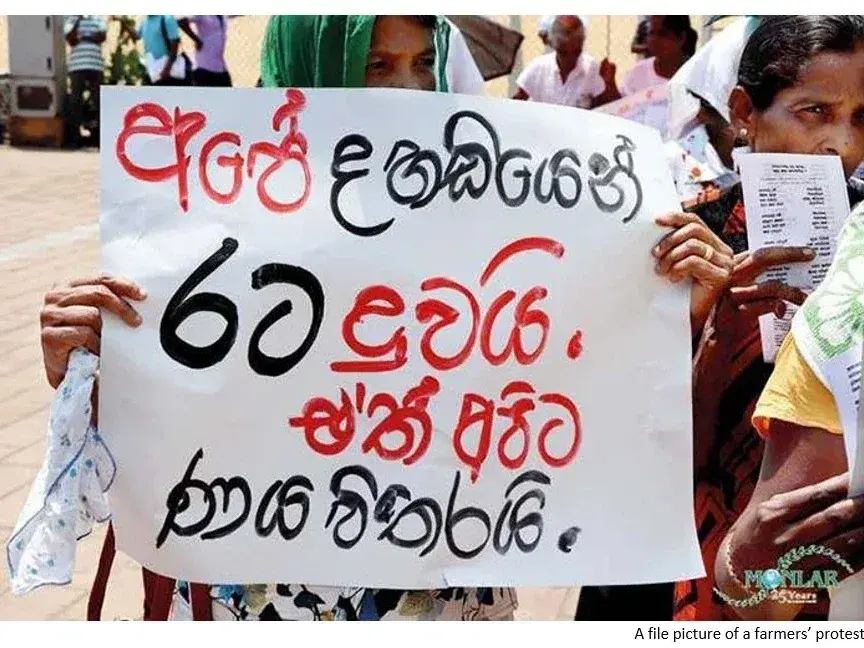
The most vociferous of anti-government protesters are paddy farmers. They are lambasting the government for its failure to make fertilizer readily available at affordable prices, purchase their paddy and liberate them from the clutches of powerful rice millers who exploit them. Deputy Minister T. B. Sarath has provoked the protesting farmers beyond measure by declaring that real farmers are not making complaints and the protesters are moonshine addicts in the garb of farmers. He has since sought to assuage the anger of farmers by claiming that he did not intend to insult genuine farmers and his attack was on Opposition politicians and their supporters mingling with farmers during protests. His efforts have been in vain.
In this country, governments succumb to the arrogance of power and ruin things for themselves. This is why they fall even when their political opponents fail to recover lost ground. The NPP government is apparently moving in the same direction as its predecessors. It remains to be seen whether it will make a course correction.
Share this story
RELATED NEWS
View all
Politics by Vishvanath
Has 22A become the govt.'s Catch-22?
Aug 27, 2026
Politics by Vishvanath
22nd Amendment: A huge political gamble for govt.
Aug 21, 2026
Politics by Vishvanath
Move to raise retirement ages of judges: Options before govt.
Aug 05, 2026
Politics by Vishvanath
‘Cockroach’ uprising and echoes of Aragalaya
Jul 26, 2026