Latest News
Rising mosquito density signals further dengue increase in Western Province
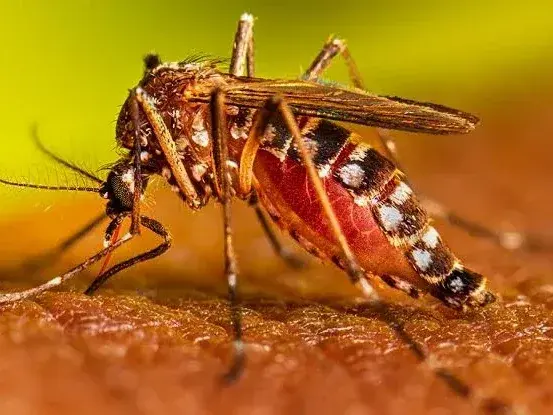
Sri Lanka could record a further increase in dengue cases over the next two to three weeks as mosquito larval density continues to rise in Colombo, Gampaha and Kalutara districts, consultant physician Dr Ananda Wijewickrama has warned.
Wijewickrama said entomological data showed that the number of mosquito breeding sites was increasing across all three districts.
He said the larvae would develop into adult mosquitoes, which could lead to a rise in infections several weeks later.
Wijewickrama urged households, workplaces, institutions and local authorities to remove containers and other places where water could collect.
He said eliminating breeding sites remained the most important dengue-control measure.
Wijewickrama also warned that fogging alone could not control the outbreak.
Fogging kills only some adult mosquitoes exposed to the chemical at the time, while mosquitoes sheltering inside homes or other locations may survive. It also does not destroy eggs or larvae, he said.
He described fogging as a temporary measure that should be used selectively in areas with intense transmission rather than as the main response to dengue.
Repeated chemical use could also harm organisms that naturally help control mosquito populations and may contribute to insecticide resistance, he said.
Wijewickrama said public expectations had become too closely associated with fogging, with some people assuming that no dengue-control work was taking place unless they saw smoke being released in their neighbourhoods.
He stressed that sustained removal of breeding sites would have a greater long-term effect.
Health authorities have identified the Western Province as the main centre of the current outbreak, with particularly high numbers of patients reported from Colombo and Gampaha. Cases are also increasing in Kalutara, Ratnapura and Galle.
Wijewickrama said rising larval density indicated that the pressure on hospitals could continue unless communities acted immediately to reduce mosquito breeding.
Share this story
RELATED NEWS
View all

Latest News
Chinese national wanted over child abuse, rape and cybercrime allegations remanded in Sri Lanka
Oct 15, 2026

Latest News
IMF ready to support Sri Lanka beyond current programme
Oct 15, 2026

Latest News
Injecting drug use emerging as major HIV risk in Sri Lanka
Oct 15, 2026
Latest News
Disabled student seriously assaulted at Jaffna school hostel
Oct 15, 2026