Latest News
Sri Lanka prepares to launch passenger drone service
Sri Lanka is preparing to launch what officials say will be South Asia’s first passenger-carrying drone service, with the first aircraft already arriving at Bandaranaike International Airport, Civil Aviation Authority of Sri Lanka (CAASL) Director General Daminda Rambukwella said on Monday.
The first flight is expected on 30 or 31 October, or during the first week of November, with Colombo Port City identified as the proposed launch site.
Rambukwella said the destination would be decided after discussions with the Ministry of Defence on 23 October.
The project is intended to test the use of electric aerial vehicles for passenger transport, tourism, emergency medical services and cargo delivery to areas that are difficult to reach.
Although the first aircraft has arrived, an international team of experts is expected to visit Sri Lanka to assess how the service should be introduced, taking into account the country’s geography and transport requirements.
Rambukwella said Sri Lanka had completed the necessary regulatory work under the relevant US certification standards for the selected aircraft, while local rules governing Advanced Air Mobility systems were being finalised.
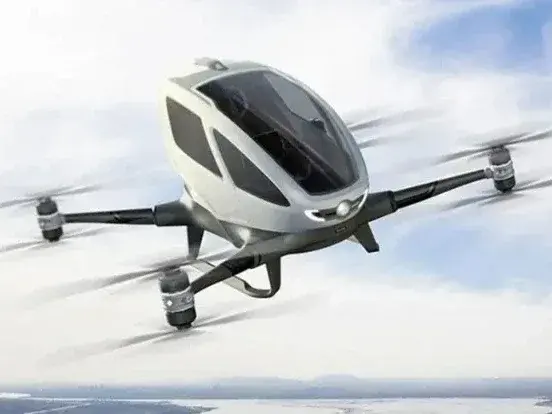
The first aircraft, an EHang model imported from Thailand, can carry two passengers. A second shipment is expected on 28 November.
The CAASL plans to introduce larger aircraft capable of carrying four to six passengers next year. These could operate as shuttle services, with flights every 30 minutes over distances of around 20 kilometres.
The service will require dedicated vertiports for take-offs, landings, charging and passenger handling.
Rambukwella said discussions were also under way on whether passenger-drone manufacturers could establish operations in Sri Lanka, depending on the business model agreed with the Government.
Unlike conventional unmanned drones, the aircraft are electric aerial vehicles designed specifically to carry passengers.
Sri Lanka plans to begin with a pilot programme before deciding on wider deployment.
Potential uses include urban transport, scenic flights over the hill country and coastal areas, emergency medical transport and the delivery of essential supplies to remote communities.
The aircraft are expected to operate at altitudes of around 400 to 500 feet and will be fitted with real-time tracking and monitoring systems.
Rambukwella said the technology could offer a relatively affordable and environmentally friendly form of transport, but its wider use would depend on the outcome of the pilot programme, the completion of regulations and the development of the infrastructure needed for safe operations.
Share this story
RELATED NEWS
View all

Latest News
Sri Lanka’s first insulin manufacturing plant to begin production in 2027
Oct 19, 2026

Latest News
Nearly 8,000 people affected by adverse weather as heavy rain continues
Oct 19, 2026

Latest News
Dengue authorities warn of renewed epidemic risk as rains continue
Oct 19, 2026

Latest News
Government will abide by all court decisions, President says
Oct 18, 2026