Latest News
Sri Lanka to accelerate renewable energy, open transmission and port projects to private investment
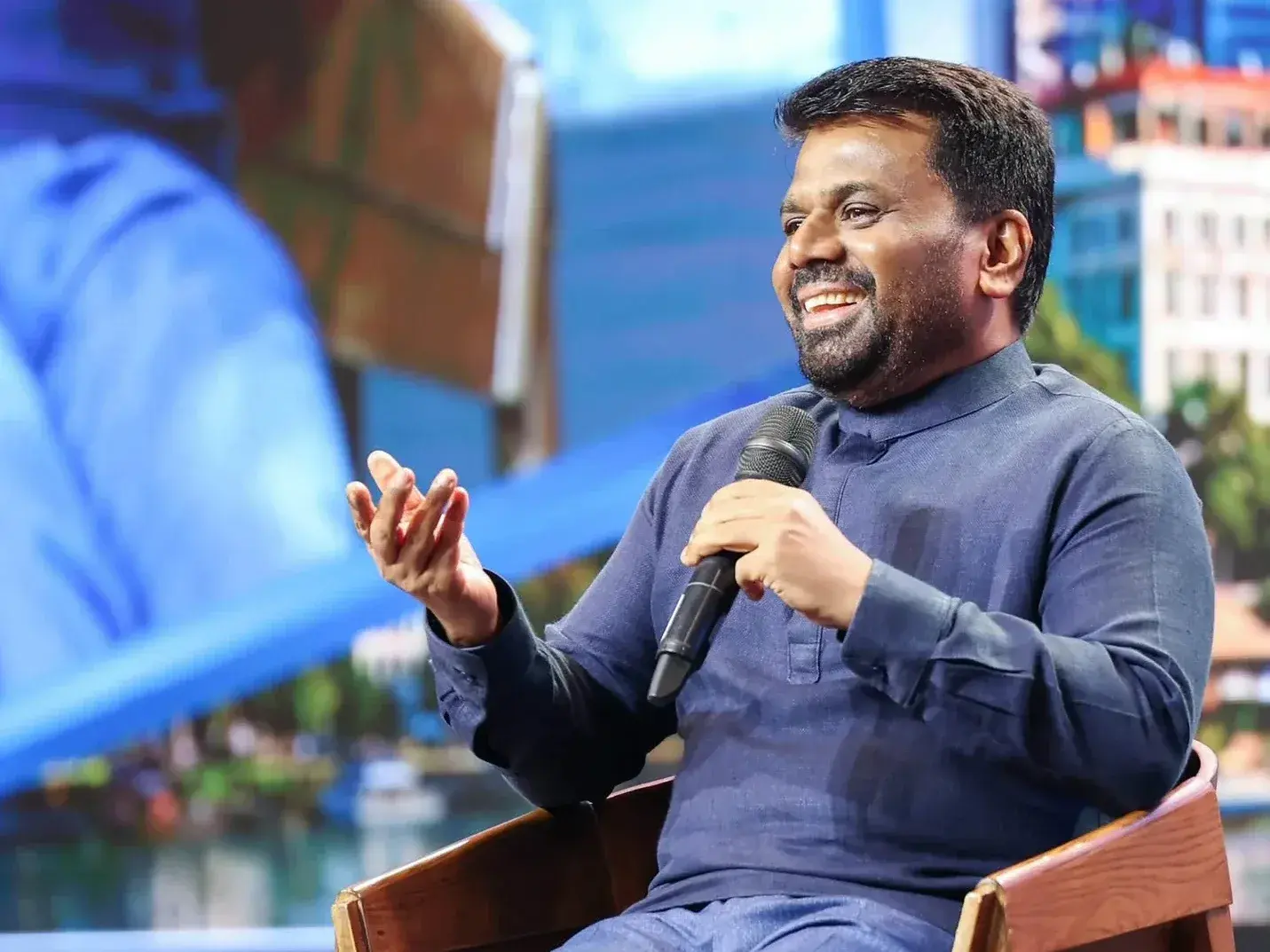
President Anura Kumara Dissanayake, on Monday, outlined plans for a major expansion of Sri Lanka’s renewable energy and port infrastructure, including around 2,600 MW of new solar capacity by next year, private investment in electricity transmission lines and greater private participation in the management of the East Container Terminal.
Speaking at the Sri Lanka Economic & Investment Summit 2026 on 12 October, Dissanayake said the Government’s energy policy would be guided by two priorities: ensuring a stable and uninterrupted supply of electricity and reducing the cost of energy.
He said Sri Lanka had around 1,400 MW of solar capacity when the current Government took office and had since added about 1,500 MW. Agreements had also been signed for another 1,100 MW.
By next year, around 2,600 MW of new solar capacity would therefore have been added under the Government, he said.
The President said the Government also intended to rely increasingly on competitive tenders rather than fixed feed-in tariffs for new electricity generation projects.
He said a project that had previously been expected to sell electricity at 8.22 US cents per unit had failed to agree to a price below five cents. After the agreement fell through, the Government tendered 50 MW of capacity and received offers at around three cents per unit. A second 50 MW tender produced a price of 3.74 cents.
Dissanayake said the experience demonstrated that competition could bring down the cost of electricity procurement.
He also announced plans to bring private investment into Sri Lanka’s electricity transmission system, which has traditionally been developed by the Government or the Ceylon Electricity Board.
Four transmission lines have already been identified for private sector participation and are expected to be tendered shortly, he said.
The Government is also examining how to strengthen the national grid to accommodate the rapid expansion of renewable energy.
Dissanayake said the growing share of solar generation had created difficulties during the daytime, when supply can exceed demand. On some occasions, electricity purchases from solar producers had to be curtailed because the grid could not absorb all the power being generated.
The solution, he said, was to expand battery storage so that electricity generated during the day could be stored and used at night.
The Government has already awarded tenders for 160 MW of battery storage, with several projects expected to be completed by November. Another 250 MW tender is under evaluation, while a further 150 MW is expected to be tendered to existing solar producers.
Dissanayake said the latest battery-storage offers were cheaper than those received under the earlier 160 MW tender.
The Government is also considering tax concessions for smaller battery systems used with rooftop solar installations.
At present, he said, tax concessions are available for larger batteries, while smaller systems face higher taxes, discouraging households and smaller producers from installing storage.
However, the Government would first need to establish a mechanism to distinguish batteries imported specifically for solar-energy storage from batteries intended for other uses.
Dissanayake said renewables now account for about 69% of Sri Lanka’s installed generation capacity and on some days produce between 70% and 75% of the electricity supplied to the grid.
He said Sri Lanka had gone four consecutive days without using diesel to generate electricity, including the previous day.
The President also said the Government wanted to expand floating solar projects to reduce pressure on scarce land.
A five-megawatt floating solar project has already been developed at Ibbankatuwa, while the Government is considering further projects at reservoirs including Randenigala, Moragahakanda, Samanalawewa and Chandrika Wewa.
He said Sri Lanka’s limited land area made floating solar increasingly attractive because conventional solar projects require substantial amounts of land.
Turning to ports, Dissanayake said Colombo’s port infrastructure would be a central part of the Government’s economic strategy.
He said Sri Lanka currently handles around 10 million TEUs, compared with about 39 million in Singapore, but earns far less from related port and logistics industries.
The President said Sri Lanka needed to move beyond container handling and develop a broader logistics and maritime services industry.
One of the Government’s priorities would be to improve the performance of the East Container Terminal.
Dissanayake said the Government intended to retain ownership of the terminal while creating a company to manage it and allowing private investors to acquire shares in that company.
He said the terminal had capacity to handle around two million containers but was not being used to its full potential.
The Government is already in discussions with major international shipping companies and hopes to attract a strong shipping line to participate in the terminal’s management.
The Government also plans to proceed with the second phase of the West Container Terminal, although the project will require the construction of a major breakwater.
Dissanayake said the earlier estimate for the breakwater had been around 1.1 billion US dollars, but the latest estimate had risen to about 1.4 billion dollars.
If the breakwater is completed, the second West terminal could provide capacity to handle another two million containers, he said.
The Government expects to allocate funds in the forthcoming Budget for preliminary work while also discussing financing with international institutions.
The Asian Development Bank is already conducting a feasibility study, with an interim report expected by December and the final report by April next year.
Dissanayake said Sri Lanka should also develop Colombo Port into a broader logistics centre rather than relying mainly on container transshipment.
He said a previous attempt to develop a logistics project had become entangled in disputes and litigation, but those issues were now being resolved.
The Government had reached agreements to compensate the companies involved and intended to tender the site again.
Dissanayake said the land concerned was among the most valuable areas within the port and could be used to attract a major international logistics operator.
The Government is also planning a container yard at Kerawalapitiya to ease congestion within Colombo Port.
Studies on the project have already been completed, and the Government intends to tender it to the private sector.
The proposed facility is expected to provide around 150 bays for container inspections.
Dissanayake said Sri Lanka would also expand its bunkering capacity, arguing that existing storage facilities were inadequate.
The Ceylon Petroleum Corporation and private companies have already agreed to increase storage capacity, he said.
The Government is also considering tax relief for bunkering services in the forthcoming Budget.
Dissanayake said Sri Lanka needed a tax system that allowed its maritime services sector to compete internationally, warning that domestic tax policies should not place local operators at a disadvantage in global trade.
He said the Government would therefore consider changes to the present tax structure affecting bunkering as part of its wider attempt to make Sri Lanka a more competitive maritime and logistics hub.
Share this story
RELATED NEWS
View all

Latest News
Drug use, threats linked to death of 17-year-old Kilinochchi girl
Oct 13, 2026

Latest News
Western Province dominate National Sports Festival swimming
Oct 13, 2026

Latest News
Sri Lanka U-19 women beat Pakistan by six wickets to stay top of tri-series
Oct 13, 2026

Latest News
Low-pressure area may form over Bay of Bengal as heavy rain, landslide risks increase
Oct 13, 2026