Point of View, Comic Strip, Counterpoint Political Desk
Week of constitutional fireworks expected in House
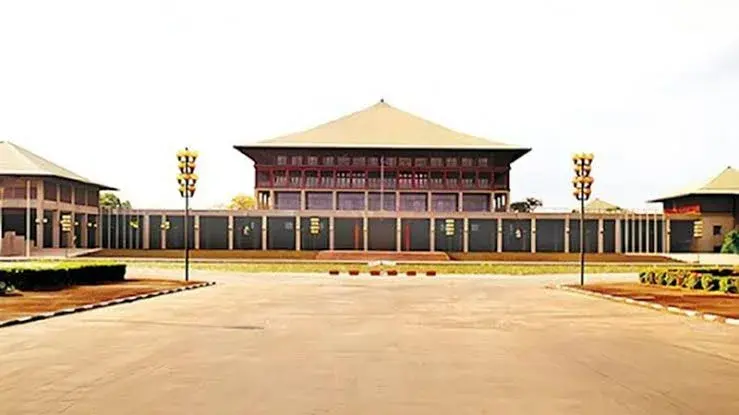
By Counterpoint Parliamentary Correspondent
If Parliament has a habit of saving its most interesting business for the days when everyone is watching, next week could provide another textbook example.
The parliamentary week from September 22 to 25 has already been neatly arranged on paper and it will work out is anybody’s guess. The real question, however, is what happens when that carefully prepared agenda collides with politics.
The government has allocated Thursday and Friday for the Second Reading debates on the 22nd Amendment to the Constitution and the Judicature (Amendment) Bill. The official programme provides seven hours each day for the two Bills. On paper, it is parliamentary business. In practice, it is likely to be the main political theatre of the week.
Before that drama begins, Tuesday could set the tone.
The Supreme Court’s determination on the constitutional challenges to the two Bills is expected to become a central issue once Parliament meets. Speaker Dr Jagath Wickramaratne will have to announce the determination to the House when it is received. Given that the Supreme Court has previously dealt with constitutional Bills by identifying provisions requiring special majorities or amendments, the wording of this particular determination will be closely watched.
The Opposition, meanwhile, is unlikely to allow the week to proceed without making its objections heard loud and clear, both inside and outside the parliament.
Opposition and SJB Leader Sajith Premadasa has already argued that the 22nd Amendment and the proposed Judicature (Amendment) Bill should be considered together, particularly because the two Bills concern the retirement ages of different categories of judges. He has also questioned whether any constitutional change affecting the sovereignty of the people could be introduced without people’s approval at a referendum.
His other question, namely how President Anura Kumara Dissanayake could have known the contents of a Supreme Court determination before Parliament had been formally informed of it is likely to resurface. Whether it will lead to a legal issue or merely another political quarrel will depend on what evidence is placed before the House.
And this is where the week could become interesting.
The government has 159 seats in the 225-member House, according to Parliament's current party composition. That arithmetic gives the government considerable room when legislation requiring a parliamentary majority comes before the House.
The Opposition therefore faces the familiar parliamentary dilemma: how to make maximum political noise when the numbers on the board are not in its favour.
Disruption of proceedings is one possible avenue. Procedural objections, lengthy speeches, points of order and adjournment motions are others. But the effectiveness of any such strategy will depend heavily on Opposition coordination. With several parties and groups occupying the Opposition benches, converting political opposition into a single parliamentary strategy is easier announced than executed.
Outside Parliament, the Opposition is also preparing for street mobilisation against the 22nd Amendment. So, the battle next week may have two stages: one around the microphones inside the Chamber and another around microphones and loudspeakers outside it.
There is another subplot that could make the week uncomfortable for the Speaker.
Kurunegala District SJB MP Dayasiri Jayasekara has written to the Inter-Parliamentary Union seeking intervention over parliamentary privileges and the handling of a privilege issue concerning Speaker Jagath Wickramaratne. Separately, CIABOC has been questioning Parliament officials over a complaint concerning the Speaker; several senior officials have already given statements. The commission's inquiry, according to reports, has brought parliamentary administrative matters under scrutiny.
The Speaker is therefore likely to find himself presiding over a House, wherein his own position is itself part of the political conversation. That is an uncomfortable coincidence at the best of times.
Tuesday and Wednesday may therefore serve as the appetiser. Tuesday has petroleum regulations, the Export Agriculture Promotion (Amendment) Bill and an Opposition adjournment motion. Wednesday brings the Chartered Institute of Media Professionals of Sri Lanka Bill.
Then comes Thursday. And Friday.
The government will argue the substance of its constitutional reforms. The Opposition will challenge their implications. Lawyers, civil society groups, trade unions, political activists and international legal associations will watch the proceedings closely. Outside the House, competing versions of democracy will be proclaimed, probably at considerably greater volume than inside it.
By Friday evening, the Bills may have moved considerably closer to becoming law or the parliamentary proceedings may have produced another instalment in the country's seemingly endless argument over constitutional power.
Either way, next week's parliamentary agenda is unlikely to remain merely an agenda.
In Sri Lankan politics, the Order Paper is often the least interesting part of what actually happens in Parliament.
RELATED NEWS
View all
Point of View
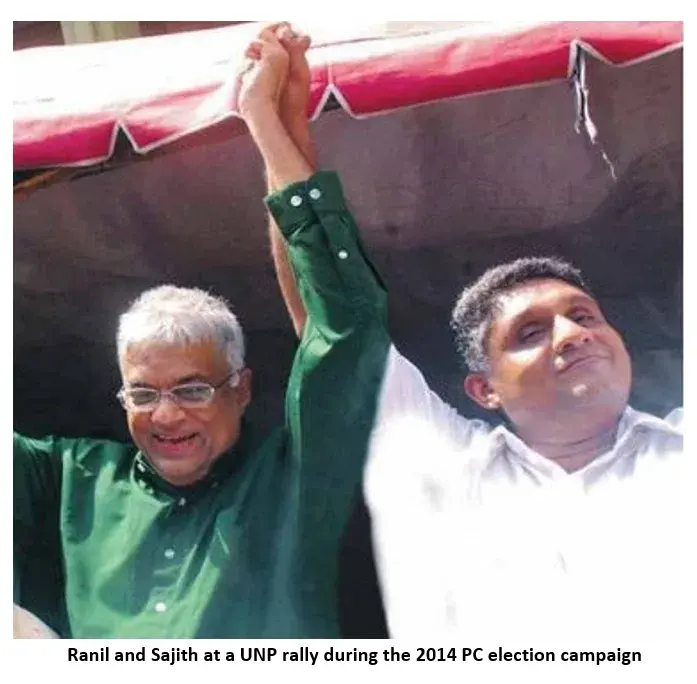
UNP-SJB betrothal announced at JRJ’s birth anniversary commemoration
Sep 19, 2026

Point of View
Pathfinder Foundation considers proposals for maintenance of security in the Indian Ocean
Oct 09, 2025
Point of View
WHY “TECHNOLOGY” IS KEY TO SRI LANKA’S MARITIME SECURITY
Oct 09, 2025
Point of View
MODERNISING SRI LANKA’S ARMED FORCES: PREPARING FOR FUTURE SECURITY CHALLENGES
Oct 07, 2025