Current Affairs
Disappearing relics of the British Raj – the latest being the iconic Delhi Gymkhana club
We're just seeing a statement, translated from Hebrew, from Israel's Defence Minister Israel Katz.





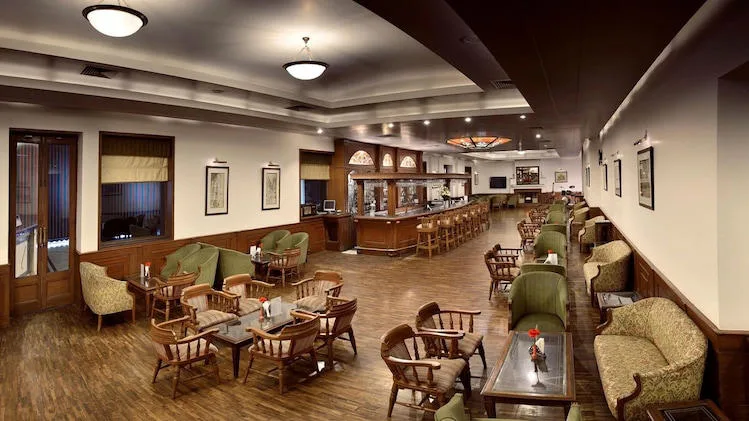
To assert its distinct identity against a background of centuries of Muslim and British rule, post-independence India has been on a campaign to get rid of the relics of the past. The latest set to go is the 1913-vintage Delhi Gymkhana Club, a watering hole and meeting place for the elite of the Indian capital.
By P.K.Balachandran
Colombo, June 8 – To assert its distinct identity against a background Muslim and British rule spanning several centuries, post-independence India has been on a campaign to get rid of the relics of the past.
Names of streets and towns have been Indianized or, in many cases, “Hinduised”. Statues of British Governors and monarchs in town squares and the main streets, have been consigned to museums, hidden from the eyes of the man-in-the-street.
Among those relics earmarked for obliteration are the “pucca” British institutions such as the Gymkhana Clubs in the various metropolises, including the 1913-vintage Delhi Gymkhana Club, the iconic watering hole for the elite of the Indian capital.
Multiple factors, including security of the Prime Minister, mismanagement, misuse of facilities and the need to discourage Western style elitism, were behind the Modi government’s decision to take over the land and buildings of the Gymkhana Club in New Delhi.
The Narendra Modi government cited “national security” among other reasons. The government has not specified the “national security” threat from the club, nor has it said what it plans to be do with the land and buildings seized. The only security issue that could be cited is the existence of the Prime Minister’s residence at No 7 Lok Kalyan Marg in the vicinity of the Club located at No 2 Safdarjung Road. Some wonder how a recreational club of the city’s elite can be a security threat. And then, there are other buildings in the vicinity too. Would those also be seen a threat and acquired?
The real issues are two: The Modi government has been on a campaign to get rid of the relics of the British Raj, especially the exclusive haunts of the post-independence Westernised elite, who use the exclusiveness of colonial institutions like the Gymkhana Club to perpetuate “alien” values and not the values of resurgent Hinduism – parading as the “civilizational values of India.”
Acolytes of the Modi Raj and Hindutva propagandists dub the purveyors of Anglicisation derisively as “the Lutyens’ Gang” after Sir. Edwin Lutyens, the British architect who designed New Delhi and some of the grand buildings in the capital of the Indian empire including the circular Parliament House and the two sings of the massive Central Secretariat.
The other reason is maladministration in the Gymkhana Club, especially wasteful expenditure, despite strictures passed by investigators. Even government-appointed administrators malfunctioned.
The Purpose of Gymkhanas
The British established several “Gymkhanas” (an Anglo-Persian coinage for sports clubs or gymnasiums) across India so that British civil servants, military officers and British businessmen could socialise with their own kind and have access to recreational activities, chiefly outdoor sports. The British believed that only vigorous outdoor sports could beat the blistering heat of the Indian plains.
Today, the Gymkhanas continue to be prestigious venues dominated by the new Indian elite. But outdoor sports are farthest from their minds. For the post-independence elite, Gymkhanas are primarily places to socialise, eat, drink and advertise their status.
Government Acts On Violations
The government has for long alleged that the Delhi Gymkhana Club had deviated from its original objective of promoting sports and recreation, despite occupying vast grounds in the heart of New Delhi. The club sits on 27 acres of prime land, leased from the government at a nominal rent of Rs 1,000 a year. But inspections found that only a tiny fraction of its spending went towards sports, while substantial sums were allegedly spent on hospitality , including "wines and cigarettes".
Membership fees were in lakhs. But paying the membership fee did not entitle membership which was given only when there was a vacancy. And it could take anything from 20 to 30 years to get membership as the waiting list was both long and growing. As of 2017-18, wait-listed applicants had already paid Rs 440 million in fees. Given the exclusivity and high fees, many bureaucrats felt left out.
Eventually, an internal struggle for power prompted an intervention by the National Company Law Appellate Tribunal (NCLAT). The government found an opening when complaints were filed by seven club members, including former office-bearers, alleging fund mismanagement, financial irregularities, nepotism in membership admissions, and primacy denied to sports and recreation.
Although the Club was allotted land at concessional rates for sporting purposes, it spent around only 2% on sports. 30% of its expenditure was directed towards costly wines.
The Ministry of Corporate Affairs (MCA)’s investigation conducted between 2019 and 2020 uncovered fabricated financial statements, unauthorised constructions, and a pattern wherein membership benefits were largely confined to a select group of "blue-blooded" families while thousands languished on waiting lists for decades.
In June 2020, the NCLAT found violations of the Companies Act of 2013. On February 15, 2021, NCLAT delivered a strongly worded interim order suspending the elected General Committee and directing the Central government to appoint an administrator.
The tribunal observed that the Club had shattered the most cherished constitutional goal of securing social justice and equality of status and opportunity. It also froze new memberships and fee enhancements.
In April 2022, NCLT went further, allowing the full takeover and replacement of the General Committee with a 15-member body nominated by the Central government. But still only an eight-member body ran the club.
Elections for the post of President and a new General Committee s were to follow. But the deadline passed without compliance. On April 23, 2025, the Delhi Gymkhana Club filed an application in the Supreme Court praying for extension of the time granted to complete the remedial measures.
Retrieval Order
The Central government then terminated the perpetual lease of the Delhi Gymkhana Club. The Ministry of Housing and Urban Affairs’ Land & Development Office (L&DO) served an order dated May 22, directing the club to hand over its sprawling 27.3-acre plot by June 5.
The government has declared that the premium land parcel, situated directly adjacent to the Prime Minister’s official residence on Lok Kalyan Marg, is required for a higher purpose, namely, securing a national defence infrastructure and advancing vital public interest security projects.
Club members and the Staff Welfare Association rushed to the Delhi High Court seeking an urgent stay. During a hearing before Justice Avneesh Jhingan, the Solicitor General, Tushar Mehta, representing the Central government, cooled tempers by explicitly assuring the court that the government will not forcibly take possession of the property when the June 5 deadline expires.
"We have given the option to vacate on its own before June 5; it's not that police will rush in and forcibly take possession. It will be as per law," Mehta submitted, clarifying that the May 22 notice was meant to terminate the perpetual lease and seek re-entry. Any actual physical eviction will follow due legal process, including fresh statutory notices, he clarified.
The court then issued a summons to the Central government and the Club's management, demanding written statements within eight weeks.
The Club’s lawyer Kapil Sibal has argued that the lease could not be interfered with because the lessor was the pre-independence Imperial government of India and the lease was given in perpetuity.
The matter is sub judice, but it does look as if the Delhi Gymkhana’s goose is cooked, partly due to its own misconduct and partly due to the Modi government’s ideological animosity towards British legacies, the latter being the dominant factor.
END
RELATED NEWS
View all



