Current Affairs
India gives up Car Nicobar airbase expansion on environmental grounds, but concerns remain.
We're just seeing a statement, translated from Hebrew, from Israel's Defence Minister Israel Katz.





By P.K.Balachandran
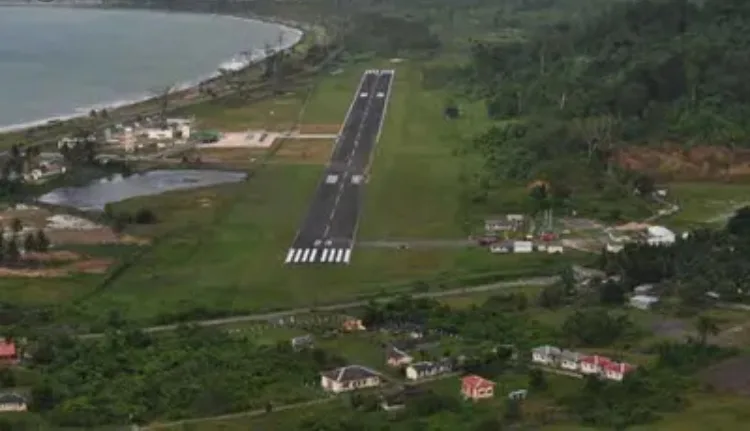
Colombo, June 13 - The Indian government is abandoning the five-year-old project to extend the runway at the naval air station “INZ Baaz” on the Car Nicobar Islands in the Bay of Bengal, in view of local environmental and socio-economic issues.
However, the government has decided to proceed with a new INR 130, 000 million greenfield civil-cum-military airport at Chingen in Galathea Bay, further South (see map).
According to the Indian media, studies have found that lengthening the existing 4,500-foot runway at INS Baaz to around 10,000 feet would be difficult due to terrain limitations, navigational challenges, and the need for extensive supporting infrastructure.
Officials also concluded that a runway expansion could have a greater impact on tribal settlements, forests and wildlife habitats than the proposed greenfield airport.
Civil-Military Airport in Galathea Bay
Located close to the Malacca Strait, one of the world’s busiest maritime trade routes, the civil cum military airport at Chingen in Galathea Bay is expected to strengthen India’s logistics capabilities, improve connectivity to the remote island territory and support military operations in the Indo-Pacific region.
Defence officials have indicated that the airport at Chingen will be under naval operational control while also serving civilian aviation requirements. Construction is expected to be completed within five years.
Concerns Remain
But critics say that the proposed civil-cum-military airport at Chingen in Galathea Bay is also fraught with environmental issues. It forms a key component of the broader Great Nicobar Island Development Project costing INR 810,000 million and includes a transshipment port, power infrastructure and township development.
The airport project is part of the government’s broader effort to develop Great Nicobar as a strategic and economic hub. Authorities argue that the new facility will enhance surveillance, maritime domain awareness, disaster-response capabilities and logistical reach across the Andaman and Nicobar archipelago.
Even so, the wider Great Nicobar development programme continues to face scrutiny from environmental groups and opposition leaders, who have raised concerns about its potential impact on rainforests, coral ecosystems and indigenous communities.
Critics ask if the economic and strategic benefits outweigh the environmental costs associated with large-scale infrastructure development on the ecologically sensitive island.
Congress Party’s Objections
Citing findings from studies conducted by the Indian Space Research Organisation's Space Applications Centre, Congress leader Jairam Ramesh said that sections of the Galathea Bay's eastern shoreline show evidence of erosion, warranting more extensive environmental investigations before any large-scale construction is undertaken.
He further pointed out that existing guidelines governing port projects in island territories require comprehensive environmental impact assessments, including modelling and seasonal studies, and questioned whether these requirements had been fully complied with in the case of the Great Nicobar project.
Ramesh called upon the government to release the report of the High-Powered Committee that reviewed the project. He wondered why aspects of the re-examination process had remained confidential.
Describing the project as "overwhelmingly a commercial enterprise", Ramesh maintained that its ecological costs could be substantial.
Despite the debate, the government maintains that the project is essential for strengthening India’s strategic presence in the Indian Ocean region while improving connectivity and economic opportunities in one of the country’s most remote territories.
END
RELATED NEWS
View all



