Current Affairs
Roots of unrest in Pakistan-held Kashmir and Gilgit-Baltistan
We're just seeing a statement, translated from Hebrew, from Israel's Defence Minister Israel Katz.





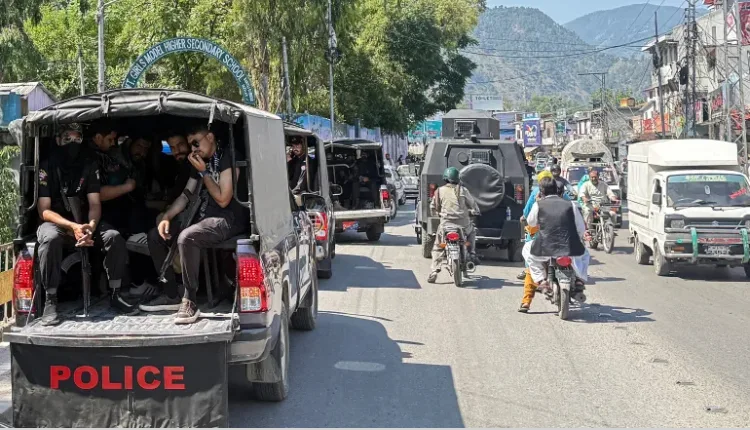
Islamabad has been unable to give in to popular demands for constitutional and national security reasons, but repression has only prolonged the agony.
By P.K.Balachandran
Colombo, June 14 –From time to time, trouble keeps flaring up in two regions of northern Pakistan – Gilgit Baltistan (GB), and that part of Jammu and Kashmir which India calls Pakistan-Occupied Kashmir (POK) and Pakistan calls Azad Jammu and Kashmir (AJK).
Behind the unrest in these two places, are long-standing popular grievances against successive governments of Pakistan, based in Islamabad. The aggrieved people resort to mass action, braving baton charges, teargassing and firing by the police and para-military forces.
Last week, in the unrest in AJK/POK, estimates of the death toll ranged from 14 to 30 and even more. Islamabad’s action drew condemnation from India as well as the UK. In Bradford, UK, home to many immigrants from POK/AJK, there was a demonstration and British MPs called for action by their government.
In the POK/AJK, the agitators were led by the Jammu Kashmir Joint Awami Action Committee (JAAC), a broad civil society coalition of traders, transporters, students, lawyers, and activists. The JAAC led repeated waves of protests in 2024, September–October 2025, and now in June 2026, often turning violent.
Major Grievances and Demands
The POK/AJK generates significant hydropower, such as from the Mangla Dam. The locals have been demanding that they should benefit more from these via royalties or lower rates based on production costs. They also complain about rising wheat flour prices. Other demands include restoring/maintaining subsidies equivalent to other areas like Gilgit-Baltistan, relief from inflation, and better access to essentialscommodities.
Locals feel that their natural resources (water, hydropower, forests) are exploited for the benefit of the rest of Pakistan, without fair returns for the people of POK/AJK and GB. Local development is neglected, contributing to poverty, unemployment, and poor infrastructure.
Locals accuse the rulers of rank corruption and inefficiency, and point to oversized cabinets and ministerial perks such as free electricity and vehicles. Local satraps of the rulers in Islamabad lack accountability.
The long list of demands includes downsizing the local government, investigating officials, ending special allowances, and improving health, education, and social welfare.
Distortion in Political Representation
There is strong opposition to the 12 seats in the POK/AJK Legislative Assembly reserved for Kashmiri refugees/migrants from Indian Kashmir now living elsewhere in Pakistan. Protesters argue these 12 seats distort local representation and allow external influences over elections. The 12 seats are filled by persons living outside AJK/POK and act as representatives of Islamabad-based political parties.
The agitators have been asking for the abolition of this system and their allotment only to locals. This is intertwined with broader demands for provincial autonomy.
Governments have met some of these demands (agreements exist on subsidies and funds for projects). But core issues like the reserved for Kashmiri refugees from India and provincial autonomy are glossed over.
Gilgit-Baltistan
In Gilgit-Baltistan (GB), many grievances overlap with those in POK/AJK. But there are also unique grievances. Here, protests focus on subsidy issues, the price of wheat, electricity tariffs and power outages, taxes, and the cost of living.
Agitators demand royalties from projects such as the Diamer-Bhasha Dam, land ownership/compensation for locals affected by development projects like the China-Pakistan Economic Corridor (CPEC), cancellation of mineral leases given to outsiders and a share of the benefits from natural resources.
But as in AJK/POK, political grievances in GB are difficult to solve. The agitators have been demanding greater autonomy, greater representation, provincial status and an end to perceived neglect or exploitation.
Peculiar Constitutional Position of AJK and GB
It should be noted that both POK/AJK and GB are not considered part of Pakistan “de jure” because they are considered part of the old composite Princely State of Jammu and Kashmir, which is now divided between Pakistan and India. Both countries claim the whole of Jammu and Kashmir. Pakistan does not want to integrate AJK with it because if it does, it will be unable to maintain that thewhole of Jammu and Kashmir as “disputed territory.”
India too claims the whole of J and K, but in 2019, it integrated what it has in J and K with the rest of India by abolishing Art 370 of the Indian constitution.
In contrast, the people of AJK and GB want their area to be integrated with Pakistan so that they can avail of all the constitutional rights. But governments in Pakistan have been unable to accept that demand because of the on-going dispute with India.
Protests often start on economic issues but soon expand to include political issues and the latter result in crackdowns, bans, and blackouts.
National Security Factor
A critical factor preventing the Pakistani State from giving full provincial status to POK/AJK and GB is concern for national security. POK/AJK and GB share borders with Indian Kashmir and therefor this is is an extremely sensitive area. Since 1947, Pakistan and India have gone to war over Kashmir a number of times. Troops are massed on the borders by both sides.
In this context, violent agitations in POK/AJK and GB are seen as by Islamabad as grave security threats, and to quell them, force is used.
Government’s Stand
Last week, amidst continuing tension in AJK/POK, Pakistan’s Defence Minister Khawaja Asif urged the now-proscribed Joint Awami Action Committee (JAAC) to take its demand for the abolition of 12 refugee seats to the electorate, arguing that these issue should be settled through democratic means rather than through pressure tactics.
Addressing the National Assembly, Asif said the matter should be placed before voters in the upcoming AJK elections scheduled for July 27.
He asked why this group wants the matter settled beforehand, and suggested that such a move appeared aimed at shaping the composition of the assembly "as per the group’s will" and not through the will of the electorate.
Asif stressed that Kashmiri refugees settled in Pakistan had made enormous sacrifices by migrating to Pakistan and argued that no one had the authority to demand removal of their voting rights.
He then said , “I wonder if this hatred (among the people of AJK) has been imported from across the line," in a reference to the Line of Control or border with India.
The government has announced a reward of 10 million Pakistani rupees (US$ 35,000) for information leading to the arrest of four wanted members of the JAAC. Police said that a raid had found that JAAC had connections with “a hostile intelligence agency from a neighbouring country,” without providing further details. Serious commentators have trashed allegations against any foreign organisation.
International Concern
“Genocide Watch” recommends that Pakistan grant genuine autonomy to AJK/POK and GB, guaranteeing local governance and political freedom; cease using anti-terrorism and sedition laws to suppress dissent; and halt displacement of indigenous ethnic groups, ensuring fair compensation and land rights protection.
Genocide Watch called upon the UN Human Rights Council to create an independent commission of inquiry to investigate and document human rights violations in Pakistani Kashmir.
In a strongly worded statement, Manzoor Hussain Parwana, Chairman of the Gilgit-Baltistan United Movement, said, “For over seventy years, our people have been deprived of basic human rights, national identity, and essential services like water, electricity, healthcare, and education.”
According to Parwana, the recently introduced Land Reform Act has rendered forests, pastures, minerals, mountains, and glaciers “government property” — a move seen by locals as a prelude to settling non-native individuals and undermining the region’s demographic character. “This law is not only unconstitutional but a direct assault on our customary land rights and centuries-old traditions,” he added.
Last Tuesday, India strongly condemned what it described as a brutal crackdown by the Pakistani security forces on protesters. The spokesperson, Randhir Jaiswal, called on the international community to hold Pakistan accountable for alleged human rights violations in the region.
The crackdown has also drawn criticism from the Human Rights Commission of Pakistan (HRCP), which expressed serious concern over the use of anti-terrorism laws to outlaw the JAAC.
As stated earlier, Kashmiri protesters staged a demonstration outside the Pakistani Consulate in Bradford, UK. The situation has also drawn the attention of British MPs led by Imran Hussain, chair of the All-Party Parliamentary Group on Kashmir.
In a letter to the UK Foreign Office, the MPs cited reports of arrests, communication blackouts, restrictions on civil liberties and the detention of British nationals and urged the UK government to engage diplomatically to promote de-escalation, restore dialogue and encourage a peaceful resolution to the crisis.
END
RELATED NEWS
View all



