Current Affairs
The place of workers’ remittances in the global and Sri Lanka context
We're just seeing a statement, translated from Hebrew, from Israel's Defence Minister Israel Katz.





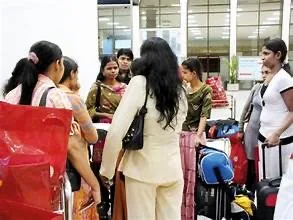
By P.K.Balachandran
Colombo, June 14 - July 16 is observed as the “International Family Remittance Day” in recognition of the critical role these remittances play in the world. Global inward remittances reached an estimated record of US$ 905 billion in 2025, an increase of 4.6% from USD 865 billion in 2023.
For the middle-income countries in Asia, Africa and Latin America, this massive flow of private capital is larger than global Foreign Direct Investment (FDI) and Official Development Assistance (ODA) combined.
India has consistently led the world in total inward remittances, receiving US$ 137 billion. Mexico got US$ 66 billion; China US$ 50 billion; Philippines US$ 39 billion; Pakistan; U$ 34.9 billion; and Egypt, US$ 42; billion.
Sri Lanka recorded an all-time high of US$ 8 billion in workers' remittances in 2025, a 22.8% growth year-on-year. This momentum has continued into 2026, with the country securing US$ 3.06 billion during the first four months, including inflows of USD 767.9 million in April.
Globally, the vast majority of remittances originate from developed nations where migrants are employed. The United States tops the list accounting for US$ 100 billion annually. Saudi Arabia accounts for U$ 47 billion; Switzerland, US$ 40 billion; and Germany, US$ 24 billion.
One Billion People Involved
Globally, about 1 billion people (or 1 in 7) participate in remittances, either as senders or as recipients back in their home countries. For smaller, labour-exporting economies, these inward flows serve as a vital lifeline for both household income and national foreign currency reserves.
Total departures for foreign employment from Sri Lanka amounted to 310,915 during 2025, with a monthly average of 25,910, a year-on-year decline compared to 2024.
In 2025, the top destination for Sri Lankan migrant workers continued to be the Middle Eastern region, with Kuwait being first, followed by the United Arab Emirates (UAE) and Saudi Arabia. Similarly, the largest share of remittances to Sri Lanka is sent by migrant workers in the Middle Eastern region.
Available data for the first three quarters of 2025 indicate that the highest share of remittances was sent from Kuwait (10.7%), UAE (10.4%) and Saudi Arabia (9.4%).
Contributions from skilled and long-term workers in destinations like Australia, the UK, and Canada is smaller but are steadily growing.
A large part of this growth is attributed to migrant workers increasingly utilising formal banking channels rather than informal “Undiyal/Hawala” systems.
Why do People Migrate?
Sri Lankan families see migration as a path for upward mobility, to earn a little more to help buy some assets and give their children a better education and access to improved healthcare. Difficulty in finding jobs in an underdeveloped economy cuts across classes, the educated and the not-so-well-educated.
Among some minority groups, like the Tamils, migration is a strategy to escape from a discriminatory or a hostile system. Lingering ethnic tensions were a push factor for a long time.
Gender Dimension
In the early 1990s, the majority of migrants for employment was female due to the demand for domestic workers and caregivers from the increasingly prosperous Middle Eastern countries. But by 2012, these proportions were nearly reversed, with two thirds of all migrants being male, says Shyamali Ranaraja in her study done for the Friedrich Naumann Foundation.
In January 2013, the Sri Lankan government raised the minimum age for migrant domestic workers from 18 to 21, aiming to protect young women from potential abuse and exploitation abroad. Female migrant workers with young children were also discouraged from migration by the introduction of the requirement of a “Family Background Report.” And wide publicity was given to complaints of harassment and abuse of female migrant workers.
Further, the South Korean government had streamlined the migration of male workers and reduced associated costs, thus encouraging greater numbers of male workers to migrate for employment, Ranaraja recalls.
However, the number of female migrants increased after the global pandemic in 2020 and the economic crisis in the country thereafter. It remains to be seen whether this trend will continue.
Age Factor
The difference in age between male and female migrant workers is striking. Women belong to older age groups. The highest proportion of female workers is found in the 40-44 age group, and that for male workers lies in the 25-29 year range. This is likely to be due to the restriction on migration of women with young children, where women wait to reduce their caregiving responsibilities within the family before migrating for employment.
Skills Factor
More than 90% of female migrant workers migrate as domestic workers or low-skilled workers. Only a small proportion of female workers migrate for higher skilled and professional occupations, due largely to the low levels of labour force participation by women in Sri Lanka itself.
The number of migrants in professional categories remains low despite the high educational achievements of men and women in Sri Lanka. This has perplexed researchers, as levels of literacy and education for Sri Lankan females are among the highest in Asia. It is likely that these women do not migrate for the same reasons that prevent them from entering the labour force in Sri Lanka, Ranaraja says.
The other key reason for the migration of Sri Lankans is the pursuit of higher education abroad. Out of the 120,000 students who qualify for university education annually, nearly 28,000 students seek admission in universities in Australia, Canada and the United States. The most sought-after destination in Europe for students is the United Kingdom.
A recent survey by Weeraratne found that most students in overseas education stated that they do not plan to return to Sri Lanka; the reasons presented for not returning included a wish to find employment outside Sri Lanka (45%), continuing higher studies outside Sri Lanka (38%) and other personal reasons (17%).
Good and Bad Effect on Families Back Home
Migrant workers’ contribution to easing pressure on the country’s balance of payments is widely appreciated. Households use the remittances to improve their standard of living, get better access to health and education.
However, in her a study on migration and remittances for the Friedrich Naumann Foundation for Freedom, Shyamali Ranaraja says that the households in urban Sri Lanka benefit more than those in the rural areas and the estates. Households in urban areas have a higher tendency to accumulate assets rather than spend it on consumption. In the estate sector, however, they are spent on consumption rather than in increasing assets.
An Institute of Policy Studies study done by Dr.Bilesha Weeratne talks about the disadvantages of being in a home without the mother.
The mothers’ “presence” at home contributed to better health and educational outcomes for children. “Adherence to a restrictive migration policy reduced outpatient visits for illness among children under 5 years of age by 14%, and inpatient stays by 15.2%, relative to similar children whose mothers are not at home,” Dr Weeratne says.
This study also shows that among older children, a mother’s presence at home has a causal effect in reducing failures by 60% when compared to a control group.
Exploitation Abroad
Dr Weeratne’s study also shows that 7,448 complaints were made in 2024 by migrant workers (equivalent to 2% of departures in the same year). Of these, 41% were reported from Saudi Arabia, 34% from Kuwait, and 10% from the UAE. Of all complaints, a majority (76%) were made by female domestic workers originating from Middle Eastern countries.
The study suggests that many Sri Lankan female domestic workers migrate due to dire financial conditions, including high household debt, lack of employment opportunities, and the need to support dependents, which makes them economically dependent on remittances. Such economic dependency increases their vulnerability to abuse.
END
RELATED NEWS
View all



