Latest News
Existing seed stocks complicate switch to short-duration paddy

Encouraging farmers to grow short-duration paddy varieties this Maha season faces practical difficulties because seed stocks were prepared during the previous Yala season, Senior Professor Buddhi Marambe said.
The senior professor in the Department of Crop Science at the University of Peradeniya’s Faculty of Agriculture, said cultivation recommendations had to take account of the seed available to farmers.
The initial thinking at government level had been to encourage varieties that matured sooner, allowing farmers to harvest before potentially heavy rainfall later in the season. However, changing varieties required suitable seed paddy, he said.
“Seed paddy for this Maha season was produced and stored during the previous Yala season. That is how our system operates,” Marambe said.
Farmers themselves produced seed used across a substantial part of Sri Lanka’s paddy-growing area, making the availability of appropriate stocks an important consideration when recommending changes.
Marambe said any government responding to changing weather conditions needed to prepare plans and revise them as circumstances developed. Forecasts indicated the likelihood of particular conditions, and recommendations had to reflect both those risks and the practical circumstances of farmers.
The Department of Agriculture had divided the country into different zones and, with the Agriculture Ministry’s approval, recommended different starting dates for cultivation, he said.
Farmers in higher-producing areas had been advised to begin cultivation before October 15. Marambe said the approach of setting dates for different areas remained appropriate.
He explained that rainfall could become particularly intense towards the end of October and early November. Paddy plants already established by then would be better able to withstand water accumulating in fields and flowing through them.
Having an established crop capable of coping with those conditions would improve farmers’ chances of managing the effects of heavy rain, he said.
However, authorities also needed to recognise the difficulties farmers faced in following cultivation recommendations.
“There are practical difficulties. Farmers are human beings, and we must consider their circumstances when encouraging them to act on these recommendations,” he said.
Marambe urged farmers to read and understand advice issued by the Agriculture and Meteorology Departments and use it to prepare for the conditions forecast for their areas.
“We cannot simply say that El Niño is coming and stop producing food. We must produce our staple foods,” he said.
Share this story
RELATED NEWS
View all
Latest News
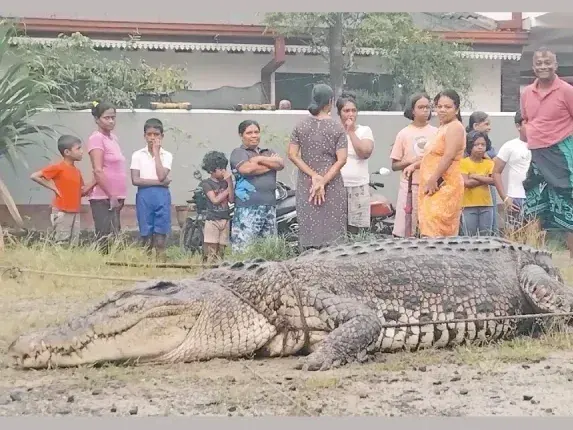
14-foot crocodile captured by villagers near Kalu Ganga
Oct 30, 2026

Latest News
Colombo High Court rejects bail for ‘Harak Kata’ and two co-accused
Oct 30, 2026

Latest News
Seven new Colombo courts established in former ministers’ bungalows
Oct 29, 2026

Latest News
Sri Lanka seeks return of 112 wanted suspects from 13 countries
Oct 29, 2026