Latest News
Lanka targets 12% digital economy by 2030
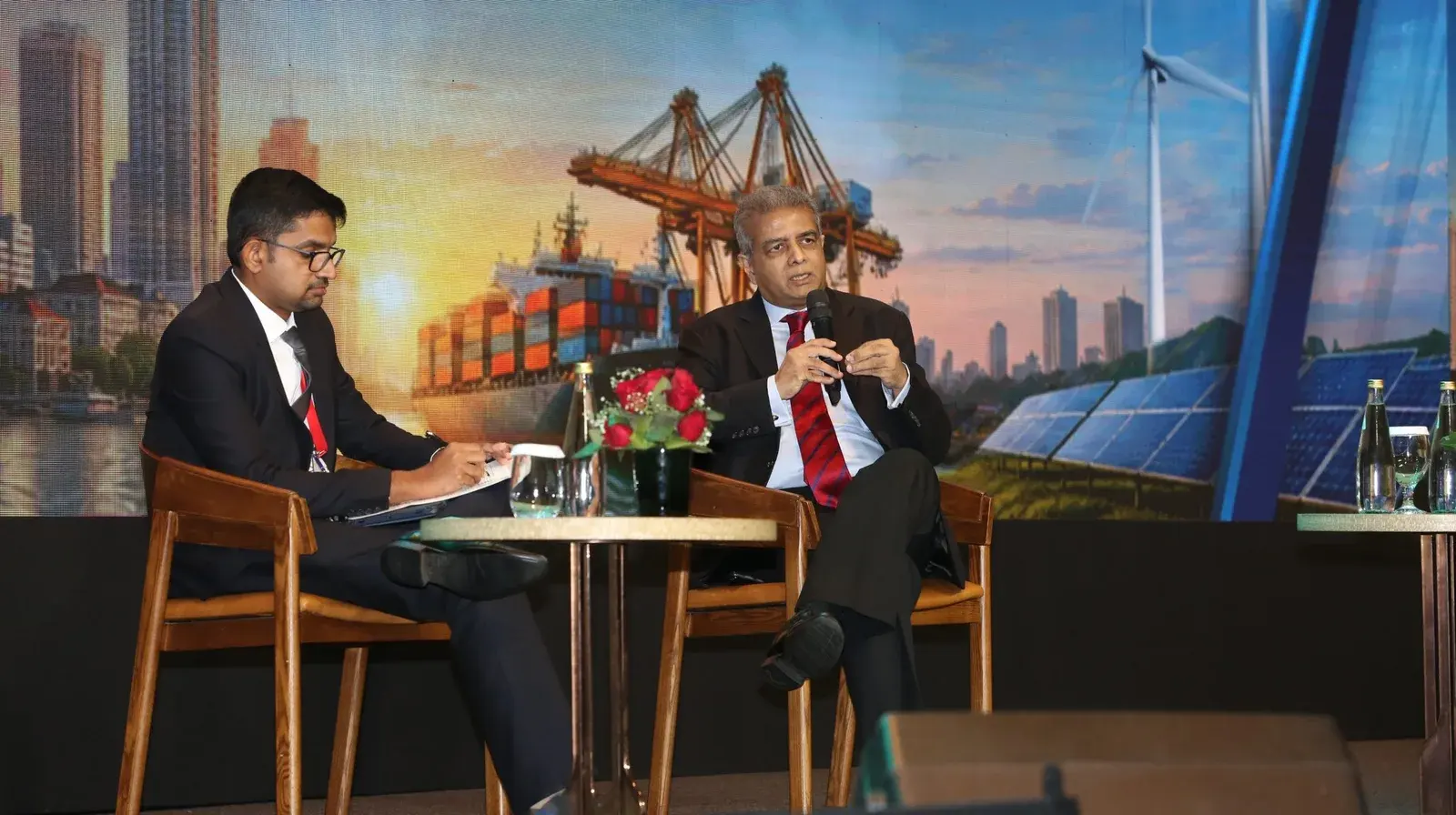
Sri Lanka is targeting a digital economy equivalent to 12% of gross domestic product (GDP) by 2030, matching the level India has reached today, with innovation and intellectual property at the heart of the strategy, Chief Presidential Adviser on Digital Economy Hans Wijayasuriya said.
“Today, India is at 12 percent. We are simply targeting Sri Lanka to get to where India is today in 2030,” Wijayasuriya told the Sri Lanka Economic and Investment Summit 2026 organised by the Ceylon Chamber of Commerce.
He said Sri Lanka needed to move towards a higher-value digital economy in which local companies could go beyond providing services and compete internationally through products and intellectual property they create.
The country could no longer rely on being “a location for cheap back office services”, Wijayasuriya said, warning that the rapid development of artificial intelligence (AI) was putting the services export model under severe pressure.
He also warned that Sri Lankan companies were spending too little on IT personnel compared with their global counterparts.
Unless companies were prepared to pay better salaries and provide attractive career opportunities locally, concerns over the loss of skilled talent would amount to “crocodile tears”, he said.
Wijayasuriya, who is also Chairman of the Information and Communication Technology Agency (ICTA), said the government itself remained a major obstacle to digital transformation.
Without “a single point of entry into the government systems”, citizens and businesses still had to collect one document from one institution and another from a different institution to obtain a service, he said.
Sri Lanka's digital public infrastructure was still effectively a building site, with several key systems under development, including the National Data Exchange and a platform to issue digitally signed permits and certificates.
The digital ID system, on which much of the digital infrastructure would depend, is expected to begin between December and February with around 100 registrations a day, Wijayasuriya said.
However, that pace would have to increase substantially.
“We need to do closer to 25,000 to 30,000 a day in order to do the entire population,” he said.
The proposed Digital Economy Authority, which is expected to serve as the apex body for regulating the digital sector, is also awaiting legislation.
Wijayasuriya said the success of the digital transformation would ultimately depend on whether the heads of individual institutions took responsibility for driving the process.
Government procurement procedures were another obstacle, he said, noting that it could take six months just to prepare tender documents for technology purchases.
The resulting procurement, he added, was often limited by the technological capability of the person who drafted the tender.
At the consumer level, Sri Lanka has also struggled to expand the use of QR-code payments among small traders.
Unlike neighbouring countries where even street vendors widely accept QR payments, many Sri Lankan small businesses remain reluctant to register, Wijayasuriya said.
Their concern was that registration would take them out of the informal economy and put their sales on official records, he said.
“I must admit, we haven’t cracked the code yet,” Wijayasuriya said, adding that the problem was behavioural rather than technological.
He acknowledged that Sri Lanka was unlikely to achieve the entire vision by 2030.
“I don’t think we can achieve this picture in its entirety” by 2030, he said.
However, if the core digital systems were operational by 2028 and local start-ups and IT companies began building businesses on top of them, “I think we are on good ground,” he said.
Share this story
RELATED NEWS
View all
Latest News
Colombo Port will add 1.5 million TEU capacity next year
Oct 13, 2026

Latest News
IMF sees Sri Lanka's growth cooling as energy shock lifts inflation
Oct 13, 2026

Latest News
Lankan designer showcases sapphire collar at Mercedes-Benz Fashion Week 2026
Oct 13, 2026

Latest News
Drug use, threats linked to death of 17-year-old Kilinochchi girl
Oct 13, 2026