Latest News
Vehicle importers caught in a tax-and-red-tape trap
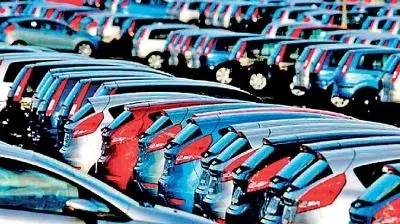
Vehicle importers could face simpler tax procedures and faster Customs clearance under measures discussed by the Parliamentary Committee on Ways and Means, which has called for better coordination among government agencies and a review of the tax and classification systems governing vehicle imports.
The committee, chaired by MP Wijesiri Basnayake, discussed vehicle import taxes, Customs valuations and delays in clearing imported vehicles and other goods at a meeting held in Parliament on November 18.
Particular attention was paid to the tax burden on imported vehicles following the relaxation of vehicle import restrictions. Officials and MPs discussed the complexities involved in calculating taxes, which depend on factors including engine capacity, CIF value and excise duty.
The committee also examined issues arising from Customs valuations and the need to simplify the existing tax structure.
Delays in clearing imported goods were another major concern, with officials pointing out that importers are required to obtain approvals from several government institutions in addition to Customs.
The absence of a common digital system linking institutions, including the Department of Import and Export Control, has resulted in delays and coordination difficulties, officials said.
Such delays can leave containers at ports for extended periods, increasing costs for importers through additional storage and related charges. The committee stressed the need for closer coordination between government agencies and faster processing of approvals.
The committee also discussed measures to promote electric vehicle (EV) imports and use, while addressing regulatory and environmental concerns associated with the growing EV market.
A major concern was the absence of a proper system for disposing of or recycling used EV batteries after they reach the end of their useful life.
The committee discussed requiring vehicle importers or manufacturers to take responsibility for the environmentally sound disposal or recycling of batteries.
The need to establish quality standards for EVs and their batteries and introduce appropriate Harmonised System (HS) codes for Customs classification was also discussed.
Members further stressed the need for tax concessions and other policy incentives to make EVs more affordable and encourage their wider use.
The committee also discussed promoting solar power and battery energy storage systems to reduce the impact of EV charging on the national electricity grid.
Accordingly, the committee considered measures to simplify vehicle import taxation, introduce incentives for EVs, update Customs classifications in line with international standards and establish a proper system for managing used EV batteries.
Deputy Ministers Eranga Weeraratne and Nishantha Jayaweera, MPs Ashoka Sapumal Ranwala, Dr Nandana Millagala and Champika Hettiarachchi, and officials of Sri Lanka Customs attended the meeting.
Share this story
RELATED NEWS
View all

Latest News
Rs. 1.66 bn spent on 72 abandoned education projects
Nov 21, 2026
Latest News
Minister urges MPs not to politicise Chemmani mass grave investigations
Nov 21, 2026
Latest News
Three Bills to be taken up during Budget debate
Nov 21, 2026

Latest News
Government plans 25,000 homes for underserved urban communities - Bimal
Nov 21, 2026