By Kassapa
The ongoing and escalating war between the United States and Israel on the one hand and Iran on the other thrust Sri Lanka right into the middle of the conflict even before we knew it, when two Iranian vessels attending a naval exercise in India sought refuge in the country’s waters. One vessel was sunk by the US, the other was escorted to safety.
In that drama, President Anura Kumara Dissanayake emerged as an astute diplomat, staying strictly neutral and not bowing to US pressure but sticking to international naval conventions. Sri Lanka made headlines although the country’s image was somewhat tarnished by Foreign Minister Vijitha Herath’s faltering performance on the same issue in the Indian media.
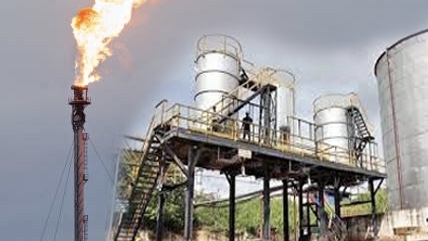
Now, the country is facing the full impact of the war, as do all other nations. A closed straits of Hormuz has led to escalating oil prices and fuel shortages. There is no sign of the conflict ending anytime soon, given US President Donald Tump’s belligerent and bellicose attitude towards not only Iran but also to his allies in Europe. The prospect of rising inflation, power cuts and gas shortages loom large.
With fuel queues emerging overnight, the government was quick to realise that this was a recipe for disaster. There was a sense of déjà vu about all this because the ‘Aragalaya’ or the peoples’ uprising against then President Gotabaya Rajapaksa is still fresh in the minds of the public. While there were many factors that led to its final outcome, it was the shortages of fuel, gas and electricity that tipped the balance in favour of the protestors.
If no action was taken promptly, the current scenario could potentially lead to history repeating itself. For all the bravado it displayed publicly, this is what the government was worried about. Similarly, this is also what the opposition was hoping for, even though they wouldn’t say so publicly.
In the one and a half years this government has been in office, it hasn’t earned a reputation of being very efficient in running the day-to-day affairs of state or even specific projects. For example, educational reforms introduced by Prime Minister Harini Amarasuriya were deferred after startling revelations about links to adult websites appearing in modules intended for children. Another instance is the ‘Clean Sri Lanka’ programme, unveiled with a bang by Dissanayake himself but hardly producing any tangible results.
So, it was vital that the government nipped this crisis in the bud to prevent it from escalating and becoming ‘Aragalaya’ Part II. Fully cognisant of this, it had no choice but to delegate this task to the best- and arguably only- man for the job: Dissanayake.
Last week, Dissanayake burnt the midnight oil, attending meeting after meeting, appointing oversight committees to monitor the situation but personally supervising every key decision made. In a bid to assuage public fears, he held a press briefing for the second time in two weeks and allowed himself to be questioned by media organisations that were considered hostile to the government.
Most observers gave him full marks for his performance because Dissanayake is by far the best communicator in the government. He is arguably the best communicator among all the Presidents we have had because of his calm, unruffled style and his ability to have a multitude of facts and figures, dates and data at his fingertips.
However, a press briefing alone is not sufficient to win the day. Therefore, the government was compelled to introduce other measures: introduce a QR code for fuel, declare Wednesdays a public holiday and cancel all government functions. More restrictive measures may follow if the conflict in the Middle East continues.
The question is, can the government survive the war? Will they emerge better or worse afterwards? The only redeeming factor is its management of the recent Ditwah cyclone. Despite the usual complaints from the collective opposition, the general consensus was that the government did a decent job, launching an efficient relief and rehabilitation effort without draining the Treasury.
It will have to do so again, perhaps even more. While the devastation from the Ditwah cyclone was drastic, it came and went in a matter of days. Now, the war looks as if it will drag on indefinitely. Dissanayake himself acknowledged the country could be in for hard times if that happens. Leaders of other advanced and more stable economies have said the same. Such is the nature of the beast the government is dealing with.
Thus far, the mood on the street is sympathetic to the government. There is an understanding that the 2022 economic debacle was due to mismanagement by the then government but the current crisis is a global phenomenon far beyond this government’s control. That is why the ‘yuddey, not suddey’ or ‘war not robbery’ slogan has gained currency. Most motorists interviewed at queues in filling stations vent their frustration but fall short of blaming the government, asking ‘what can they do?’. How long they would do so is unpredictable. It will depend on how well the government manages the crisis.
The opposition meanwhile is sensing blood and flexing its muscles. Some argue that the fuel restrictions came too late. Others complain that the QR code for fuel is not functioning optimally for new vehicle owners. Video clips of what National Peoples’ Power politicians- including Dissanayake- said at the height of the 2022 fuel queues are unearthed and being re-circulated. There was even a ‘joint opposition’ media briefing. Politics is the art of the possible and in this crisis, the opposition sees an opportunity to embarrass and corner the government. There is, of course, nothing wrong with that, that is what politicians are meant to do.
The war could be a blessing in disguise for the government, if they deal with its fallout professionally minimising its impact on the public. The average citizen will forgive and forget the government’s recent blunders if they manage that. Then again though, how long they would tolerate hardships and to what degree is the ‘big question’. Time will tell.