Latest News
Butterfly migration largest observed since 2014
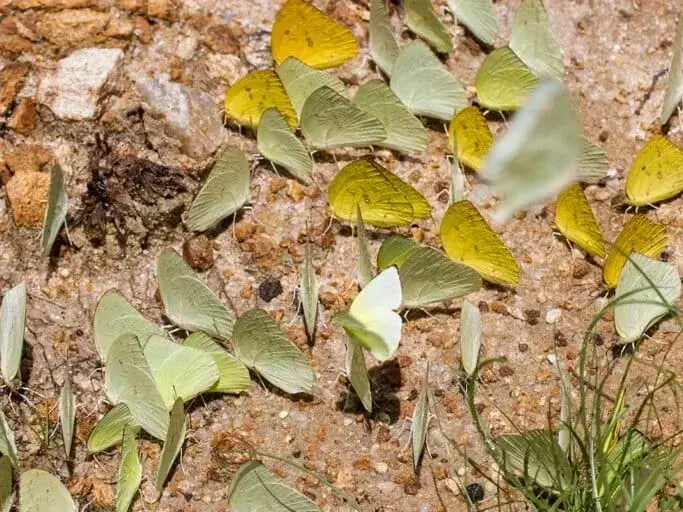
Sri Lanka is witnessing the largest butterfly migration he has observed since 2014, environmentalist and Attorney-at-law Dr Jagath Gunawardana said, as large numbers of butterflies move northwards through several parts of the country.
The migration, dominated by the lemon emigrant butterfly, has also been visible in Colombo and surrounding towns, where butterflies have been seen flying between buildings and along roads.
“Based on my observations, this is the first time since 2014 that we have seen such large numbers migrating in this way,” Gunawardana said.
He said the scale of the movement had attracted considerable public attention, with people sharing photographs, videos and descriptions of sightings on social media.
Although lemon emigrants predominated, smaller numbers of mottled emigrants, common leopards and orange migrants had also been observed. The species involved and their relative abundance could change as the migration continued, he said.
Gunawardana, who began studying butterfly migration in 1987, said these movements generally occurred in November and could sometimes continue until the end of December. Their scale varied considerably between years.
He said rainfall preceding the migration encouraged fresh growth in plants on which caterpillars fed, creating favourable conditions for breeding. Butterfly numbers consequently increased before the migration began.
However, the precise trigger for the movement remained uncertain.
A shortage of food did not appear to explain it, he said, because food for both caterpillars and adult butterflies was generally abundant during this period.
Researchers also needed further evidence to establish how far individual butterflies travelled and whether the same individuals completed the journey or successive generations continued the movement.
Gunawardana said observations indicated that the butterflies were travelling mainly northwards. Although folklore described them as heading to Sri Pada before the pilgrimage season, their observed direction was generally towards the north rather than the central hills.
Nevertheless, the traditional account accurately identified the season in which the migration occurred, he said.
In urban areas, tall buildings appeared to divert butterflies towards available gaps and open routes. This helped explain why people had seen them flying along roads. Local changes in direction did not necessarily indicate a change in their overall northward movement.
Gunawardana encouraged the public to continue recording sightings, saying observations could help researchers build a clearer picture of the migration.
Useful information included the location, date, time, direction of travel and species seen. Photographs and videos could assist identification.
Observers could also count butterflies passing a fixed point for about five minutes at intervals during each hour, providing useful information on changes in numbers.
“You do not have to be a scientist or work for a scientific institution,” he said. “Anyone interested in the subject can contribute.”
Share this story
RELATED NEWS
View all

Latest News
Bail for temple priest, assistant arrested over alleged archaeological damage
Nov 17, 2026

Latest News
Harsha says 2027 Budget fails to ease pressure on middle-income families
Nov 17, 2026
Latest News
No tsunami threat to Lanka after Banda Sea quake
Nov 17, 2026

Latest News
Lanka, S Korea eye closer ties ahead of 50th anniversary
Nov 17, 2026