Current Affairs
Rights activist questions the wisdom of the “War on Drugs” approach to addiction in Sri Lanka
By P.K.Balachandran
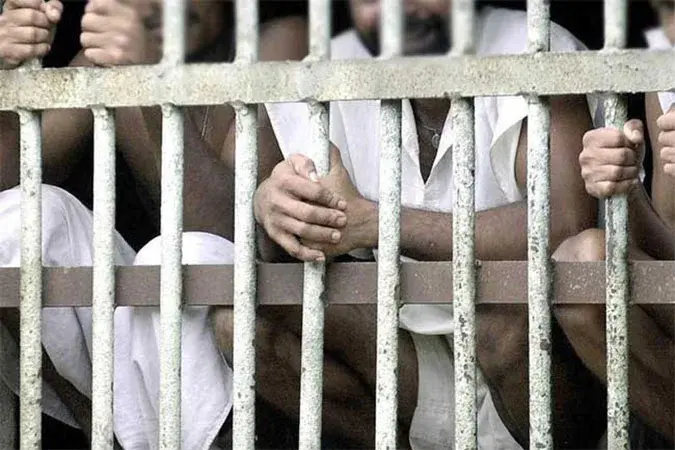
Colombo, July 15 - Ambika Satkunanathan, a human rights activist and former Commissioner of the Human Rights Commission of Sri Lanka, argues that the country’s militarised and punishment-based approach to drug addiction is part of the problem rather than its solution.
Her 2021 report, “A Broken System: Drug Control, Detention and Treatment of People Who Use Drugs in Sri Lanka,” published by Harm Reduction International in 2012, shows how the heavy involvement of security forces in drug control and treatment, combined with compulsory detention and abstinence-only programmes, has produced widespread human rights violations, ineffective outcomes, and perpetuated cycles of dependency and marginalisation.
The militarisation of drug policy intensified after President Gotabaya Rajapaksa’s election in November 2019. His administration prioritised eradication of “the drug menace” and established a Taskforce to build a “Secure Country, Disciplined, Virtuous and Lawful Society”, staffed mainly by police and military personnel and tasked with preventing drug use and eradicating trafficking.
The National Dangerous Drugs Control Board, which runs rehabilitation centres, was placed under the Ministry of Defence. This approach echoes the post-war model used to “rehabilitate” alleged former combatants, reflecting a state ethos of disciplining groups viewed as societal threats rather than addressing drug dependence as a health issue.
Media coverage has reinforced this punitive narrative. People who use drugs are routinely labelled “drug addicts” or “drug traffickers”, blamed for crime and social problems, and portrayed as dangerous outcasts. Such dehumanisation has made rights violations against them appear justified.
In July 2020, when a COVID-19 cluster broke out at the Kandakadu Drug Treatment Centre, media quickly blamed the detainees for spreading the virus nationwide.
International Norms
International standards promote a public health approach based on voluntary community treatment, harm reduction, evidence-based care, and informed consent. The 2016 UNGASS Outcome Document requires drug policies to comply with human rights law. Sri Lanka is party to the main drug control conventions and human rights treaties, yet its model of compulsory abstinence-based treatment without medication or harm reduction to manage withdrawal can amount to torture or cruel, inhuman and degrading treatment.
Compulsory detention violates rights to liberty, health, and freedom from discrimination. A rights-compliant system would prioritise community-based options that include harm reduction services so individuals are not forced into painful and dangerous unsupported withdrawal.
Law enforcement practices are deeply problematic. The Police Narcotics Bureau handles drug investigations, but systemic failings enable serious misconduct. Prison studies by the Human Rights Commission show frequent allegations that police plant drugs to frame suspects. Women report invasive body searches during arrest. Torture of drug suspects in custody is well documented, yet officers are rarely held accountable, creating a culture of impunity.
Lack of Oversight
Lack of oversight allows falsification of arrest details, tampering with evidence, and deliberate delays that keep suspects in prolonged pre-trial detention, breaching due process rights. Former convicts face ongoing police harassment. In July 2020 several Police Narcotics Bureau officers were arrested for running a drug trafficking network from within the Bureau, raising grave doubts about the integrity of past investigations and convictions.
Cracks in Legal Framework
The legal framework rests on the Poisons, Opium and Dangerous Drugs Ordinance. Section 54A criminalises possession, trafficking and related activities involving heroin and other narcotics, with penalties up to death or life imprisonment; bail is generally unavailable at the Magistrate’s Court. Lesser cases are usually charged under Section 78(5), which allows fines of Rs. 1,000–10,000 and/or up to five years’ imprisonment and is bailable. Methamphetamine cases fall under the 2008 Illicit Traffic Act.
Before 2020, following Attorney General instructions issued to the Inspector General of Police in May 2012, cases involving less than 500mg gross of heroin were presented under Section 78(5)(a) to limit wide police discretion in charging under the more serious provision. Such cases were typically concluded the same day in Magistrate’s Court upon a guilty plea, with a fine imposed at the judge’s discretion. Non-payment could result in up to six months’ imprisonment. Larger quantities led to remand prison while awaiting purity reports from the chronically under-resourced Government Analyst Department.
Months-long delays caused severe overcrowding in remand facilities. Once the report arrived, final charging depended on the net pure quantity; amounts exceeding 2g of pure heroin could attract life imprisonment or the death penalty under the Third Schedule of the Ordinance.
COVID Outbreak
COVID-19 outbreaks in prisons prompted measures to reduce the prison population. The Attorney General issued new guidelines in November 2020 directing that cases involving less than 2g gross heroin or under 1g net, with no evidence of trafficking or serious prior offences, be handled under Section 78(5)(a) in the Magistrate’s Court. January 2021 instructions told State Counsels not to object to bail after six months in remand for cases up to 10g gross, provided investigations were complete and there were no aggravating factors.
In May 2021 a further category for 2g–4g gross heroin was introduced, allowing bail after three months in remand. These successive administrative circulars were intended to spare dependent users from harsh penalties and ease overcrowding. In practice their broad and discretionary language has permitted inconsistent application, with State Counsels often still objecting to bail. The requirement to spend months in remand before eligibility itself functions as an extra penalty.
Reliance on ad-hoc instructions rather than legislative reform has undermined legal certainty while delivering only limited relief.
Compulsory Treatment
Compulsory treatment is governed by the Drug Dependant Persons (Treatment and Rehabilitation) Act No. 54 of 2007. Section 10 allows police to detain suspected drug users for medical assessment and empowers Magistrates to order compulsory rehabilitation on the basis of a finding of dependence or as punishment for a drug offence.
This facilitates arbitrary arrest and detention without adequate evidence. Although the Community Based Corrections Act offers non-custodial alternatives, judges frequently impose mandatory treatment as a condition, with the threat of prison undermining genuine consent. Implementation of community corrections remains limited.
Rehabilitation Centres
Proposals to divert convicted drug offenders into rehabilitation instead of prison, floated since the pandemic to reduce overcrowding, risk extending the militarised approach under the label of treatment. Programmes could be run by the Ministries of Defence and Justice rather than Health, and individuals may be sent to mandatory programmes without consent.
State rehabilitation centres include those operated by the National Dangerous Drugs Control Board and the military-run Kandakadu and Senapura centres, formerly used for alleged ex-combatants. These are now under the State Ministry of Prison Reform and Prisoners Rehabilitation but operated by the military.
Women
There is only one NDDCB centre with a women’s ward. Private centres are meant to be licensed and regulated by the NDDCB, but many operate without approval and oversight is weak. All programmes, state and private, are strictly abstinence-based and provide no harm reduction or medication-assisted treatment.
The UN Special Rapporteur on Torture has condemned the denial of substitution therapies as subjecting people to severe pain and suffering, effectively punishing them for drug use.
Persons who had undergone compulsory treatment at Kandakadu and Senapura described the everyday nature of violence to which they were subjected from the moment of admission. They often did not know why they were being beaten, and the use of collective punishment was common.
Every interviewee who had experienced compulsory rehabilitation identified it as ineffective, a human rights violation, and a driver of relapse; many had been through multiple centres and relapsed repeatedly.
Post-Release Support
Post-release support and after-care are almost non-existent. Former users face intense social stigma that severely hinders reintegration and livelihood opportunities, while police harassment frequently continues.
Interviewees repeatedly cited stigma and ongoing harassment as primary reasons for relapse. Although private centres are supposed to be voluntary, families often forcibly send relatives there, and even voluntary entrants may not be allowed to leave when they wish. In prisons, access to drug treatment is extremely limited and not evidence-based.
Remand Prisoners
Most persons imprisoned for drug offences are remand prisoners whose inability to access any medical intervention to mitigate withdrawal symptoms places their health and lives at serious risk.
Conclusion
Sri Lanka’s war-on-drugs model—marked by militarisation, punitive laws, arbitrary policing, violent and ineffective compulsory “rehabilitation”, and the absence of harm reduction or aftercare—has failed to reduce drug use or trafficking.
Instead, it has entrenched human rights violations, overcrowded prisons, fostered corruption within law enforcement, and trapped vulnerable people in cycles of arrest, detention and relapse.
Ambika Satkunanathan’s the research demonstrates that only a fundamental shift to a voluntary, community-based, harm-reduction and rights-respecting public health approach can address drug dependence effectively and humanely.
This requires legislative reform to decriminalise personal use, demilitarise drug policy, establish robust police accountability, expand evidence-based treatment, and provide meaningful social reintegration support.
Without such changes the current approach will continue to harm the very individuals and communities it claims to protect.
END
Share this story
RELATED NEWS
View all

Current Affairs
Bloody killings mar the backdrop of Bollywood films
Oct 20, 2026
Current Affairs
UNHRC Special Rapporteurs write to Sri Lankan President their concerns about the NGOs’ bill
Oct 02, 2026
Current Affairs
Denial of the right to vote is not new in India
Oct 01, 2026
Current Affairs
The 1948 UNSC resolution on Kashmir was in India’s favour
Sep 25, 2026