Politics by Vishvanath, Cover Story
Viral Vas Kaviya: ‘Release Gnanasara Thera’ campaign taken to celestial realm Canalization of aggression through curse poems and devil dancing rituals
By Vishvanath
Never a dull day in Sri Lanka, where controversies and packed news cycles are the order of the day. Close on the heels of a protest march conducted by Buddhist monks from Kandy to Colombo in a bid to secure a presidential pardon for Ven. Galaboda Aththe Gnanasara Thera, and launching a Satyagraha at Viharamadevi Park has come a viral vas kaviya (or a traditional Sinhala curse poem) against the government. Titled Yaksha Raja Vajrapani vas kaviya, it has now become a kind of theme song for the “Release Gnanasara Thera” campaign. Anti-government activists keep playing it to tease government politicians and their supporters.
This however is not the first time a vas kaviya has been used against the JVP-led NPP government. A curse poem entered political discourse following the 2024 regime change.
Vas Kavi are written and recited to bring ruin, sickness, or misfortune upon a specific target. Rooted in folk magic and esoteric astrology, these verses are traditionally chanted 108 times (or its multiples) before the image of a deity like Kataragama (Skanda) or Kali. They are also chanted before the images of other deities as well.
What is unfolding is essentially a politico-religious battle between Buddhis monks demanding Gnanarsara Thera’s release and the government, which is refusing to give in. Protesting monks chant prith, conduct other religious activities at the Satyagraha site, where thovil (traditional devil dances) are also performed.
Buddhism and vas kavi or thovil do not go together, for the Buddha’s teachings have nothing to do with cursing or occult practices; they are based on compassion even towards one’s enemies, as can be seen from the following verse from Dhammapada.
Na hi verena verani
sammantidha kudacanam
averena ca sammanti
esa dhammo sanantano.
“Hatred is, indeed, never appeased by hatred in this world. It is appeased only by loving-kindness.”
So, it is seth kavi or blessing poems chanted to bring peace, healing, and good fortune that are associated with mainstream Buddhist practices. Why has a vas kaviya become an integral part of a campaign conducted by Buddhist monks and laypersons for the release of a Buddhist monk from prison? There are several reasons, but focus of this comment is on only two of them.
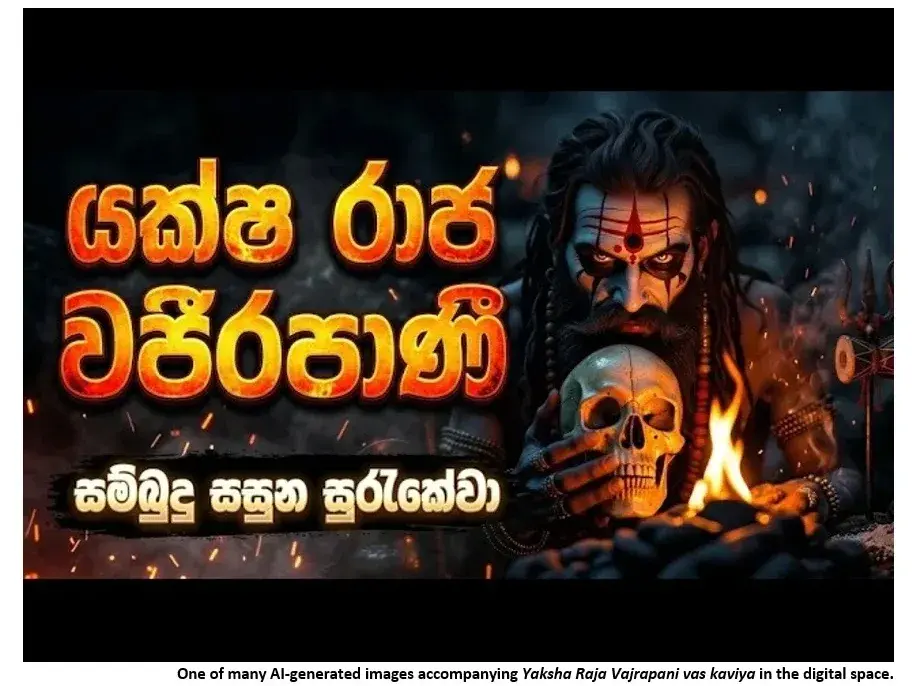
First, occult practices are outside the realm of many mainstream religions in the world. They include various rituals, beliefs, and studies that deal with the supernatural, paranormal, or hidden forces. But some Buddhist monks are believed to engage in them on the sly. The writer of the viral vas kaviya under discussion is not known, but going by the technical perfection of the curse poem, he (or she) must be well versed in Sinhala poetry. It is being speculated in some quarters that it was written by a Buddhis monk. This fact is borne out by the elegant metrical feet that form the poem’s rhythm. Various AI-generated images of deities and Yakas (devils) have been used to intensify the unnerving effect which the vas kaviya is intended to have on the ruling party politicians who are however not named.
Second, people seek retribution through vas kavi when those who have wronged them are too powerful to settle scores with or when they have no trust in legal and judicial processes or when the identities of the wrongdoers are unknown. Yaksha Raja Vajrapani vas kaviya invokes the wrath of the guardian deities, especifically Vajrapani, Utpala Varna (Vishnu), Pajjunna, and Vessamuni to protect the Buddha Sasana and strike down perceived corrupt or anti-Buddhist rulers and figures.
Canalization of aggression
This method of giving vent to aggression in a non-violent manner is explored by Professor Gananath Obeyesekere in his 1975 paper, Sorcery, Premeditated Murder, and the Canalization of Aggression in Sri Lanka, published in the journal Ethnology. His central argument is that aggression does not always manifest itself in overt physical violence; it can be channelled into culturally accepted or socially meaningful practices, including sorcery and ritual attempts to harm others. The idea of the canalisation of aggression has since gained currency among social scientists.
The scope of Prof. Obeysekere’s research is much broader, and his approach is multi-religious. Obeyesekere examined practices at three main religious shrines in Sri Lanka—Buddhist, Hindu and Muslim. He found that some people sought the assistance of ritual specialists to punish enemies who they believed had wronged them. In many cases, the grievances involved perceived injustices that the supplicants felt could not be remedied through the police or courts. Sorcery thus provided an alternative means of seeking retribution. Similar practices are associated with some other local shrines that are not associated with any major religions.
Vas kaviya reaches the parliament
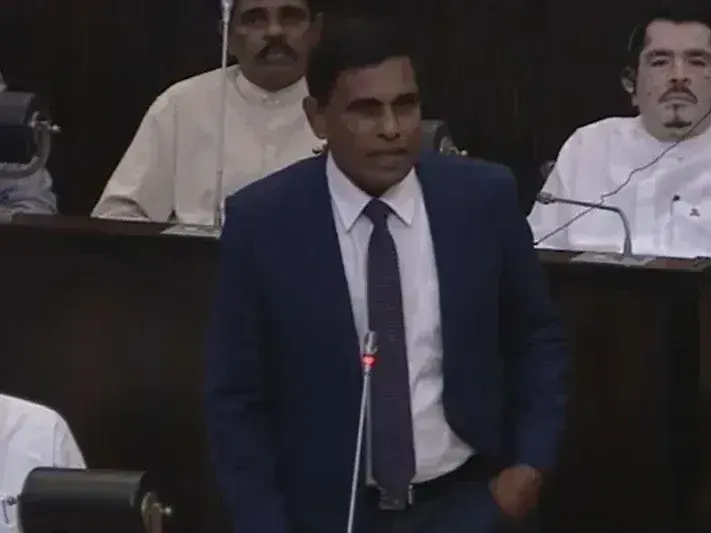
On October 20, SJB MP Nalin Bandara raised a question about Yaksha Raja Vajrapani vas kaviya in the parliament, feigning deep concern regarding its spread, composition and supposedly malefic effect. He was obviously teasing the government members and giving a fillip to the spread of the vas kaviya by taking it up in the parliament.
Opposition MP Dayasiri Jayasekera craftily went a step further, ensuring that the vas kaviya entered Hansard by chanting it in the parliament on Friday. The government members did not raise objections as they did not want to play into the hands of their Opposition counterparts who were trying to provoke them into reacting angrily.
The chanting of the vas kaviya and the Opposition MPs’ remarks on it in the parliament brought back memories of some occult practices that the UNP and its political rivals once resorted to in the parliament amid political upheavals following an abortive attempt to impeach President Ranasinghe Premadasa in 1992. The impeachment bid was led by ruling a group of prominent UNP dissidents, including Lalith Athulathmudali, Gamini Dissanayake, and G.M. Premachandra, with the help of the Opposition. President Premadasa succeeded in aborting the impeachment motion by intimidating UNP MPs into withdrawing their signatures and coercing the Speaker into rejecting it.
It was then rumoured that President Premadasa had got some charmed oil applied to the seats in the parliamentary chamber, on the advice of his astrologers and ritual specialists, in a bid to will the MPs to oppose the impeachment motion. It is said that the Opposition MPs and the UNP dissidents, smuggled small quantities of pig oil into the House and applied it to their seats to neutralize the effect of charmed oil.
Govt.’s response to vas kaviya
There has been no official response as such from either government politicians or their propagandists to Yaksha Raja Vajrapani vas kaviya, which does not name anyone and refers to ‘those who are undermining and ruining the Buddha Sasana, and it will therefore be counterproductive for the government to react.
The JVP leaders have historically treated occult practices with public dismissal and contempt. It was only the other day that President Anura Kumara Dissanayake sought to ridicule Opposition Leader Sajith Premadasa by referring to what he described as some talismans worn by the latter. His remarks, made at a public rally, elicited a prompt response from the SJB, whose big guns snapped back at the President, demanding to know why he who could guess what was under Sajith’s shirt had been in the dark when 2.5 US dollars in Treasury funds was fraudulently diverted to a rogue account under his nose.
There are indications that the Yaksha Raja Vajrapani vas kaviya has had an unsettling effect on the government perhaps because it has now become a symbol of protest and source of unease for the ruling party politicians. This may be the reason why a Buddhist monk taking part in a pro-government demonstration chanted what he described as a seth kaviya to counter the supposedly malefic effects of the viral vas kavi and invoke blessings on President Dissanayake and his government. However, his effort failed to catch on. It is usually negative news that grabs headlines.
Share this story
RELATED NEWS
View all
Politics by Vishvanath
Has 22A become the govt.'s Catch-22?
Aug 27, 2026
Politics by Vishvanath
22nd Amendment: A huge political gamble for govt.
Aug 21, 2026
Politics by Vishvanath
Move to raise retirement ages of judges: Options before govt.
Aug 05, 2026
Politics by Vishvanath
‘Cockroach’ uprising and echoes of Aragalaya
Jul 26, 2026