Current Affairs
Future of multilateral organisations: Are SAARC and BIMSTEC on the Brink?
By P.K.Balachandran
Colombo, April 30 - In an increasingly fragmented and transactional world, multilateral institutions such as SAARC, NATO, OPEC, BRICS, SCO, BIMSTEC, and RCEP face growing strains.
Many nations are shifting away from broad-based forums toward more flexible, tailored bilateral arrangements that better serve their immediate national interests.
NATO Under Strain
The North Atlantic Treaty Organization (NATO), a Cold War-era alliance, has encountered unprecedented internal divisions in recent months. The United States, its cornerstone, threatened to withdraw after European members declined to support President Donald Trump’s unilateral actions to forcibly reopen the Strait of Hormuz during the conflict with Iran.
Earlier, Trump had urged NATO allies to increase defence spending to at least 5% of GDP in response to the Russian threat following the invasion of Ukraine—an appeal that met with limited enthusiasm in Europe.
OPEC’s Fragmentation
The Organization of the Petroleum Exporting Countries (OPEC) is also showing signs of erosion. The United Arab Emirates has announced its intention to exit in May amid disagreements with Saudi Arabia over production quotas and pricing.
This follows previous departures: Angola in 2024, Qatar in 2019, and Indonesia’s earlier withdrawal and brief return. Ecuador’s on-and-off membership further illustrates how national interests often trump collective commitments.
SAARC: Paralysed by Rivalry
The South Asian Association for Regional Cooperation (SAARC) includes eight members: Afghanistan, Bangladesh, Bhutan, India, Maldives, Nepal, Pakistan, and Sri Lanka. Proposed by Bangladeshi Prime Minister Ziaur Rahman and supported by Nepal’s King Birendra, the idea gained traction with a foreign secretaries’ meeting in Colombo in April 1981. Bangladesh, Nepal, Sri Lanka, Bhutan, and Maldives backed the initiative, while India and Pakistan initially remained sceptical.
India feared that SAARC could become a platform for neighbours to internationalise bilateral disputes and form an anti-India bloc. Pakistan worried it might serve as a vehicle for Indian economic dominance.
Despite these reservations, diplomatic efforts led to the adoption of the SAARC Declaration in 1983 and the launch of an Integrated Programme of Action covering agriculture, rural development, telecommunications, meteorology, and health.
However, persistent India-Pakistan tensions and smaller members’ concerns over Indian hegemony have rendered SAARC largely ineffective. Summits have become rare formalities.
India has increasingly favoured bilateral engagements with SAARC members—bypassing Pakistan entirely—with generally positive outcomes for both New Delhi and its partners.
BIMSTEC: Ambitious but Underperforming
The Bay of Bengal Initiative for Multi-Sectoral Technical and Economic Cooperation (BIMSTEC), established in the 1990s, aimed to foster cooperation among seven South and Southeast Asian nations. Despite lofty goals, progress has been modest due to differing levels of development, divergent trade priorities, and uneven security environments.
Myanmar, a key link for connectivity, remains destabilised by ethnic insurgencies.
India viewed BIMSTEC favourably as it excluded rivals Pakistan and China. Yet even without them, New Delhi has struggled to drive the organisation forward effectively.
SCO and RCEP: Selective Engagement
The Shanghai Cooperation Organisation (SCO) was designed to combat terrorism and separatism. While it has advanced China and Russia’s interests in Central Asia, it has done little to address India’s concerns about Pakistan-based terrorism.
India prefers bilateral ties with Central Asian republics and carefully calibrated economic engagement with China, where bilateral trade has reached US$ 155.6 billion annually. This pragmatic approach has benefited both sides, with China showing willingness to invest in Indian manufacturing.
India withdrew from the Regional Comprehensive Economic Partnership (RCEP) in 2019 over fears of being flooded by Chinese imports and concerns about its trade deficit, which exceeded US$ 100 billion with RCEP members at the time (more than half with China alone). Strong opposition from agricultural lobbies, particularly regarding dairy imports from New Zealand and Australia, also influenced the decision.
BRICS: Deep Divisions
BRICS—originally Brazil, Russia, India, China, and South Africa—has expanded to include Egypt, Ethiopia, Iran, Indonesia, and the UAE, with Saudi Arabia offered membership in 2024 (which it has yet to accept).
But the grouping remains deeply divided on issues ranging from de-dollarisation to conflicts in Gaza and Iran. China and Russia push aggressively for de-dollarisation, while India remains cautious. China’s desire to include Pakistan has met strong Indian opposition.
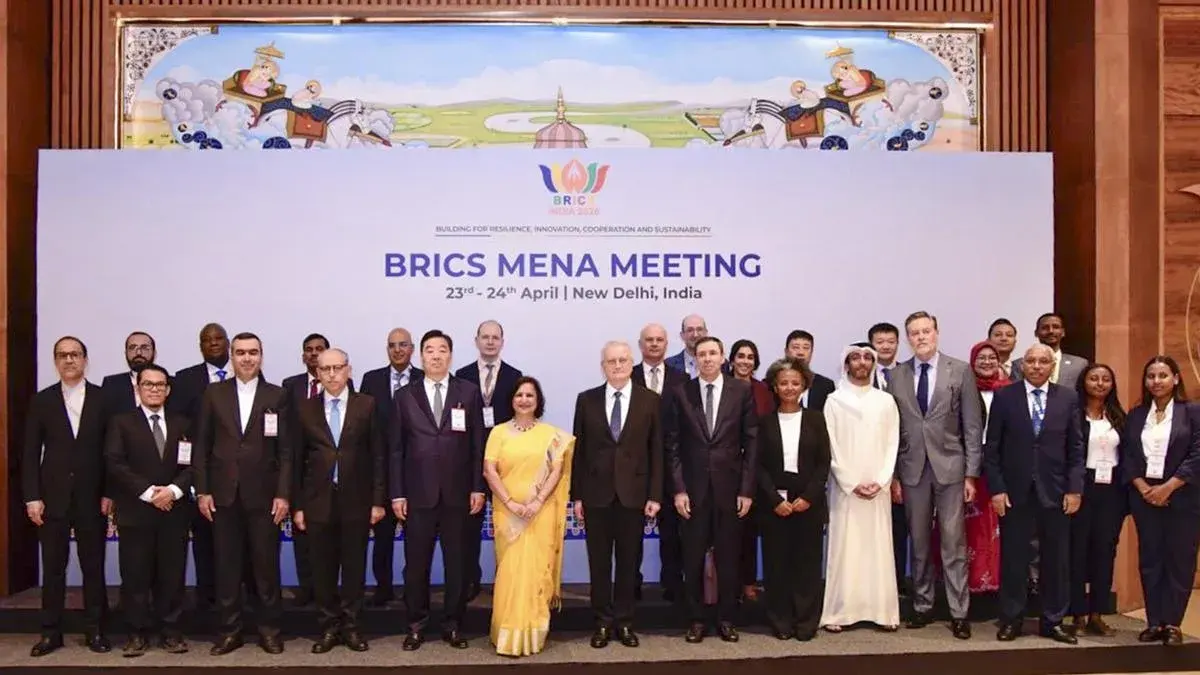
These fissures were evident at the BRICS Deputy Foreign Ministers’ meeting in New Delhi on April 23-24, which concluded without a joint statement. Delegates from the UAE and Iran clashed over West Asian conflicts, while India reportedly sought to moderate language on Israel-Palestine—an effort that surprised other members.
The resulting “Chair’s Statement” was notably restrained, focusing on humanitarian concerns, terrorism, and the Lebanon ceasefire without strong condemnations.
As BRICS chair this year, India faces a challenging path ahead, with critical Foreign Ministers’ meetings scheduled for May 14-15 and the leaders’ summit in September.
A Bilateral Future?
Across these organisations, the pattern is clear. Multilateralism is yielding to bilateral pragmatism. When deep-seated rivalries, asymmetric power dynamics, and conflicting national priorities persist, countries increasingly opt for direct, issue-specific bilateral deals.
For India and many others, this shift appears to deliver more tangible results than cumbersome, often deadlocked forums. Whether SAARC, BIMSTEC, or their global counterparts can reinvent themselves—or fade into irrelevance—remains one of the defining questions of this era.
END
RELATED NEWS
View all

Current Affairs
Sri Lankan Presidential pardons- the good and the bad
Sep 11, 2026
Current Affairs
The pros and cons of joining BRICS- the dilemma of Pakistan and Bangladesh
Sep 09, 2026
Current Affairs
Disaster in Nepal gets embroiled in geopolitics.
Sep 08, 2026
Current Affairs
Why Mecca Pact, and what does it imply for its members, Israel and India?
Aug 18, 2026