Current Affairs
Changes in East Asia's international politics
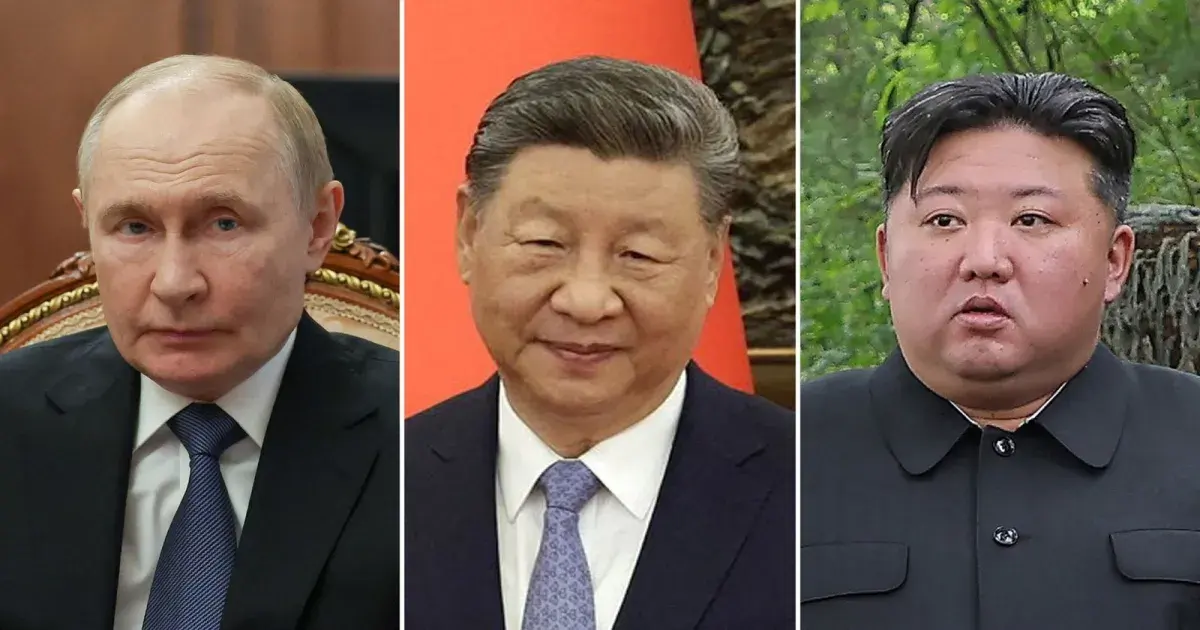
China makes up with North Korea due to the Russia factor, US steps up sanctions against China, South Korea gets tough with Japan
By P.K.Balachandran
Subtle changes are taking place in international relations in East Asia. China makes up with nuclear-armed North Korea due to the Russia factor, the US steps up sanctions against China after Trump’s friendly talks with Xi Jinping, and South Korea gets tough with ally Japan.
Changes in China-North Korea Relations
With Russia moving closer to North Korea in matters of defence, China moved to checkmate it by strengthening economic ties with North Korea. China has virtually withdrawn its opposition to North Korea’s nuclear programme.
South Korea is checkmating Japan’s newfound military ambitions despite both being part of an anti-China Western alliance. And the US, seemingly accommodative towards China’s interests during President Donald Trump’s meeting with Xi Jinping, has backtracked by putting some top Chinese companies on the banned list citing security reasons.
Xi’s Visit to North Korea
China and North Korea have been allies since the Korean War in 1950, but have had big differences over North Korea’s acquisition of nuclear weapons. But China has now taken the nuclearisation of North Korea as a fait accompli and is now patching up with it.
There has been a growing anxiety in China over the rising Russian influence on North Korea. Russia had entered into a defence partnership with North Korea, and the latter had its citizens to fight for Russia in Ukraine. It was to counter the long-term implications of growing Russo-North Korean ties that prompted Chinese President Xi Jinping to visit North Korea.
During the visit, Xi and his North Korean counterpart, Kim Jong-un, pledged to strengthen strategic cooperation and defend each other’s sovereignty. The two leaders vowed to “open a new chapter” in bilateral ties and expand exchanges and cooperation in political, economic, cultural and other fields.
Kim Jong-un said that strengthening ties with China was the country’s “most important strategic mission”. And Xi said that his country’s relationship with North Korea “stands at a new historical starting point” and that he had reached “important consensus” with Kim. Xi also pledged “unwavering” support to North Korea and its leader and called for stronger exchanges at all levels in areas such as foreign policy, law enforcement and the military.
Without mentioning denuclearisation, Xi urged the two sides to step up their strategic coordination and collaboration to “firmly safeguard their own sovereignty, security and development.”
North Korea is a very poor country though nuclear-armed. Being heavily sanctioned by the US, it is dependent on China for trade and also economic assistance. Personally, North Korean leader Kim needs Chinese assistance to protect him from his disaffected population seething with anger over shortages and brutal State control. On the other hand, North Korea needs Russia for military hardware to fight against South Korea, where 28,000 US troops are stationed.
But China would like to be North Korea’s defence guarantor n place of Russia as China has a direct interest in the defence of North Korea being a neighbour. The defence of North Korea is vital given the fact that South Korea has US troops and Japan has resumed militarisation under the present Prime Minister.
North Korea’s Military Power
Partly due to Russian assistance, North Korea is both a nuclear and conventional military power. The construction of Pyongyang’s Choe Hyon-class guided-missile destroyer, which has a displacement of up to 5,000 tonnes, was first unveiled in December 2024. It is North Korea’s largest-ever surface combatant. The second in the series, the Kang Kon, was relaunched in June the same year. The country’s third vessel is reportedly under construction at the Nampo Shipyard near Pyongyang and scheduled to be launched by October.
The Choe Hyon-class destroyers are North Korea’s first naval vessels equipped with phased-array radar and vertical launch systems (VLS), possibly with technical support from Russia. The destroyer could launch various types of ballistic and cruise missiles for anti-aircraft, anti-ship and anti-submarine missions, some having hypersonic capabilities with potential for nuclear armament.
North Korea is also ramping up its underwater fleet, regarded as one of the largest in the world in terms of numbers, and constructing its first nuclear-powered submarine, following Kim’s announcement in 2021 that the project had moved beyond the design and research phase.
By participating in the Ukraine war, the North Korean military has gained significant combat experience in unmanned aerial vehicle (UAV) warfare. It is building its own military drone fleet. Going beyond its older reconnaissance models, North Korea’s new drone fleet incorporates new features for strategic surveillance UAVs, AI-integrated suicide drones, and loitering munitions.
In 2023, North Korea unveiled the Saetbyol-4 and Saetbyol-9 strategic surveillance drones, modelled after US RQ-4 Global Hawk and MQ-9 Reaper, respectively, designed for deep-penetration intelligence gathering.
North Korea has also tested and showcased Kumsong-series tactical attack drones. These low-cost loitering munitions are built for mass production. According to North Korean media and some external analysis, the drones have AI technology capable of autonomous target detection and flight operations, with likely technical support from Russia.
Missiles and Nuclear Programme
Kim visited a factory producing nuclear missile materials, including a new solid-fuel engine to be used for the Hwasong-19 and the new “next-generation” Hwasong-20 ICBM. Kim oversaw a test of a solidfuel missile engine, which is more difficult to detect and more survivable than liquid-fuel weapons.
Kim also inspected a new plant that makes weapons-grade nuclear material, just a day before Xi’s visit to North Korea was announced.
China’s Mixed Feelings about North Korea’s Nuclear Programme
Though an ally, China has opposed North Korea’s nuclear ambitions.
It opposed North Korea’s first nuclear test in 2006, dubbing it a “flagrant and brazen” move. In 2009, when the United Nations adopted sanctions against North Korea because of its nuclear programme, China was in favour of the sanctions resolution since Pyongyang’s actions were in “disregard for the international community’s common objective.” In 2013 and 2016 as well, China condemned North Korea’s nuclear testing programmes.
However, since 2018, Beijing has been trying to repair ties with North Korea and become soft on its nuclear programme as Kim assured that he was “committed to denuclearisation.”. But Kim cannot be taken seriously because North Korea considers nuclear deterrence as vital for its defence.
South Korea-Japan Standoff
South Korea’s relations with Japan is also changing despite their membership of the US-led security alliance. South Korea and Japan were to sign a defence pact, but South Korea made it clear that there will be no pact unless Japan apologises for the atrocities committed by the Japanese in Korea during the occupation of the Korean peninsula from 1910 to 1945, leaving behind wounds that have never fully healed.
US-China Rift Again
In mid-May, US President Trump had cordial meetings with his
Chinese counterpart Xi Jinping during which China promised to buy
200 Boeing aircraft and soyabeans worth billions of dollars. Yet, the US added Alibaba, BYD, and other Chinese tech champions to its military company blacklist.
In a Federal Register notice scheduled for publication on Wednesday, the US Department of Defence designated a broad range of Chinese firms as “Chinese military companies” under Section 1260H of the National Defence Authorisation Act. These include electric vehicle makers, artificial intelligence companies, battery manufacturers, biotech firms and solar suppliers.
The designation can complicate companies’ access to US capital markets and government business, although it does not automatically trigger sanctions.
END
RELATED NEWS
View all

Current Affairs
Sri Lankan Presidential pardons- the good and the bad
Sep 11, 2026
Current Affairs
The pros and cons of joining BRICS- the dilemma of Pakistan and Bangladesh
Sep 09, 2026
Current Affairs
Disaster in Nepal gets embroiled in geopolitics.
Sep 08, 2026
Current Affairs
Why Mecca Pact, and what does it imply for its members, Israel and India?
Aug 18, 2026