Current Affairs
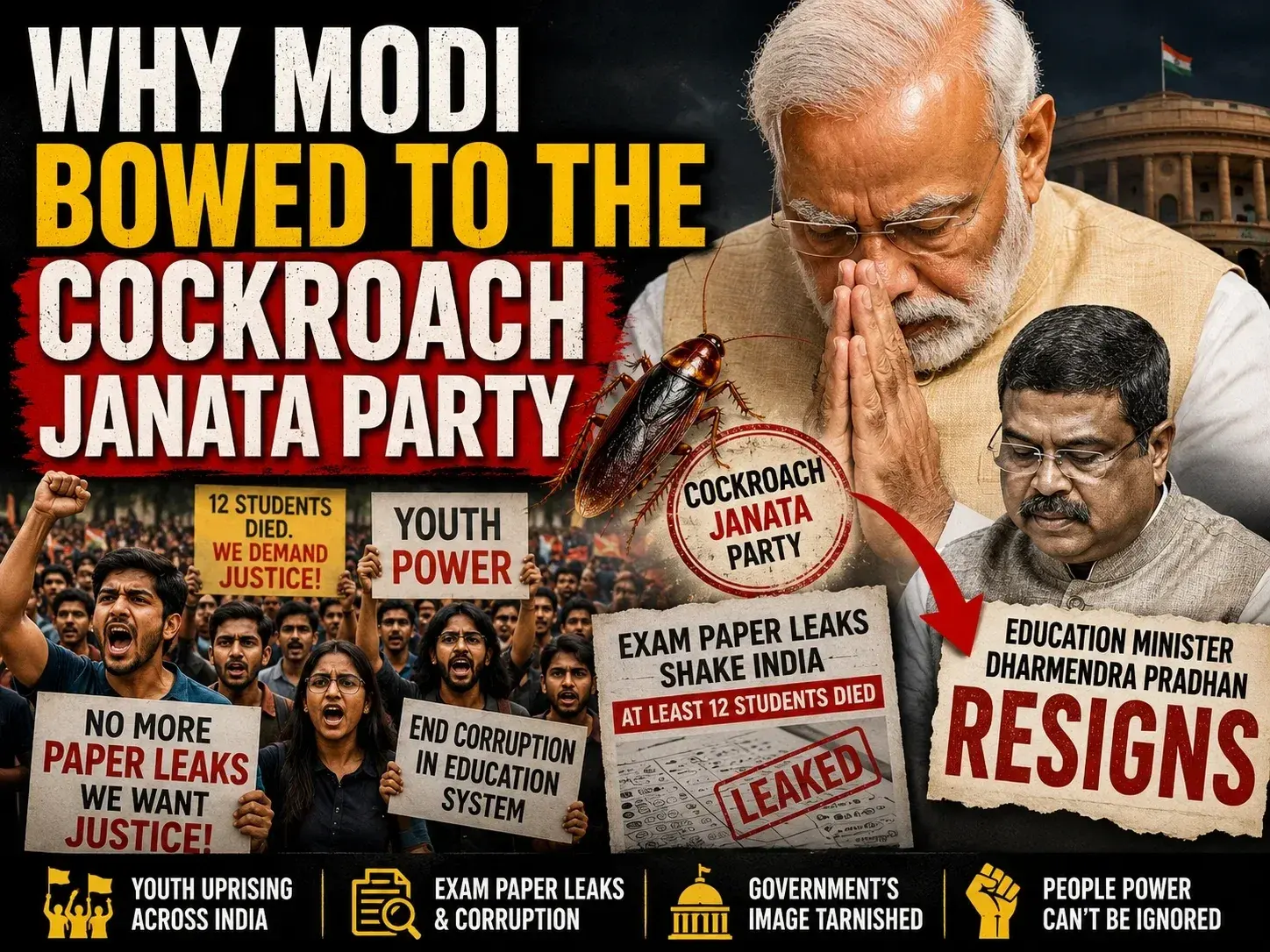
Why Modi bowed to the Cockroach Janata Party
By P.K.Balachandran
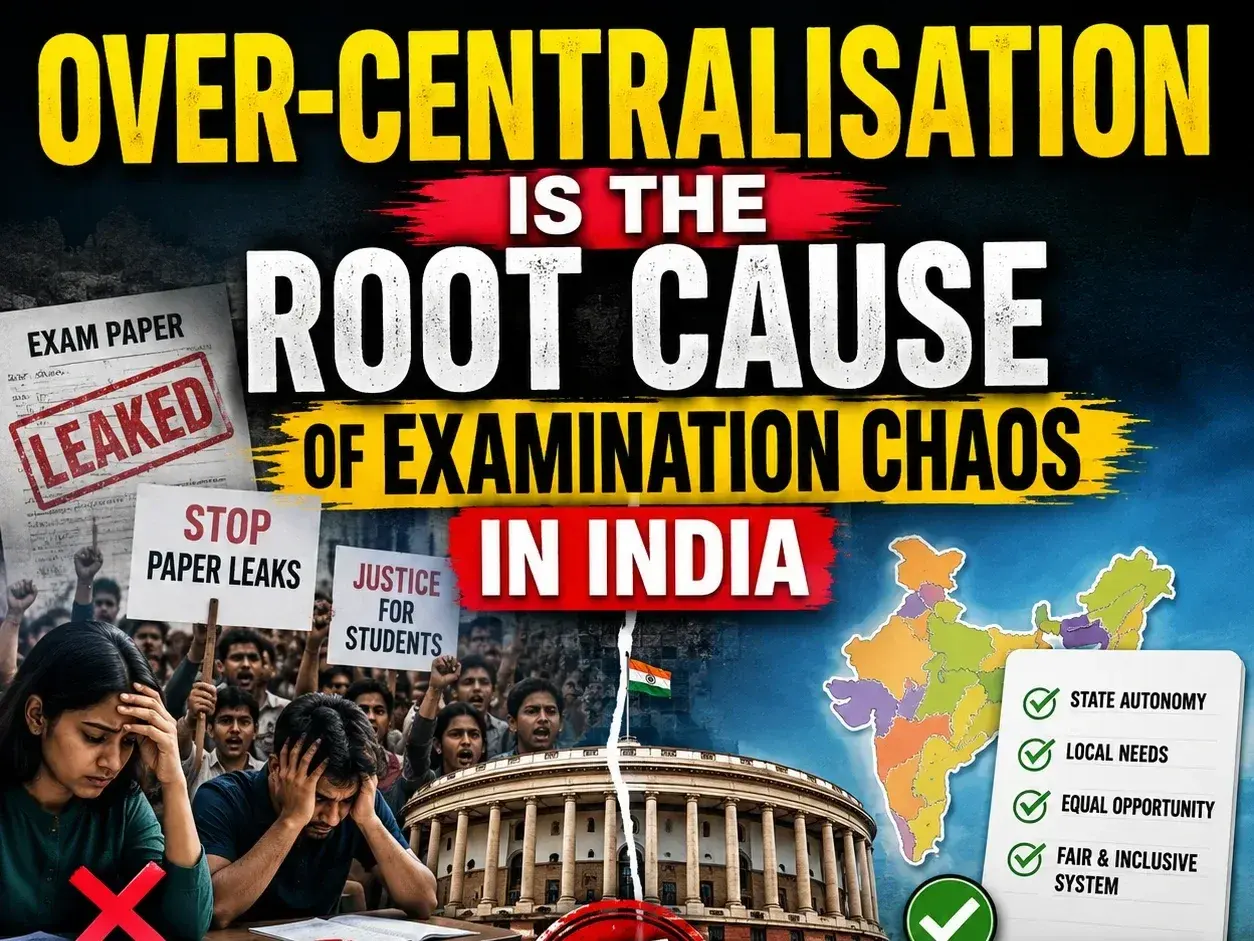
Colombo, July 26 – On Saturday, India’s Prime Minister Narendra Modi, known to be tough and unyielding to pressure, humbly gave in to the Cockroach Janata Party’s main demand, namely the resignation of the Education Minister Dharmendra Pradhan on the issue of examination paper leaks that had led to at least 12 suicides.
The CJP is but an inchoate conglomeration of students. Many of Modi’s supporters had predicted that he would allow the CJP agitation to weaken and peter out over time, recalling how he had let the farmers’ agitation brew for a whole year without lending them an ear. He has let Manipur in Eastern India boil for years not even bothering to visit the troubled border State.
On July 20, Modi tried to cow the CJP protesters down by using police and paramilitary forces armed with nailed clubs, pellet guns and tear gas shells. But when this got him bad publicity and he saw his carefully cultivated image getting tarnished both in India and abroad due to the ubiquitous social media, he saw the writing on the wall.
Agitation Affected Modi’s Constituency
Modi was clearly alarmed by the withering of his own political constituency – the youth, or more precisely, the “aspirational generation” who are educated youth from “aspirational families” from the middle classes.
It is this section of Indian society which had voted for Modi in 2014 and subsequently in 2019 and 2024, convinced that he would lead them into “a better days” or “Achche Din”, something that the people did not expect from the tired old opposition led by the Congress party.
The “aspirational generation” (known as Gen Z elsewhere in the world) and their “aspirational families”, were deeply dismayed when Modi was turning a blind eye to massive and repeated leaks of question papers set for a variety of prestigious courses or government service jobs. The consequent postponement of exams delayed study plans and employment/career prospects. Massive corruption was seen at the root of the problem.
Students in India begin studying for competitive exams right from high school and the preparatory period stretches between three to five years. Often, they take private tuition which does not come cheap. Parents and families fund private tuition. The malaise in the exam system, therefore, affected whole families. As many as 12 students had committed suicide after being told that exam papers had been leaked and that they would have to sit for them again.
The CJP’s rally and fast unto death by environmentalist Sonam Wangchuk attracted not only students but older men and women, all aspirational parents with aspirational kids. The ridiculing of Modi and his inability to rule sensibly was unbridled and relentlessly increasing in the ubiquitous social media.
It is believed that influential persons within Modi’s inner circle began advise him to soften a bit so that the agitation did not spread to other towns in North India, Modi’s main political base. North Indian States like Rajasthan, Uttar Pradesh, Bihar and Gujarat, were majorly affected by the exam paper leaks and were on the verge of replicating the CJP’s agitation in New Delhi.
Modi then sent senior Bharatiya Janata Party (BJP) leaders to the fasting CJP icon Sonam Wangchuk, to persuade him to break his fast. He also got them to meet representatives of the CJP. Following this, Wangchuk gave up his fast and Education Minister Dharmendra Pradhan resigned “on personal grounds”.
The atmosphere did cool, but the CJP decided to press for its other demands including educational and exam reforms.
Meanwhile, the opposition parties, chiefly, the Congress led by Rahul Gandhi, upped the ante and demanded an apology by Modi. There were demands for Modi’s resignation too.
Over-Centralisation
The CJP’s agitation and its impact on Modi showed the weakness of Modis’ policy of centralising everything – be it education, development, exams or welfare schemes, diluting regional autonomy – when the Indian constitution states that “India is Union of States.”
Under a centralized system, a flaw or misstep has a country-wide impact sometimes leading to a total collapse of the structure. This is what happened in the present exam paper leaks case.
Since Modi and his right-wing BJP are fixated on uniformity and a centralized structure in all matters, a change in thinking leading to decentralisation can be ruled out. Any change will have to await a change of guard, which is not likely in the immediate future.
The celebrated writer and rights activist, Arundhati Roy, wrote in “The Wire”, casting doubts on the CJP-led movement as it had little or no active support from the mainstream political parties.
But Sapatarshi Basak writing in “Indian Express”, said that if the July 20 crackdown was the state’s strategy to deter citizens from protesting, the days that followed suggested that it had the opposite effect.
“This isn’t to say that India is witnessing a new political awakening. Protests, both big and small, come and go. Some of them succeed in making the State accept their demands, but many do not culminate in any kind of institutional reform. But the story is not that people protested; it is that people who ordinarily do not do politics suddenly wanted to participate,” Basak wrote.
“For many, the exam paper leaks and the government’s handling of it made the issue intensely personal. But the size of the July 20 gathering and the decision of many to return to Jantar Mantar (the agitation site in New Delhi) despite witnessing the police crackdown raise a different question: What made people cross the threshold from observer to participant?”
“People often privately hold views they do not express, whether to avoid a backlash, to preserve social standing or to conform to what they perceive to be the majority view. A sufficiently significant public event, however, can alter that perception. Suddenly, people are willing to reveal preferences that had been hidden all along. July 20, then, may have been the first day that many felt it was socially acceptable — perhaps even worthwhile — to translate private grievance into public expression.”
Basak went on to say: “July 20, then, suggests that participation itself may deserve as much attention as the outcome of this protest. These young people may not have undergone an ideological transformation overnight, but even if only briefly, they ceased to be politically absent.”
July 20 in New Delhi represented the first sign of an apolitical people becoming political, even if only for a short while and for a single cause.
END
RELATED NEWS
View all
Current Affairs
Why Mecca Pact, and what does it imply for its members, Israel and India?
Aug 18, 2026
Current Affairs
Bangladesh PM’s August visit to India in jeopardy due to Hasina extradition issue
Aug 17, 2026
Current Affairs
Nepal’s Prime Minister walks the tightrope between India and China
Aug 14, 2026
Current Affairs
Livelihoods and indigenous cultures come under pressure in the Sino-Indian border State of Arunachal Pradesh
Aug 05, 2026