Current Affairs
Sri Lankan Presidential pardons- the good and the bad

The Supreme Court has questioned some of the President's gross actions.
By, P.K.Balachandran
Colombo, September 11 - On Thursday, the Sri Lankan Supreme Court nullified the pardon given to the convicted monk Ven.Gnanasara Thera by former President Maithripala Sirisena in 2019. The Thera was serving a six-year term for intimidation in the Prageeth Eknaligoda disappearance case and contempt of court in 2018.
The apex court said that the pardon had violated natural justice and infringed the fundamental right to equality guaranteed under Article 12(1) of the Constitution.
Sri Lanka’s Supreme Court has increasingly reviewed and struck down certain pardons as arbitrary, irrational, or violating public trust/procedure, as seen in the cases of Duminda Silva, Jayamaha, and Gnanasara Thera.
The nullification of the pardon to Gnanasara Thera has revived interest in past Presidential pardons in Sri Lanka. While some pardons had been welcomed by the public, others were not. Among the pardons that had been welcomed, were mass releases given on religious holidays such as Vesak, Poson, or Christmas.
Ninety-four inmates were pardoned in 2021 (though the inclusion of the high-profile murderer Duminda Silva among them shocked the people); 388 were pardoned on Vesak Day in 2025 by the current President Anura Kumara Dissanayake. Hundreds were pardoned for Christmas or other occasions for minor offences.
In 1981, President J. R. Jayewardene pardoned W. K. Sunil “Gonawala Sunil”), who had been convicted of rape. In 2010, President Mahinda Rajapaksa pardoned J. S. Tissainayagam, a Tamil journalist, who was convicted for 20 years for writing some controversial articles. Tissainyagam was pardoned following international pressure. It was widely welcomed.
In 2014, five fishermen from Tamil Nadu (sentenced to death on drug charges) were pardoned by President Mahinda Rajapaksa. In 2015, Sarath Fonseka, the war-time Army Commander who defeated the LTTE, was pardoned by President Maithripala Sirisena with restored rank, rights, medals, and pension. This again got plaudits.
In 2019, President Sirisena pardoned the death row convict Don Shramantha Jude Anthony Jayamaha, who had murdered Swedish teenager Yvonne Jonsson in Colombo. But in 2024, the Supreme Court ruled that the pardoning of Jayamaha was “arbitrary and invalid”.
In 2020, President Gotabaya Rajapaksa had pardoned Sunil Ratnayake, a former Army sergeant who had been convicted and sentenced to death for the massacre of 8 Tamil civilians, including children in Mirusuvil in Jaffna during the war in 2000.
In 2021, President Gotabaya Rajapaksa pardoned Duminda Silva, a former MP, who in 2011 had murdered a rival MP, Bharatha Lakshman Premachandra. This again was a shocker. But in January 2024, the pardon was overturned by the Supeme Court.
The Unique Case of Edward Henry Pedris
The pardoning of freedom fighter Diyunuge Edward Henry Pedris (better known as Henry Pedris) who had been executed in 1915 on a false charge of treason, by President Ranil Wickremesinghe on September 12, 2024 was unique, in as much as it was posthumous.
The pardon was granted in accordance with the powers vested in the President under Article 33(h) of the Constitution and was officially announced through a special gazette issued on September 12, 2024.
Captain Pedris, a respected military officer and social activist, was wrongfully put to death on July 7, 1915, following a court-martial that was convened by a proclamation from the then Governor of Ceylon, Robert Chalmers, on June 25, 1915. His execution was part of a series of repressive actions by the colonial administration during the 1915 Sinhala-Muslim riots, where he was falsely accused of inciting racial violence.
Born on August 16, 1888, in Galle, Pedris held the rank of Captain in the Ceylon Defence Force and served in the Colombo City Guard Force. Beyond his military service, he was a notable social figure in Ceylon of the day. His execution by the British authorities remains one of the most controversial moments in the colonial history of Sri Lanka.
The presidential pardon serves as a formal recognition of the miscarriage of justice that took place over a century ago.
Pedris was sentenced to death by a firing squad for “attempted murder.” The shots that he fired in self-defence into a mob that was converging on his shop in Pettah, had only injured a policeman. No one was killed.
Pedris, then only 27, was executed by an army firing squad in Welikade prison on July 7, 1915. The unconscionable execution was part of the widespread repression the British rulers resorted to in order to control the Buddhist-Muslim riots, which they suspected were part of a sinister scheme to overthrow them.
Pedris was executed primarily to set an example to those among the newly-emerging Sinhalese-Buddhist elite who had developed a sense of cultural and religious nationalism with a political undertone.
However, contrary to the expectation of the British, Pedris’ brutal execution did not frighten the emerging Ceylonese political elite but only spurred them on. Independent Ceylon remembered the young martyr by naming places after him and issuing a postage stamp in his honour.
But the indefensibility of the British decision to execute him was not publicised. This lacuna was going to be filled by a three-member cabinet-appointed investigating committee chaired by Anil Gunarathna, a retired Supreme Court Judge.
Shooting and the Riots
Pedris was from one of the richest families in Ceylon. And like his class, was by no means anti-British. In fact, he was a member of the Colombo ‘Town Guard’, a force raised by the government to help the police in emergencies.
The Sinhala-Muslim riots had started in Kandy at the end of May 1915, and had spread to Colombo. It wreaked havoc in Pettah, the town’s main market. On 1 June, when Pedris was at his shop on Main Street, Pettah, a Muslim mob, incensed by the destruction of their shops, was seen advancing towards his shop. Pedris came out, whipped out a gun and fired six shots into the crowd. One of the bullets hit police constable Seneviratne in the head. Seneviratne survived, but the charge of attempted murder was slapped on Pedris.
The police raided his house and seized a cache of arms and ammunition. He was produced before a Court Martial and sentenced to death. The sentence, grossly out of proportion to the crime, was handed down despite contradictory evidence about the time at which the shooting took place. Further, the trial was held under Martial Law even though the shooting had taken place before Martial Law was imposed.
Appeals for clemency to the Governor Sir Robert Chalmers from the highest personages in Ceylon fell on deaf ears. Chalmers and the Inspector General of Police, Herbert Layard Dowbiggin, wanted to make Pedris’ swift execution a lesson for the other ‘ringleaders’ of the ‘anti-British’ movement such as D.S. Senanayake, F.R.Senanayake, D.B.Jayatilaka, Dr W.A.de Silva and Dr. C.A. Hewavitharana. Like Pedris, these members of the emerging Ceylonese elite were striving to foster a new cultural nationalism based on Sinhala-Buddhist ideals. They were among 86 leading lights of the anti-drink ‘Temperance Movement’ who were imprisoned in Welikade for ‘waging war against the King’ and abetting the riots against ‘His Majesty’s Moorish (Muslim) subjects.’
The Execution
On the day of the execution, at 7.30 a.m., the man in charge, Additional District Judge Arthur Charles Allnut, an Oxford University graduate and a member of the Ceylon Civil Service, lined up the 86 Sinhala-Buddhist notables in the verandah outside L-Hall in Welikade Prison, so that they could watch Pedris walk to his death.
According to Jayasena Dahanayaka, author of “Deshabandhu F.R. Senanayake (Vijitha Yapa, 2011)”, Pedris, dressed in his Town Guard uniform, marched with his head held high and chest forward. At the site of the execution, behind the jail, Pedris was made to sit on a chair. He had just one request to make: he wanted to be shot, not by Christian or European soldiers, but by Asians. Allnut agreed and ordered the men of the 28th Battalion of the Punjab Regiment, which had been brought from India to help quell the riots, to carry out the sentence. Pedris faced the Punjabis fearlessly, rejecting a blindfold offered to him.
Sharp at 8 a.m., gunshots rang, signalling the end of the young man. Twenty minutes later, Allnut arrived at L-Hall with a posse of prison staff carrying the blood-splattered chair on which Pedris had died. Showing the chair to the Ceylonese leaders lined up there, Allnut declared: “Any person who commits an act of treason against the government by forming organisations like the so-called Anti-liquor Movement, will have to die facing such a fate as this.”
An infuriated F.R.Senanayake shot back: “Are you such a cowardly and timid nation to shoot one of our young men and bring the chair splashed with his blood? Aren’t you ashamed to parade the results of your foolish and stupid act to us when we are sorrowing at the demise of one of our people? Each drop of blood of this young man Pedris, who I treat as one of my own, should be considered as sacrificed in the name of the nation. If the stream of blood wetting that chair is counted in drops of blood, the British will definitely have to pay compensation.”
The killing of Pedris and the liberal use of the charge of treason in dealing with rioters and suspected instigators made the British very unpopular among the politically conscious sections of Ceylon. Even the British lawyer, Eardley Norton, dubbed this tendency as ‘Treasonitis’, a new disease afflicting Colonial Establishments all over the world.
Edmund Hewavitharana, brother of Buddhist revivalist Don David Hewavitharana (who later became Anagarika Dharmapala) was sentenced to ‘penal servitude’ for inciting a mob to attack ‘Chrystal Palace ’, a huge Muslim emporium on Keyzer Street, Pettah. Constable Senanayake was sentenced to death for extorting money and jewellery from a Muslim businessman.
Punishments out of proportion to the crime, such as these, eventually turned the leaders of the social reformist ‘Temperance Movement’ into national political leaders demanding self-rule, albeit in a non-violent, gradualist and constitutional ways. Their efforts culminated in the British withdrawing from Ceylon and D.S. Senanayake becoming independent Ceylon’s first Prime Minister in 1948.
END
RELATED NEWS
View all
Current Affairs
Denial of the right to vote is not new in India
Oct 01, 2026
Current Affairs
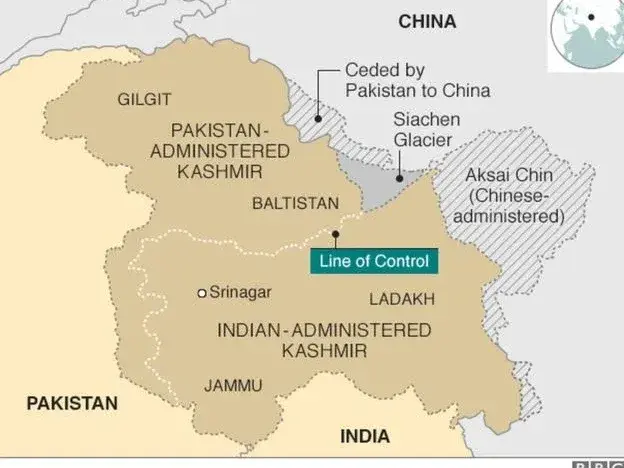
The 1948 UNSC resolution on Kashmir was in India’s favour
Sep 25, 2026
Current Affairs
The pros and cons of joining BRICS- the dilemma of Pakistan and Bangladesh
Sep 09, 2026
Current Affairs
Disaster in Nepal gets embroiled in geopolitics.
Sep 08, 2026