Current Affairs
Militarised drug control system has failed in Sri Lanka
By P.K.Blachandran
Colombo, July 8 – A persistent issue afflicting Sri Lankan prisons came up again last Sunday when a riot over drugs claimed the lives of 26 prisoners including seven jail officials. Initial investigations showed that the fight had started when a few prisoners leaked information of efforts to smuggle drugs into the prison to the jail authorities.
"This had angered a second group of inmates who were supporting the smuggling. When prison officials attempted to intervene it escalated with the prisoners attacking with poles. The police had to fire to protect themselves,” Minister of Justice Harshana Nanatakkara told parliament.
The Negombo prison housed about 2,400 inmates though there was room only for about 650, according to the Committee for Protecting Rights of Prisoners. As many as 734 prisoners were moved to four other prisons on Tuesday morning to reduce the severe overcrowding, the Department of Prisons said.
Previous prison violence in Sri Lanka includes a riot in November 2020 that left 11 inmates dead, and a prison riot in 2012 in Colombo that left 27 dead.
Militarised Approach to Drug Control
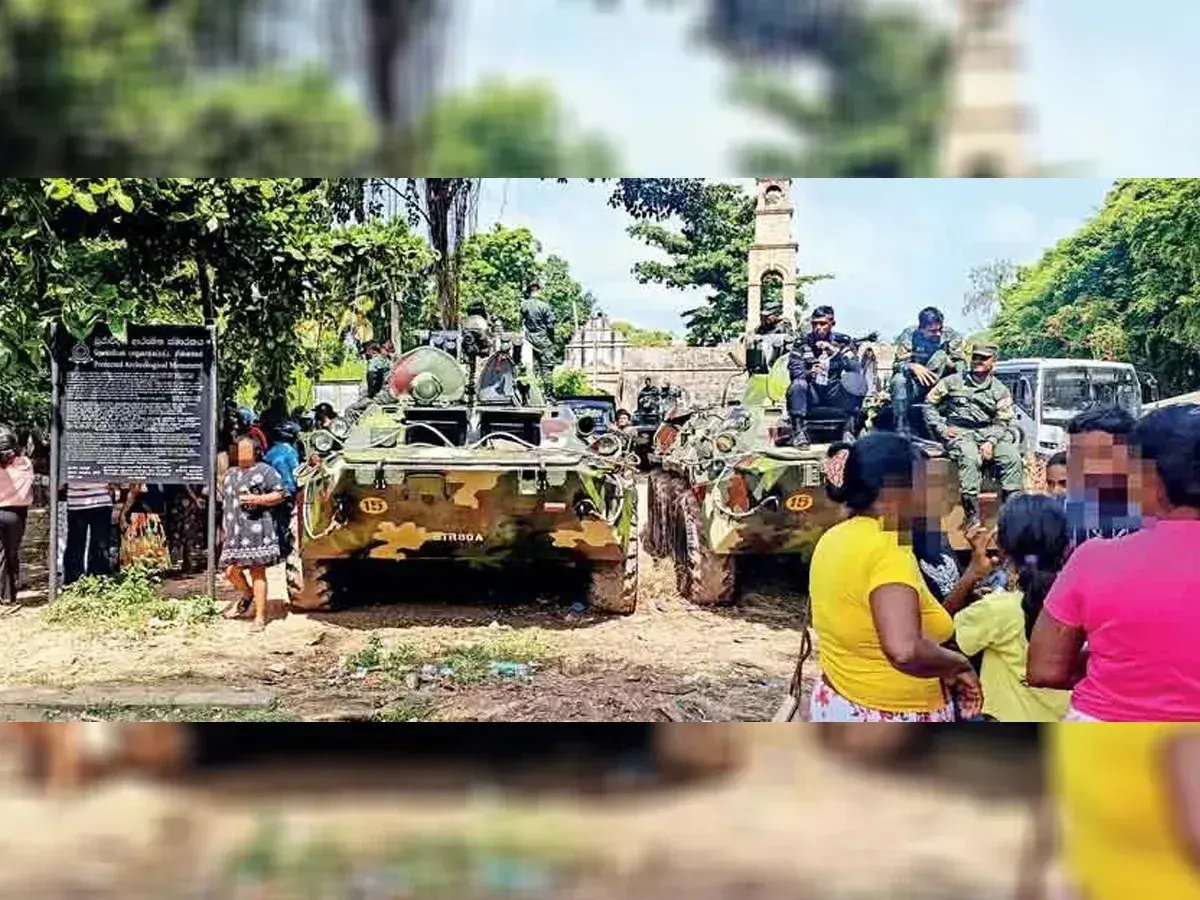
Over the past decade, the government of Sri Lanka has adopted a militarised approach to drug control, with the military playing an increasingly significant role in the ‘war on drugs’. This includes not only participation in anti-drug trafficking operations, but also in drug treatment and prevention. The militarisation of drug control accelerated after the November 2019 election of President Gotabaya Rajapaksa, whose election manifesto prioritised eradication of “the drug menace.” Since then, the President formalised the military’s involvement in drug control.
Drug use is highly stigmatised, with the government and the media frequently misrepresenting people who use drugs as “criminals and a public threat,” thereby marginalising them. This dehumanising narrative enables widespread violation of the human rights of people who use drugs, with little scrutiny., says the website “Ceylon Public Affairs” (https://ceylonpublicaffairs.com/sri-lanka-anti-drug-campaign-2025-new-laws/).
An analysis of Sri Lanka’s drug control laws reveals that the legal framework is ill-equipped to effectively address drug control issues, and contains contradictory provisions that result in arbitrary and disproportionate outcomes. Furthermore, laws are commonly overridden through ad-hoc administrative circulars and instructions, undermining legal certainty and transparency.
Domestic legislation criminalises import, export, trafficking, and possession of a wide variety of narcotic substances. It envisages severe and disproportionate penalties, up to life imprisonment or even death for possession and trafficking of as little as two grams of heroin.
The severity of the penalties depends on the quantity of drugs. The possession of smaller pure amounts of drugs is punished with imprisonment or a fine, with judges enjoying significant discretion.
As courts are overburdened and under-resourced, people accused of drug-related offences risk spending weeks or even months in pre-trial detention. For this reason, once brought to court upon arrest, people are incentivised to plead guilty (irrespective of whether they actually committed any offence). This typically leads to them being fined and released; however, those who cannot afford the fine will be imprisoned for up to six months – effectively “criminalising poverty.”
Certain Drug Offences Are Not Bailable
Certain drug offences are not bailable, resulting in mandatory pre-trial detention – which also constitutes a violation of the right to liberty. Because of under-resourcing and administrative hurdles, the trial can be significantly delayed, with people languishing in pre-trial detention for months. In turn, this leads to severe overcrowding of remand prisons.
Persons in prison frequently accused the police of planting drugs to frame them; while torture and ill-treatment in police custody, specifically against persons arrested for drug offences, is widely documented. Women, in particular, reported being subjected to invasive body searches upon arrest. It is also common for persons detained for drug offences to be harassed and targeted by police officers after their release from prison, the website said.
Lack of oversight of investigation processes enables officers to interfere in drug-related cases by falsifying crucial details with regard to the timing of the arrest, tamper with the chain of custody for drugs seized, and intentionally delay trials.
Inhuman conditions of detention
The large number of persons incarcerated for drug offences has led to the severe overcrowding of all prison institutions in Sri Lanka, with prisoners enduring inhuman conditions of detention and degrading treatment and punishment.
Due to the outbreak of COVID-19 in prisons, the government had allowed the release of people imprisoned for the non-payment of fines and minor offences. Guidelines were also issued in January 2021 to State Counsels instructing them not to object to bail in cases of possession of less than 10 grams of heroin if the person has been in remand for over six months, investigations have been concluded, and other criteria are met.
However, in practice, arbitrary conditions allow State Counsels to object to bail. This has led to the award of bail in drug-related cases being restricted.
Militarised Drug Detention Centres
There are both state-administered and private drug rehabilitation and treatment centres in Sri Lanka. The two most widely known centres – “Kandakadu” and “Senapura” – were formerly used by the military to ‘rehabilitate’ alleged ex-combatants following the conclusion of the armed conflict in 2009, and continue to be operated by the military.
The DrugDependantPersons (Treatment and Rehabilitation) Act of 2007 empowers police officers to send any person suspected of using drugs for a medical assessment, and produce the person before a Magistrate. The Magistrate can send the person for compulsory drug rehabilitation, either on the basis of a medical assessment of ‘’drug dependence’’, or as a punishment for an offence under the Poisons, Opium and Dangerous Drugs Ordinance. Section 10 of the aforementioned Act allows the police to arrest persons without evidence and arbitrarily detain them, leading to them being sentenced to compulsory drug rehabilitation.
Community Based Corrections (CBC) Act
The Community Based Corrections (CBC) Act provides alternatives to incarceration, whereby a non-custodial sanction can be imposed on persons convicted for minor offences for which imprisonment is not a mandatory penalty, and for offences for which the penalty is less than two years’ imprisonment.
However, when persons arrested for drug-related offences have a history of drug use or prior offences, the judge may require the individual to undergo mandatory drug treatment as part of the conditions of the CBC order.
Although the Act requires the individual to consent to the CBC order, consent cannot be deemed as free – as refusal to undergo treatment would result in the imposition of a prison sentence. Thus, even in this case drug treatment meets the threshold of arbitrary detention.
Ill-treatment and abuse in rehabilitation centres
Violence is widespread in the rehabilitation centres, either as a form of ‘treatment’ or as punishment. Among others, former detainees report beatings, denial of food, strenuous physical exercise, being tied to trees for long periods of time, collective punishment, and other forms of humiliation.
There is little (if any) post-release support or after-care to support re-integration. People who have undergone compulsory rehabilitation consistently report facing stigma as well as harassment by the police, which in turn hinder social and community re-integration and livelihood opportunities.
Prison Overcrowding and Judicial Backlog
Human rights reports have highlighted the severe prison overcrowding in Sri Lanka caused by drug-related detentions, with many accused individuals waiting years for trial. Sri Lanka’s judicial backlog slows the process of justice, weakening deterrence and worsening social costs.
Analysts argue that the focus has historically fallen on low-level users and small-scale traffickers rather than the financiers and networks controlling supply chains. Even with the new laws, this pattern risks persisting unless the system changes its priorities to target major drug trafficking networks.
Rehabilitation centres, both public and private, struggle with underfunding and lack of trained counsellors. This shortage of resources directly impacts the effectiveness of drug addiction treatment Sri Lanka can provide.
For Sri Lanka drug restrictions to truly work, addiction must be treated as a public health approach to addiction, not merely a criminal issue.
Linked to Unemployment
Likewise, without addressing domestic demand especially among unemployed or disaffected youth the market for narcotics will persist. Youth vulnerability, shaped by economic frustration, peer influence, and lack of recreational outlets, continues to feed the cycle of dependency.
The State should expand rehabilitation facilities across districts, providing accessible, affordable treatment and post-recovery support. Investment in drug treatment centers must be prioritized to handle the volume of cases effectively. The school education system should embed drug awareness and life-skills programmes into curricula, delivered in both Sinhala and Tamil to ensure inclusivity. Youth drug prevention Sri Lanka initiatives must start early to build resilience against peer pressure.
Community policing and local leadership must be mobilised to buildtrust peopleshould see law enforcement as partners, not threats. This approach enhances the effectiveness of drug enforcement mechanisms by fostering cooperation.
Monitoring Systems
Monitoring systems should track real social indicators: drug prevalence rates, school attendance, family stability, and crime data. This evidence-driven approach would reveal whether the anti-drug campaign produces meaningful, long-term effects.
Livelihood development plays an essential role in drug prevention. In communities where trafficking and drug use are driven by economic hardship, alternative income opportunities are vital. Government and private partnerships can create vocational programmes for at-risk youth, steering them away from the narcotics economy. Such interventions not only address poverty but also foster self-worth and community engagement—core elements of social recovery.
Public-private partnerships can amplify rehabilitation efforts by creating safe, stigma-free environments for discussion and reintegration. Civil society and faith-based organisations complement government efforts in community recovery.
Above all, transparency and accountability are critical for maintaining public confidence. Public trust in the anti-narcotics drive depends on whether enforcement is perceived as fair and impartial. Allegations of selective targeting or political influence can undermine legitimacy. Therefore, the government must publish transparent data on arrests, convictions, and rehabilitation outcomes.
Oversight mechanisms, including parliamentary committees and independent watchdogs, should ensure the policy remains balanced between control and compassion.
Maritime Trafficking Routes Must Be Blocked
Sri Lanka’s geographical position as a maritime hub makes it vulnerable to transnational trafficking, especially via sea routes. The island nation’s location along major shipping lanes creates opportunities for drug trafficking that require constant vigilance. Without stronger international coordination and intelligence-sharing, enforcement efforts may only relocate the problem rather than solve it. Cross-border drug monitoring becomes essential for disrupting supply chains effectively.
Long Way to Go
The overall question is “Will Sri Lanka’s new narcotics restrictions yield real social change?” There is no definitive answer yet. There is progress in law and enforcement, but less evidence of transformation in everyday life. The crackdown has raised awareness and disrupted supply lines, but sustainable results hinge on what follows. If the system continues to rely mainly on punishment, the cycle will repeat: prisons fill, users relapse, and trafficking adapts.
END
RELATED NEWS
View all

Current Affairs
Sri Lankan Presidential pardons- the good and the bad
Sep 11, 2026
Current Affairs
The pros and cons of joining BRICS- the dilemma of Pakistan and Bangladesh
Sep 09, 2026
Current Affairs
Disaster in Nepal gets embroiled in geopolitics.
Sep 08, 2026

Current Affairs
Why Mecca Pact, and what does it imply for its members, Israel and India?
Aug 18, 2026