Latest News
Lanka named among global trade hubs in White House report
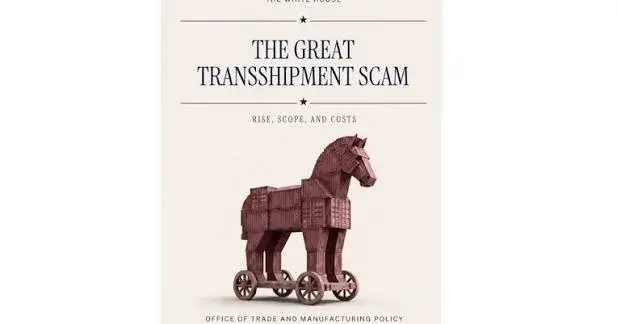
Sri Lanka has been identified as one of more than 40 countries that have gained importance as manufacturing, logistics and trade hubs amid the restructuring of global supply chains following the United States’ imposition of tariffs on Chinese goods.
The country is named in a report by the White House Office of Trade and Manufacturing Policy titled The Great Transshipment Scam, which examines changes in global trade flows since the US began imposing tariffs on Chinese imports in 2018.
The report argues that the tariffs have contributed to the restructuring of supply chains, with companies increasingly diversifying production and distribution channels. As a result, goods originating in higher-tariff jurisdictions, particularly China, can reach the US market through intermediary countries.
However, the report stresses that changes in trade patterns do not, by themselves, indicate illegal activity. It notes that shifts in production and exports may result from legitimate foreign investment, manufacturing expansion, supply-chain diversification and the relocation of industrial activity following changes in US trade policy.
Sri Lanka is classified under what the report calls “Tier 3” economies, comprising smaller countries that can offer strategic geographical locations, logistics infrastructure, warehousing facilities, free trade zones, competitive labour costs and access to international markets.
The report also groups Sri Lanka with Bangladesh, Cambodia, Laos and the Philippines under the category “Southeast Asian Microhubs”. It says countries in this group can serve various functions in modern supply chains, including light manufacturing, export processing, assembly and regional distribution.
The document lists Sri Lanka alongside countries including India, Vietnam, Malaysia, Thailand, Singapore, the United Arab Emirates, South Korea, Japan and Brazil, each playing different roles in global trade networks ranging from manufacturing and assembly to logistics, warehousing and distribution.
According to the report, China’s response to US tariffs has involved deeper integration with regional and global manufacturing networks. Production, assembly and logistics activities have increasingly been spread across Asia, the Middle East, Latin America and other regions, resulting in increasingly interconnected supply chains.
The report estimates that trade exposure associated with these evolving supply chains could range from US$40 billion to US$303 billion annually, depending on the methodology used. It argues that the changes could have implications for US tariff revenues and the competitiveness of American manufacturers.
The Trump administration has proposed strengthening customs enforcement through artificial intelligence-based systems capable of analysing global trade and supply-chain data to identify potential tariff-evasion risks.
The report also points to plans to tighten customs compliance requirements and strengthen mechanisms for monitoring international trade flows.
Despite Sri Lanka’s inclusion, the report makes no specific allegation against the country and does not cite any investigation, enforcement action or financial estimate relating directly to Sri Lanka.
Instead, Sri Lanka is listed among a wider group of countries that have assumed greater significance in global supply chains as businesses adjust their manufacturing and distribution networks in response to geopolitical and economic changes.
RELATED NEWS
View all

Latest News
New Bill seeks to eliminate rabies and regulate dog ownership in Sri Lanka
Sep 24, 2026

Latest News
Screen time rising among Sri Lankan preschool children, Health Ministry warns
Sep 24, 2026
Latest News
China to deploy meteorological early-warning system in Sri Lanka
Sep 24, 2026

Latest News
Government moves to ease prison overcrowding as remand population falls, Justice Minister says
Sep 23, 2026