Cover Story, Volume 2
Illicit firearms chipping away at the State - 2
March 21, 2019
The danger of firearms in the wrong hands became evident, last Friday, when a lone gunman mowed down 50 persons in a mosque and left many others injured in Christ Church, New Zealand. Armed with an automatic weapon, he carried out the barbaric attack, which he livestreamed, much to the horror of the civilized world. The massacre has jolted New Zealand into reviewing its gun policy.
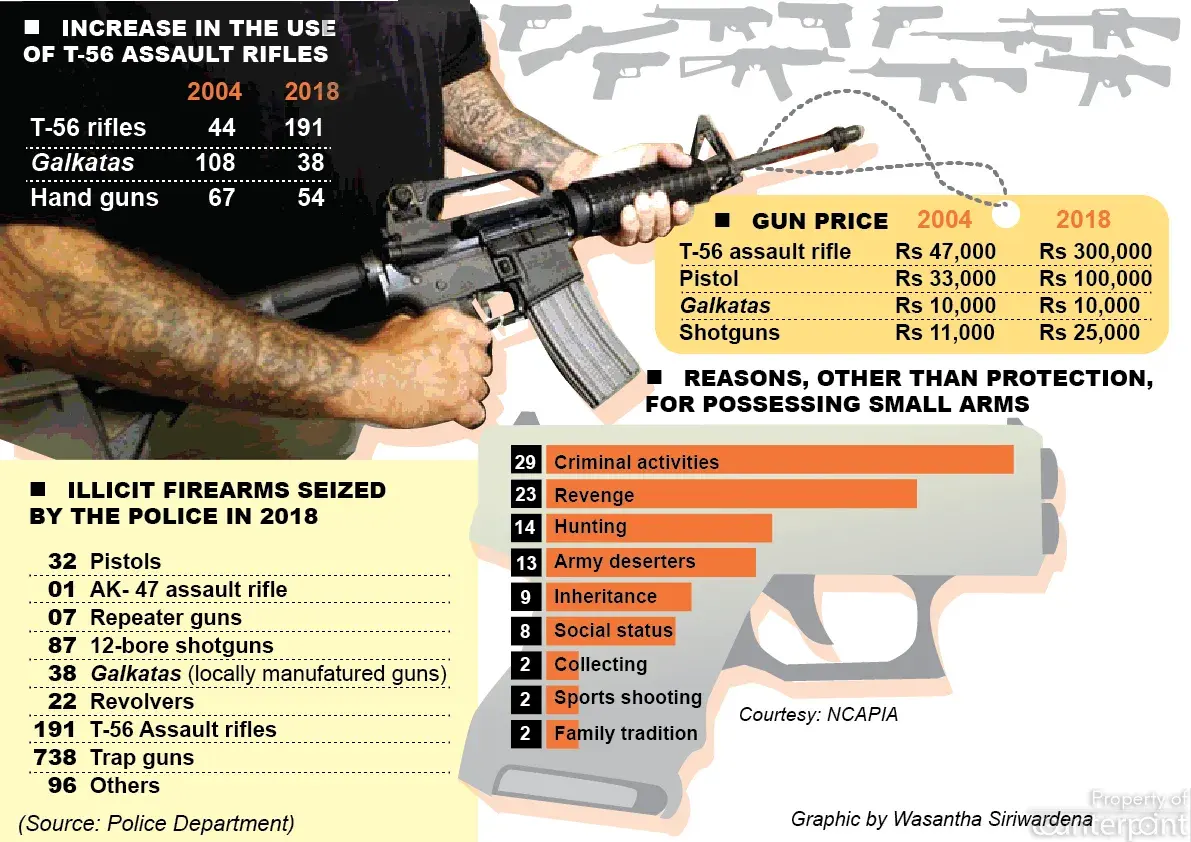
Most of the Sri Lanka Police crime busters, interviewed by Counterpoint, were of the opinion that the available information indicated that illicit firearms accounted for the majority of the violent incidents, where human lives were lost. In 2018, there were as many as 3,140 armed crimes in this country, according to the police.
The gravity of the problem of the proliferation of illicit firearms became clear recently, when the Special Task Force (STF) detected an arms cache belonging to a confederate of drug lord cum contract killer Madush Lakshitha aka Makandure Madush. Among the weapons, seized by the elite police commandos from his hideout in Rawatawatte, on March 11 were a T-56 assault rifle, two pistols, 2,803 rounds of T-56 ammunition and 12 FG type bullets. A many as 177 kilos of heroin were also taken into custody.
TYPES OF ILLCIT WEAPONS IN SRI LANKA AND THEIR PRICES
Arms seizures by the police over the last several decades indicate that the illicit weapons in circulation include both military and non-military types. Only the military-type weapons usually receive media attention and others become mere statistics.
The common types of illicit weapons in Sri Lanka:
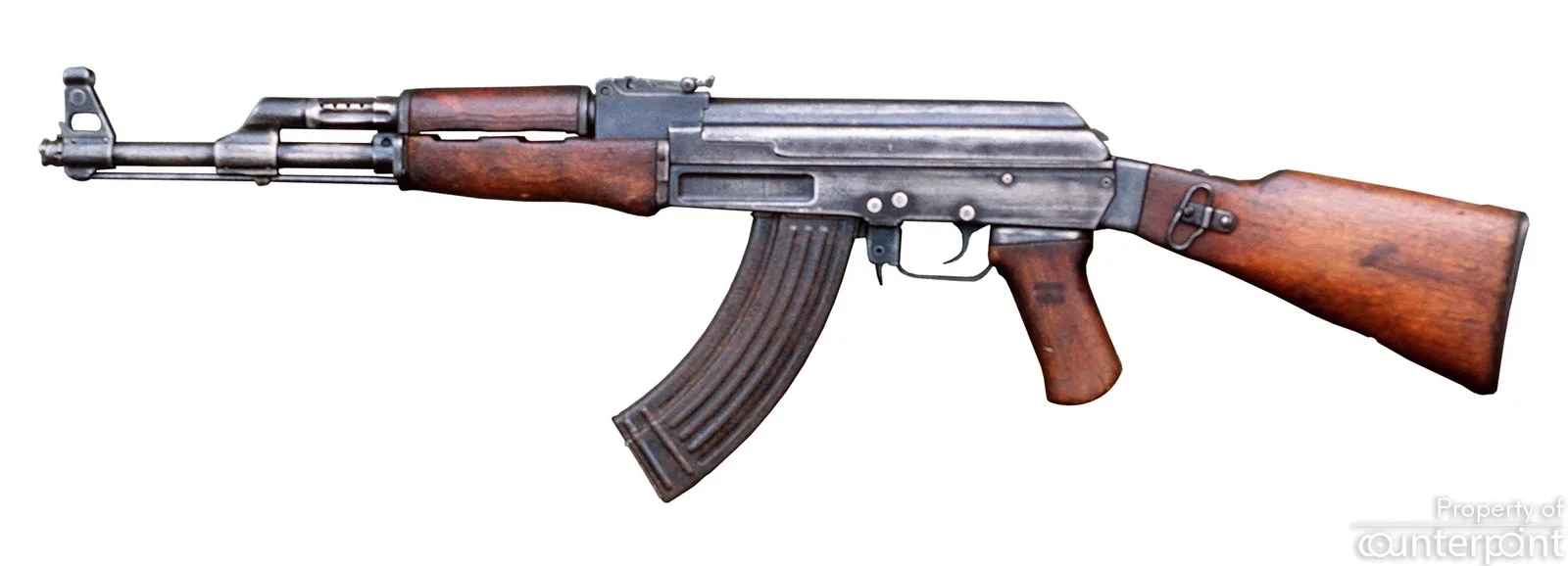 AK – 47
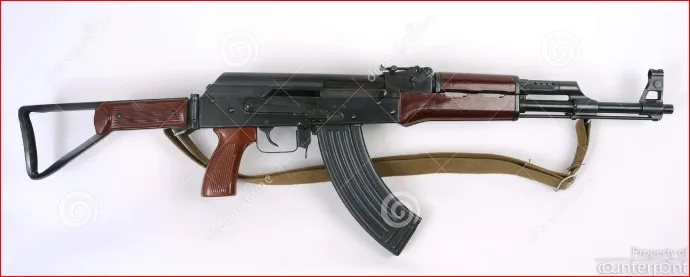 T-56
Interestingly, there was only a single AK-47 rifle among the 1,212 weapons seized by the police in 2018 whereas there were as many as 191 T-56 rifles besides 76,849 rounds of ammunition.
SCRATCHING THE SURFACE
The police believe that the weapons, taken into custody, are only a fraction of those in the hands of criminals, and tens of thousands of sophisticated arms which belonged to the LTTE are lying buried in the North and the East or perhaps even in Colombo. It is believed that most of the LTTE’s arms and explosive caches have not been detected yet.
Some of the high-ranking police officers, interviewed by Counterpoint, were of the opinion that it was not possible to give even a ballpark figure as regards the number of illicit weapons in the country. “We are groping in the dark,” one of them said, noting that not even a national survey on illicit firearms conducted in 2006-2007 had helped shed much light on the issue.
In April 2016, the Terrorism Investigation Division of the Sri Lanka Police, acting on a tip-off, found, in a house, at Chavakachcheri, one of the former LTTE strongholds, a suicide jacket, four side chargers, three parcels of about 12 kilos of TNT (plastic explosives) two parcels of 100 rounds of 9 mm pistol ammunition and two battery packs used to detonate side chargers.
In September 2013, four years after the conclusion of the war, the police chanced upon 120 kilos of TNT concealed in the chassis of a lorry, which had been taken into custody on suspicion and kept near the Kotahena police station for 17 long years! The lorry was first found near Sama Viharaya, Kotahena, in 1996, and an initial search yielded 75 kilos of TNT, in secret compartments inside the vehicle’s fuel tank. The truck was later taken to a place near the Kotahena police station. The second detection was made while it was being dismantled for scrap iron.
THE APPOINTEMENT OF NCAPISA
The proliferation of illicit firearms and the attendant increase in the crime rate prompted the Chandrika Kumaratunga government to appoint the National Commission against Proliferation of Illicit Small Arms (NCAPISA) in 2005. The move was in keeping with international best practices recommended by the UN. The commission was tasked with the coordination of the approaches to small arms-related problems in the country.
The NCAPISA conducted a comprehensive national survey from Nov. 2006 to April 2007, covering all parts of the country except those held by the LTTE, at that time. The aim of the survey was to ‘provide accurate information to the NCAPISA and the government of Sri Lanka, in general, on the small arms situation in the country as the basis for taking measures to strengthen existing small arms controls, prevent armed crime, increase community security, and eliminate illicit trafficking.’ It was expected to help formulate a National Small Arms Policy.
NCAPISA DEFINITION OF SMALL ARMS
The NCAPISA defined small firearms as follows for the purpose of its survey:
“There are many definitions of small arms and light weapons (SALW). The 1997 UN Panel of Governmental Experts on Small Arms broadly defines them as follows: ‘small arms are those weapons designed for personal use, and light weapons are those designed for use by several persons serving as a crew.’ This definition focuses on military-type weapons. For the purpose of this survey a broader definition of small arms is used. This term is used to cover all types of firearms – from crude homemade weapons, such as trap guns, galkatas and muzzle-loading guns, to shotguns, hunting rifles, hand guns (such as pistols and revolvers) and military-type small arms including self-loading rifles (SLRs), assault rifles, sub-machine guns and light machine guns. The UN definition also includes munitions and ammunition. This is also covered in this report, particularly ammunition of types used in all of the identified types of small arms, as well as hand grenades. This survey does not cover light weapons such as mortars, portable anti-aircraft guns, rocket propelled grenades and portable anti-tank and anti-aircraft missiles.”
T-56
Interestingly, there was only a single AK-47 rifle among the 1,212 weapons seized by the police in 2018 whereas there were as many as 191 T-56 rifles besides 76,849 rounds of ammunition.
SCRATCHING THE SURFACE
The police believe that the weapons, taken into custody, are only a fraction of those in the hands of criminals, and tens of thousands of sophisticated arms which belonged to the LTTE are lying buried in the North and the East or perhaps even in Colombo. It is believed that most of the LTTE’s arms and explosive caches have not been detected yet.
Some of the high-ranking police officers, interviewed by Counterpoint, were of the opinion that it was not possible to give even a ballpark figure as regards the number of illicit weapons in the country. “We are groping in the dark,” one of them said, noting that not even a national survey on illicit firearms conducted in 2006-2007 had helped shed much light on the issue.
In April 2016, the Terrorism Investigation Division of the Sri Lanka Police, acting on a tip-off, found, in a house, at Chavakachcheri, one of the former LTTE strongholds, a suicide jacket, four side chargers, three parcels of about 12 kilos of TNT (plastic explosives) two parcels of 100 rounds of 9 mm pistol ammunition and two battery packs used to detonate side chargers.
In September 2013, four years after the conclusion of the war, the police chanced upon 120 kilos of TNT concealed in the chassis of a lorry, which had been taken into custody on suspicion and kept near the Kotahena police station for 17 long years! The lorry was first found near Sama Viharaya, Kotahena, in 1996, and an initial search yielded 75 kilos of TNT, in secret compartments inside the vehicle’s fuel tank. The truck was later taken to a place near the Kotahena police station. The second detection was made while it was being dismantled for scrap iron.
THE APPOINTEMENT OF NCAPISA
The proliferation of illicit firearms and the attendant increase in the crime rate prompted the Chandrika Kumaratunga government to appoint the National Commission against Proliferation of Illicit Small Arms (NCAPISA) in 2005. The move was in keeping with international best practices recommended by the UN. The commission was tasked with the coordination of the approaches to small arms-related problems in the country.
The NCAPISA conducted a comprehensive national survey from Nov. 2006 to April 2007, covering all parts of the country except those held by the LTTE, at that time. The aim of the survey was to ‘provide accurate information to the NCAPISA and the government of Sri Lanka, in general, on the small arms situation in the country as the basis for taking measures to strengthen existing small arms controls, prevent armed crime, increase community security, and eliminate illicit trafficking.’ It was expected to help formulate a National Small Arms Policy.
NCAPISA DEFINITION OF SMALL ARMS
The NCAPISA defined small firearms as follows for the purpose of its survey:
“There are many definitions of small arms and light weapons (SALW). The 1997 UN Panel of Governmental Experts on Small Arms broadly defines them as follows: ‘small arms are those weapons designed for personal use, and light weapons are those designed for use by several persons serving as a crew.’ This definition focuses on military-type weapons. For the purpose of this survey a broader definition of small arms is used. This term is used to cover all types of firearms – from crude homemade weapons, such as trap guns, galkatas and muzzle-loading guns, to shotguns, hunting rifles, hand guns (such as pistols and revolvers) and military-type small arms including self-loading rifles (SLRs), assault rifles, sub-machine guns and light machine guns. The UN definition also includes munitions and ammunition. This is also covered in this report, particularly ammunition of types used in all of the identified types of small arms, as well as hand grenades. This survey does not cover light weapons such as mortars, portable anti-aircraft guns, rocket propelled grenades and portable anti-tank and anti-aircraft missiles.”
- Shotguns and repeater guns
- Pistols and revolvers
- Locally produced muzzle-loading guns and galkatas
- T-katas or locally manufactured guns firing T-56 ammunition
- T-56 and AK-47 assault rifles
- Others including SLR (self-loading rifles)
AK – 47
T-56
Interestingly, there was only a single AK-47 rifle among the 1,212 weapons seized by the police in 2018 whereas there were as many as 191 T-56 rifles besides 76,849 rounds of ammunition.
SCRATCHING THE SURFACE
The police believe that the weapons, taken into custody, are only a fraction of those in the hands of criminals, and tens of thousands of sophisticated arms which belonged to the LTTE are lying buried in the North and the East or perhaps even in Colombo. It is believed that most of the LTTE’s arms and explosive caches have not been detected yet.
Some of the high-ranking police officers, interviewed by Counterpoint, were of the opinion that it was not possible to give even a ballpark figure as regards the number of illicit weapons in the country. “We are groping in the dark,” one of them said, noting that not even a national survey on illicit firearms conducted in 2006-2007 had helped shed much light on the issue.
In April 2016, the Terrorism Investigation Division of the Sri Lanka Police, acting on a tip-off, found, in a house, at Chavakachcheri, one of the former LTTE strongholds, a suicide jacket, four side chargers, three parcels of about 12 kilos of TNT (plastic explosives) two parcels of 100 rounds of 9 mm pistol ammunition and two battery packs used to detonate side chargers.
In September 2013, four years after the conclusion of the war, the police chanced upon 120 kilos of TNT concealed in the chassis of a lorry, which had been taken into custody on suspicion and kept near the Kotahena police station for 17 long years! The lorry was first found near Sama Viharaya, Kotahena, in 1996, and an initial search yielded 75 kilos of TNT, in secret compartments inside the vehicle’s fuel tank. The truck was later taken to a place near the Kotahena police station. The second detection was made while it was being dismantled for scrap iron.
THE APPOINTEMENT OF NCAPISA
The proliferation of illicit firearms and the attendant increase in the crime rate prompted the Chandrika Kumaratunga government to appoint the National Commission against Proliferation of Illicit Small Arms (NCAPISA) in 2005. The move was in keeping with international best practices recommended by the UN. The commission was tasked with the coordination of the approaches to small arms-related problems in the country.
The NCAPISA conducted a comprehensive national survey from Nov. 2006 to April 2007, covering all parts of the country except those held by the LTTE, at that time. The aim of the survey was to ‘provide accurate information to the NCAPISA and the government of Sri Lanka, in general, on the small arms situation in the country as the basis for taking measures to strengthen existing small arms controls, prevent armed crime, increase community security, and eliminate illicit trafficking.’ It was expected to help formulate a National Small Arms Policy.
NCAPISA DEFINITION OF SMALL ARMS
The NCAPISA defined small firearms as follows for the purpose of its survey:
“There are many definitions of small arms and light weapons (SALW). The 1997 UN Panel of Governmental Experts on Small Arms broadly defines them as follows: ‘small arms are those weapons designed for personal use, and light weapons are those designed for use by several persons serving as a crew.’ This definition focuses on military-type weapons. For the purpose of this survey a broader definition of small arms is used. This term is used to cover all types of firearms – from crude homemade weapons, such as trap guns, galkatas and muzzle-loading guns, to shotguns, hunting rifles, hand guns (such as pistols and revolvers) and military-type small arms including self-loading rifles (SLRs), assault rifles, sub-machine guns and light machine guns. The UN definition also includes munitions and ammunition. This is also covered in this report, particularly ammunition of types used in all of the identified types of small arms, as well as hand grenades. This survey does not cover light weapons such as mortars, portable anti-aircraft guns, rocket propelled grenades and portable anti-tank and anti-aircraft missiles.”Share this story
RELATED NEWS
View all