Current Affairs
Imran’s Khan’s party is ahead in Pakistan elections but army could try to thwart victory
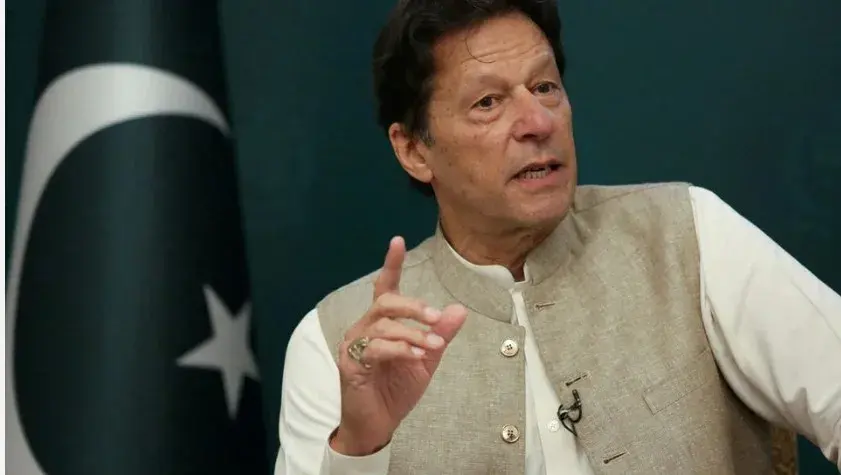
A Pakistan Tehreek –e-Insaf victory could jeopardise government-army relations
P.K Balachandwab
February 10
The Pakistan Tehreek-e-Insaf (PTI) led by jailed Imran Khan is currently way ahead of the Pakistan Muslim League (Nawaz) led by Nawaz Sharif and the Pakistan Peoples’ Party (PPP) led by Bilawal Bhutto in the results of elections to the National Assembly announced thus far.However, the army which has been calling the shots in Pakistani politics traditionally, may stitch together an anti-PTI alliance to thwart a PTI victory.Counting is still going on, but the current figures indicate that PTI linked Independents are far ahead.
By 9.15 am on Saturday, the PTI-linked Independents had won 94, the PML (N) 63, the PPP 50 and the smaller parties had taken 16.Since the PTI had been barred from contesting the elections and its cricket bat symbol had been banned, its candidates fought as Independents. The other handicap was that its leader, Imran Khan, had been jailed with 150 cases against him. Imran himself has claimed that the PTI has won a “landslide victory” bagging 170 seats. He thanked the people for asserting their faith in democracy and called for nation-wide celebrations.But the army can still stich a PML (N)-PPP alliance by coaxing or threatening a section of the Independents.
Nawaz Sharif has also claimed that his party is the single largest and has urged others to join him in a coalition. Nawaz and PPP patriarch Asif Zaradari have already met in Lahore and discussed the formation of a coalition.Since no group or party appears on course to win an overall majority, the final result is difficult to predict accurately.The success of the PTI-linked Independents was unexpected, with most experts agreeing that Sharif, believed to be backed by the country's powerful military, and also with money power was the clear favourite.But the results thus far show that Imran Khan's popular support basis is intact.Be that as it may, the PTI is not a recognised party after being barred from running in the election.
So, technically Sharif's PML-N is the largest official political group.Therefore, political horse-trading will begin in earnest, with money and military power throwing its weight behind a Nawaz-Bhutto coalition.In a speech on Friday, Sharif acknowledged that he did not have the numbers to form a government alone. Addressing supporters outside his party's headquarters in Lahore, he urged other candidates to join him in a coalition and said he could save the country from difficult times both economically and politically.The million-dollar question now is: Will PTI form a coalition with any of the “corruption-ridden” parties?
Would it be able to get support from breakaway groups from other parties? This may be difficult with Imran in jail and the PTI lacking in money and coercive power, with the army backing the other side.The elections results have put the army in an unenviable situation. It cannot get along with Imran if he gets a majority. This is because of his trenchant pre-election anti-army rhetoric. With the army not backing him, will Imran be able to perform as Prime Minister and implement his schemes?Imran may also have problems with the US unless he tones down his anti-American rhetoric. He had accused the US of trying to overthrow him with the help of the army.
And with troubled relations with the army and the US, a PTI- led government will not be able to make any progress in relations with India. But the PTI is confident that if it gets power, the cases against Imran, 150 of them, will be withdrawn and he will be able to guide the nation even from outside the National Assembly.There are signs that the US may work with an Imran-led government. The US State Department spokesman Matthew Miller criticised the “Undue restrictions on freedoms of expression, association, and peaceful assembly" during Pakistan's electoral process. This was an indictment of the army-backed Caretaker government.Miller also cited "attacks on media workers" and "restrictions on access to the internet and telecommunication services" as reasons to worry about "allegations of interference" in the process
.Voters in Lahore told the BBC that the internet blackout on polling day meant it was not possible to book taxis to go and vote, while others said they could not co-ordinate when to head to polling stations with their family members.But an interior ministry spokesman said the blackouts were necessary for security reasons.END
RELATED NEWS
View all

Current Affairs
Sri Lankan Presidential pardons- the good and the bad
Sep 11, 2026
Current Affairs
The pros and cons of joining BRICS- the dilemma of Pakistan and Bangladesh
Sep 09, 2026
Current Affairs
Disaster in Nepal gets embroiled in geopolitics.
Sep 08, 2026
Current Affairs
Why Mecca Pact, and what does it imply for its members, Israel and India?
Aug 18, 2026