Columns, Volume 2
Party leaders behave, for once
March 28, 2020
It is seldom that political leaders see eye to eye on anything, in this country. They are perennially at daggers drawn and go for one another’s jugular, at the drop of a hat. In the aftermath of the Boxing Day tsunami (2004), which pummelled the country’s littoral, destroying as it did tens of thousands of lives and properties worth billions of rupees, leaders of all political hues got together and vowed to help the country rise above the waves. But their much-publicized show of unity was short-lived. They started bashing one another, in public, shortly afterwards. They did likewise, following the Easter Sunday carnage (2019), as well, instead of joining forces to help the bereaved families, defeat terrorism and safeguard national security. When they met, in Parliament, purportedly to have a debate on the terror strikes, they only traded allegations and insults. Nothing constructive came of the ‘debate’.
Since a sharp increase in the incidence of COVID-19, a couple of weeks ago, there have been strident calls for reconvening the dissolved Parliament to discuss ways and means of managing the national health emergency. Former Minister, Mangala Samaraweera, has written to President Gotabaya Rajapaksa that the presence of only 20 MPs, being the quorum, is needed for a parliamentary sitting.
Call for reconvening Parliament
Why the Opposition is trying to have Parliament reconvened is not difficult to guess. COVID-19 has eclipsed all other issues, in the country, and the Opposition finds it difficult to attract much-needed media attention at this juncture. Above all, the government is handling one of the biggest problems the country has faced while Parliament and the Provincial Councils remain dissolved. If it manages the coronavirus crisis successfully, it will get a turbo boost for its election campaign, which is already underway, to all intents and purpose. If it bungles, the Opposition will stand to gain.
There has been a precedent for reconvening a dissolved Parliament, in this country. The Sixth Parliament, which commenced, on 22 April 2004 and was dissolved on 09 Feb. 2010, after four sessions, had to be reconvened, twice, on 09 March, 2010 and 06 April 2010 for Emergency Regulations to be passed. But the incumbent government has refused to follow the precedent. Instead, on Tuesday (24), it opted for a meeting of the leaders of the political parties, which were represented in the last Parliament.
Temple Trees meeting
The political party leaders met, at Temple Trees on 24 March, at the request of Prime Minister Mahinda Rajapaksa. Director General of Health Services Dr. Anil Jasinghe, Army Commander Lt. Gen. Shavendra Silva, Acting Inspector General C. D. Wickramaratne and other high ranking officials were also present.
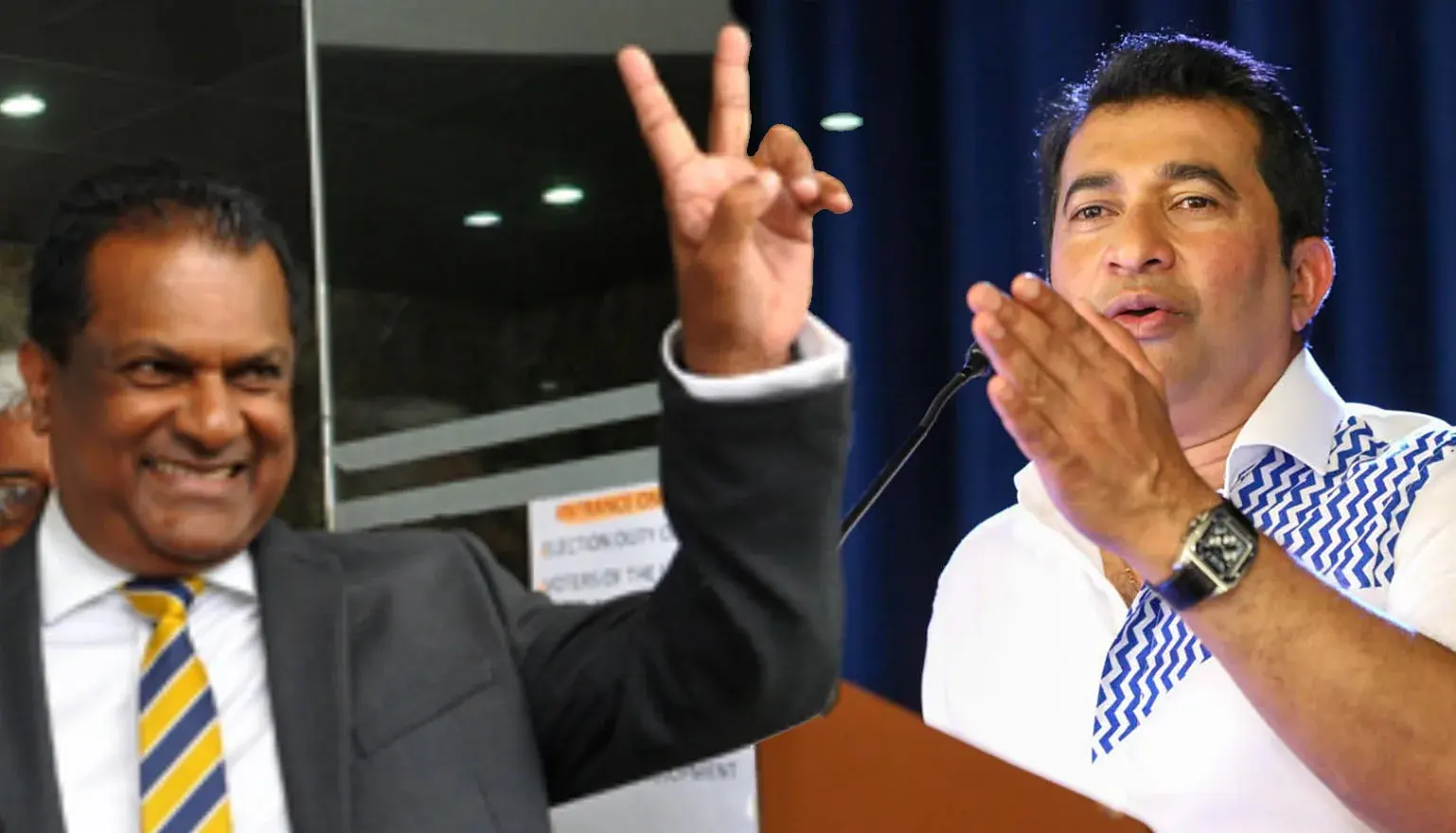
Sri Lanka Muslim Congress Leader, Rauff Hakeem, speaking at the aforesaid meeting, requested Prime Minister Rajapaksa to have Parliament reconvened immediately to discuss the COVID-19 crisis. But his request didn’t find favour with the government representatives. Pivithuru Hela Urumaya Leader Udaya Gammanpila, rejected Hakeem’s call lock, stock and barrel. He said there was no need for reconvening Parliament as nobody, involved in the battle against COVID-19 has asked for new laws, etc. He also said 225 former MPs and parliament workers should not gather while the public was being urged to adopt physical distancing. He maintained that the party leaders could meet and discuss issues related to COVID-19 instead of reconvening Parliament. It was clear that he was articulating the position of the government, which does not want Parliament reconvened.
Government’s gamble
The government, obviously, wants to handle the situation, under its own steam, without sharing the credit for the country’s battle against COVID-19, with others. This, however, is a huge gamble, given how ill-equipped the country is to manage a possible explosive spread of COVID-19. The World Health Organisation has identified four stages of the transmission of the disease:
- No cases
- Sporadic cases
- Clusters
- home clusters
- small group clusters
- Community transmission
RELATED NEWS
View all
WEELKY POLITICAL WATCH
Arrests eclipse battle over 22nd Amendment
Sep 04, 2026
Columns
Easter Sunday carnage probe: UNP makes strategic move
Jun 21, 2026

Columns
Indian Sinologist Shikha Pandey finds Xinjiang to be an appealing blend of the ancient and the ultra-modern
Nov 22, 2023
Current Affairs
World's medical fraternity wakes up to the need to study “medical atrocities”
Nov 16, 2023