Current Affairs
SC orders compensation to journalist and viewer after long drawn case
February 19, 2021
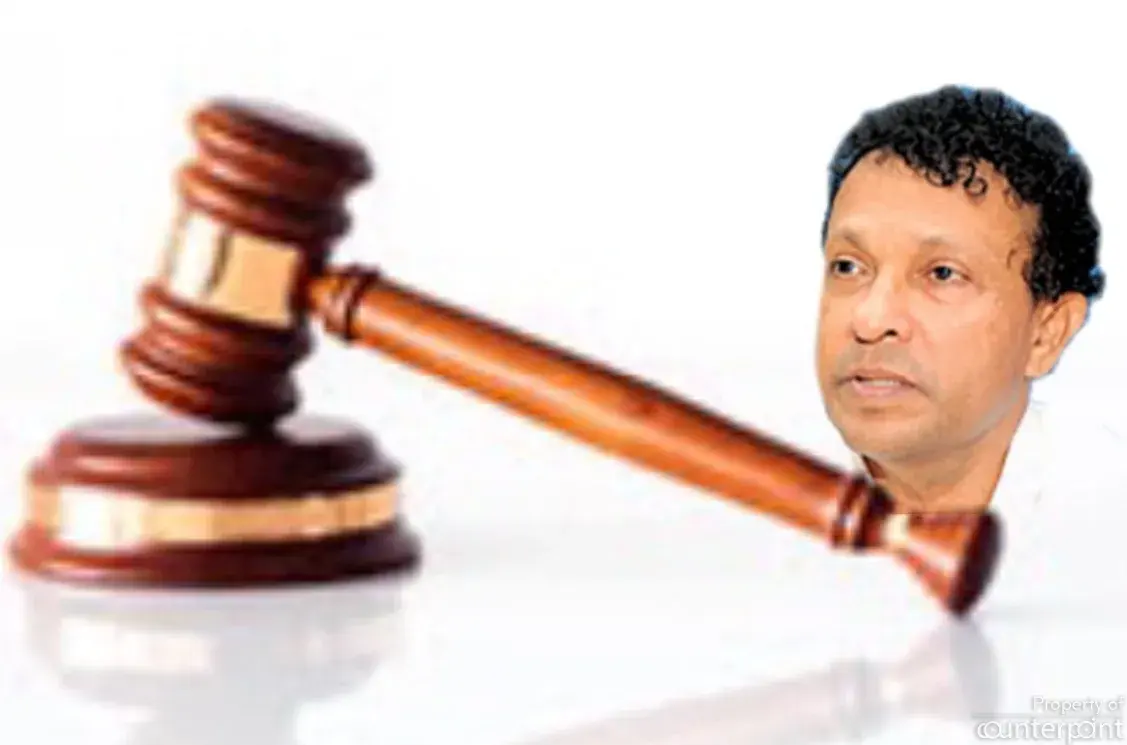
• Petitioners allege that the SLRC censored a live TV programme
• Court holds that the nature of the expression being political is certainly not a criterion recognized in the Constitution to limit freedom of expression.
The Supreme Court has ordered the State and former Chairman of Sri Lanka Rupavahini Corporation (SLRC) Prof. Ariyaratne Athugala to pay compensation to media professional UvinduKurukulasuriya and a television viewer for censoring a live television program in 2008. The Supreme Court ordered the State to pay the two petitioners Rs.30,000 each and also ordered Prof. Athugala to pay each of the petitioners Rs.50,000 as compensation for violating their Fundamental Rights guaranteed under Article 12(1) of the constitution. Former Convenor of Free Media Movement UvinduKurukulasuriya and television viewer J. K. W. Jayasekara had filed two separate Fundamental Rights petitions challenging the decision of SLRC to prevent them from expressing their views in a television program titled ‘Ira Anduru Pata’ (Challenge the Darkness), aired on ‘Rupavahini Channel’ of SLRC on 4th November 2008. In his petition Kurukulasuriya stated that a program producer of the SLRC had invited him to participate this program to discuss the ‘Private Television Broadcasting Station Regulations of 2007. Prof. Charitha Herath, Senior Lecturer of the Department of Philosophy of the University of Peradeniya and Dhamma Dissanayake, a Senior Lecturer of the University of Colombo also participated as panelists in the program. Kurukulasuriya maintains that he was informed that the discussion would be Televised live on the ‘Rupavahini Channel’ for a duration of one and a half hours From 10.30 pm until 12 midnight on the 4th of November 2008. He had also been Informed that the viewers would be allowed to direct questions to the panelists via Telephone calls during the telecast. During the course of the programme it had been interrupted only once for a very brief commercial break at 11.00 pm to convey the time. Thereafter around 11.14 pm, after a lapse of approximately 45 minutes from the commencement of the programme the discussion was interrupted and the programme interrupted by a commercial break with the presenter stating; “If issues arise in the society, we must deliberate as to how solutions can be found to resolve those problems. Now we take a short break.” The petitioner said following the commercial break, the programme did not recommence although the presenter and the panelists were present in the studio. The respondents had alleged that during the first roundof discussion, Kurukulasuriya deviated from the guidelines of the programme and made a political speech alleging that the media was exercising self-restraint and referred to a court case pending against a journalist under the Prevention of Terrorism Act. In his judgment, Justice Buwaneka Aluwihare held that nature of the expression being political is certainly nota criterion recognized in the Constitution to limit freedom of expression. The Supreme Court further elaborated that Constitution of Sri Lanka only curtails free speech to maintain racial and religious harmony, parliamentary privilege, to avoid contempt of court and defamation or to avoid incitement to an Offence. "Even if it were a criterion for limitation, in the present case the petitioner did not mention the name of any political party or politician whose interests, he sought to advance nor did he state that media freedom in the country would have been in a better state under a different government. He voiced his dissatisfaction with a certain state of affairs, he criticized the incumbent government. It was an opinion, and from the perspective of the SLRC, could be considered political dissent, which however does not call for the restriction of such comment. An expression that is well within the parameters of the law as set out in Article 15, does notlose its legitimacy for being political or for being unpalatable to those who listen to it. If every speech which points out the shortcomings of an incumbent government or politicians were to be interpreted as being a political speech and censored, no legitimate criticism which could promote better governance would ever be made," Justice Aluwihare added. Petitioner Jayasekara alleged that he along with all the other participatory viewers of the programme unable to receive the information they sought by watching the programme and even if they wished so. He said viewers were unable to make use of the phone-in component. Supreme Court three-judge-bench comprised Justice Buwaneka Aluwihare, Justice Priyantha Jayawardena and Justice L.T.B. Dehideniya.RELATED NEWS
View all

Current Affairs
Sri Lankan Presidential pardons- the good and the bad
Sep 11, 2026
Current Affairs
The pros and cons of joining BRICS- the dilemma of Pakistan and Bangladesh
Sep 09, 2026
Current Affairs
Disaster in Nepal gets embroiled in geopolitics.
Sep 08, 2026
Current Affairs
Why Mecca Pact, and what does it imply for its members, Israel and India?
Aug 18, 2026