Latest News
Sri Lanka plans to offer underused state land to returning migrant workers
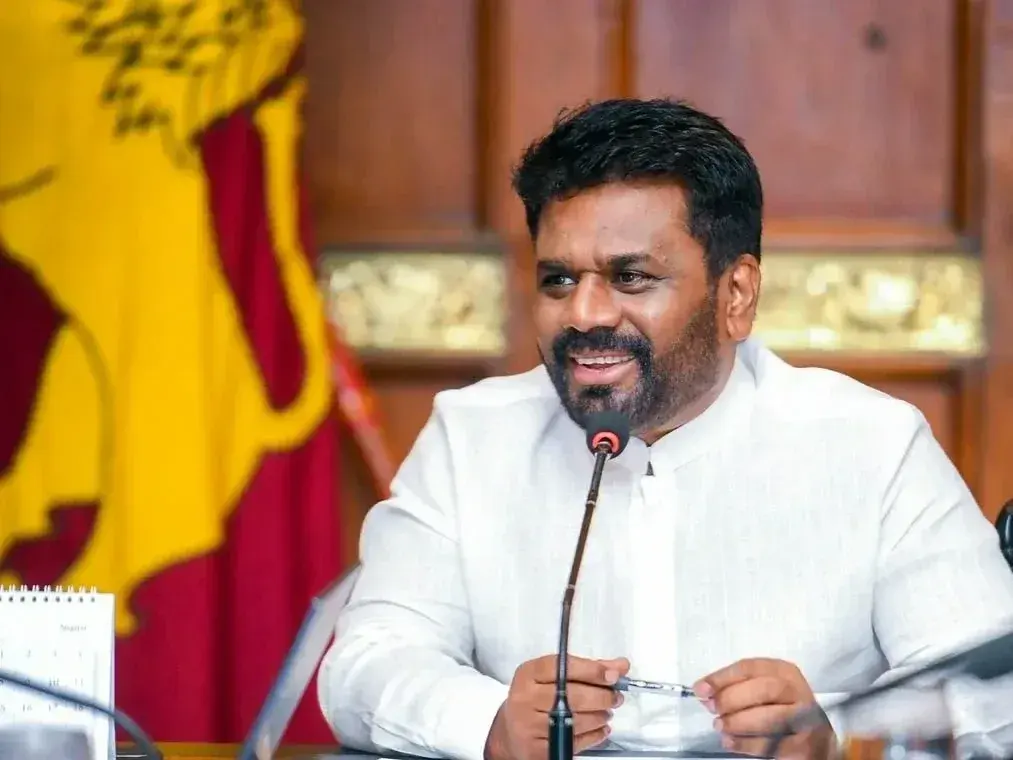
President Anura Kumara Dissanayake instructed officials, on Friday., to develop a scheme to provide underused land and project support to migrant workers returning to Sri Lanka after completing their overseas employment.
The programme would help returning workers invest their savings in productive ventures and improve their long-term economic prospects, according to the President’s Media Division.
Dissanayake issued the instructions during a meeting at the Presidential Secretariat on Friday to review projects funded through the 2026 Budget under the Ministry of Plantation and Community Infrastructure and discuss proposals for the 2027 Budget.
The meeting reviewed development projects carried out by the plantation sector, the community infrastructure division and state-owned plantation companies.
The President also examined programmes funded through a capital allocation of Rs. 1.081 billion, including surveys of plantation land, coconut disease-control measures, the Kapruka Fund, efforts to increase coconut production and the Northern Coconut Triangle programme.
Dissanayake called for the timely completion of a project to build 10,000 houses for the Malaiyaha Tamil community.
He said weaknesses in the implementation of projects funded through foreign aid and loans had resulted in some allocations being returned and called for a more efficient system to use such funds.
Officials also reviewed assistance provided to replant tea, coconut, rubber and other plantation crops damaged by the Ditwah disaster.
The meeting heard that six state-owned plantation companies had increased their profits compared with the previous year. They included Elkaduwa Plantations, Kurunegala Plantations, Chilaw Plantations, the Sri Lanka State Plantations Corporation, the Janatha Estates Development Board and Kalubovitiyana Tea Factory Ltd.
Officials said about 60,000 hectares of Sri Lanka’s tea-growing land consisted of smallholdings. The Government had spent Rs. 155.07 million of the Rs. 450.06 million allocated in the 2026 Budget for replanting small tea estates.
Dissanayake also reviewed the Tea Village programme, which aims to establish 500 tea-producing villages, and instructed officials to coordinate it with other rural development initiatives, including the Praja Shakthi programme.
The Government allocated Rs. 137 million to the Rubber Research Institute in the 2026 Budget to revive rubber cultivation.
Officials also discussed programmes to improve coconut productivity, develop value-added products and strengthen the palmyrah and kithul industries.
Sri Lanka is expected to produce 18,000 tonnes of its annual cashew requirement of 25,000 tonnes this year, while the Northern and Eastern provinces have the potential to cultivate cashew on about 15,000 hectares, the meeting heard.
The President also instructed the Finance Ministry to appoint a committee to review and update agreements signed by previous governments when allocating state land to companies.
He said the Government should introduce stronger agreements governing the use of state-owned land.
Dissanayake also asked officials to explore whether universities could offer courses currently conducted by the National Institute of Plantation Management.
RELATED NEWS
View all

Latest News
New Bill seeks to eliminate rabies and regulate dog ownership in Sri Lanka
Sep 24, 2026
Latest News
Screen time rising among Sri Lankan preschool children, Health Ministry warns
Sep 24, 2026
Latest News
China to deploy meteorological early-warning system in Sri Lanka
Sep 24, 2026
Latest News
Government moves to ease prison overcrowding as remand population falls, Justice Minister says
Sep 23, 2026