Latest News
Sri Lanka strengthens response to transboundary marine pollution
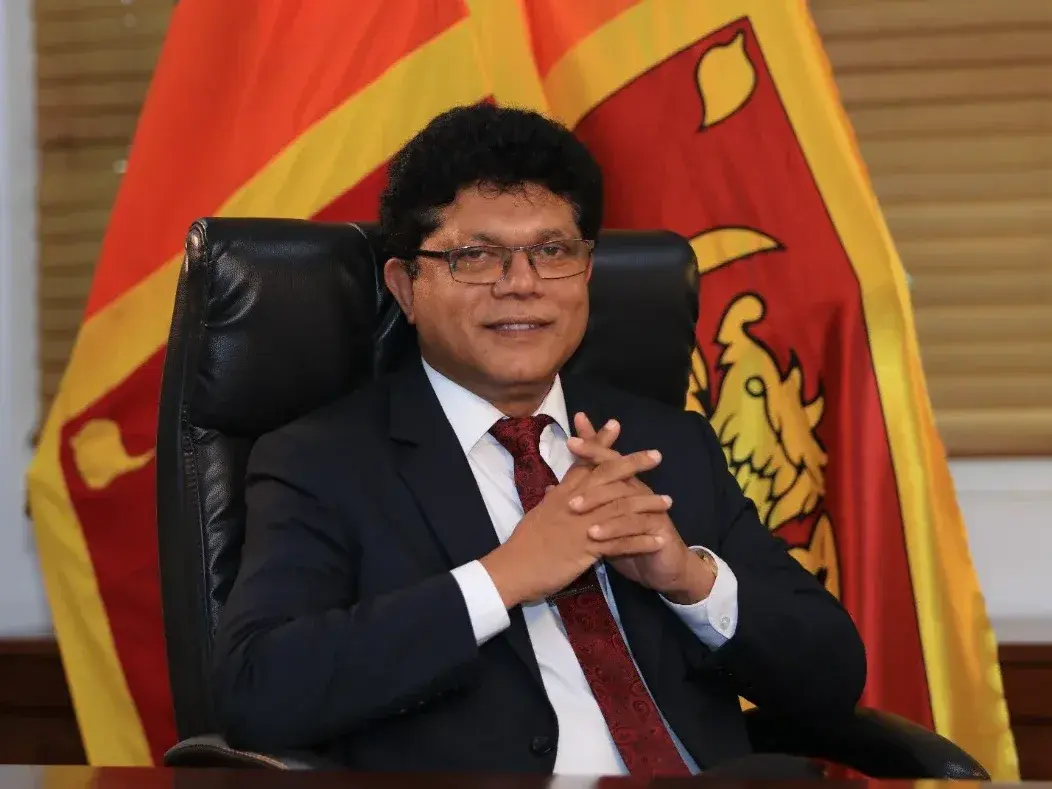
Sri Lanka has strengthened its ability to respond to transboundary marine pollution caused by ships carrying hazardous cargo, fuel oil, marine diesel and plastic waste, Environment Minister Dr Dammika Patabendi said.
The country has also improved its capacity to seek compensation for environmental damage caused by vessels polluting its waters, he said.
Patabendi said the Marine Environment Protection Authority (MEPA), which operates under the Environment Ministry, had expanded its monitoring and emergency response capabilities following several major maritime pollution incidents in the Indian Ocean.
The improvements allow authorities to identify pollution threats earlier, assess environmental damage and take legal action when incidents affect Sri Lanka’s marine environment, he said.
The ministry is investing in vessel monitoring systems, digital technology and supporting infrastructure to strengthen MEPA’s ability to monitor pollution, respond to environmental emergencies and improve marine waste management.
Sri Lanka has also intensified regional cooperation through the South Asia Co-operative Environment Programme (SACEP) to tackle marine plastic pollution, which has become one of the organisation’s main environmental priorities.
“We have held several rounds of discussions with SACEP on measures to prevent marine plastic pollution,” Patabendi said. “Sri Lanka is playing a leading role in expanding regional cooperation and campaigns to address this growing challenge.”
Colombo-based SACEP brings together Afghanistan, Bangladesh, Bhutan, India, the Maldives, Nepal, Pakistan and Sri Lanka to address common environmental challenges across South Asia.
Patabendi said Sri Lanka had recently secured compensation over pollution linked to the MSC ELSA 3 and MV Wan Hai 503, two major maritime incidents involving vessels operating off India’s west coast.
The Liberian-flagged container ship MSC ELSA 3 sank off the Kerala coast on 25 May 2025 while sailing from Vizhinjam to Kochi. It was carrying more than 640 containers, including hazardous cargo, fuel oil and marine diesel.
The sinking released plastic nurdles, fuel and cargo into the Arabian Sea. Ocean currents driven by the south-west monsoon carried some of the pollution towards Sri Lankan waters, prompting authorities to launch an extensive monitoring operation.
The incident revived memories of the MV X-Press Pearl disaster in 2021, when billions of plastic nurdles washed ashore along Sri Lanka’s western coastline after the Singapore-flagged container ship caught fire and sank off Colombo.
The disaster became the worst marine pollution incident in Sri Lanka’s history. In July last year, the Supreme Court ordered the Singapore-based X-Press Pearl Group, the vessel’s owner, to pay the Government US$1 billion in compensation for the environmental damage.
The second incident involved the Singapore-flagged MV Wan Hai 503, which caught fire off India’s west coast in June 2025 while transporting containers, including hazardous cargo.
Indian and Sri Lankan authorities jointly monitored the incident and introduced pollution response measures amid concerns that debris and pollutants could drift into Sri Lankan waters.
Patabendi said transboundary plastic pollution remained one of Sri Lanka’s most serious environmental challenges.
“Plastic waste drifts into Sri Lankan waters from several islands in the Indian Ocean and from parts of India, particularly along the northern and eastern coasts,” he said.
“We have also observed hospital waste washing ashore, posing serious environmental and public health concerns.”
RELATED NEWS
View all

Latest News
New Bill seeks to eliminate rabies and regulate dog ownership in Sri Lanka
Sep 24, 2026
Latest News
Screen time rising among Sri Lankan preschool children, Health Ministry warns
Sep 24, 2026
Latest News
China to deploy meteorological early-warning system in Sri Lanka
Sep 24, 2026
Latest News
Government moves to ease prison overcrowding as remand population falls, Justice Minister says
Sep 23, 2026