Volume 1, Exposé
Though Banned, Corporal Punishment Is Practiced Across Schools
September 06, 2018
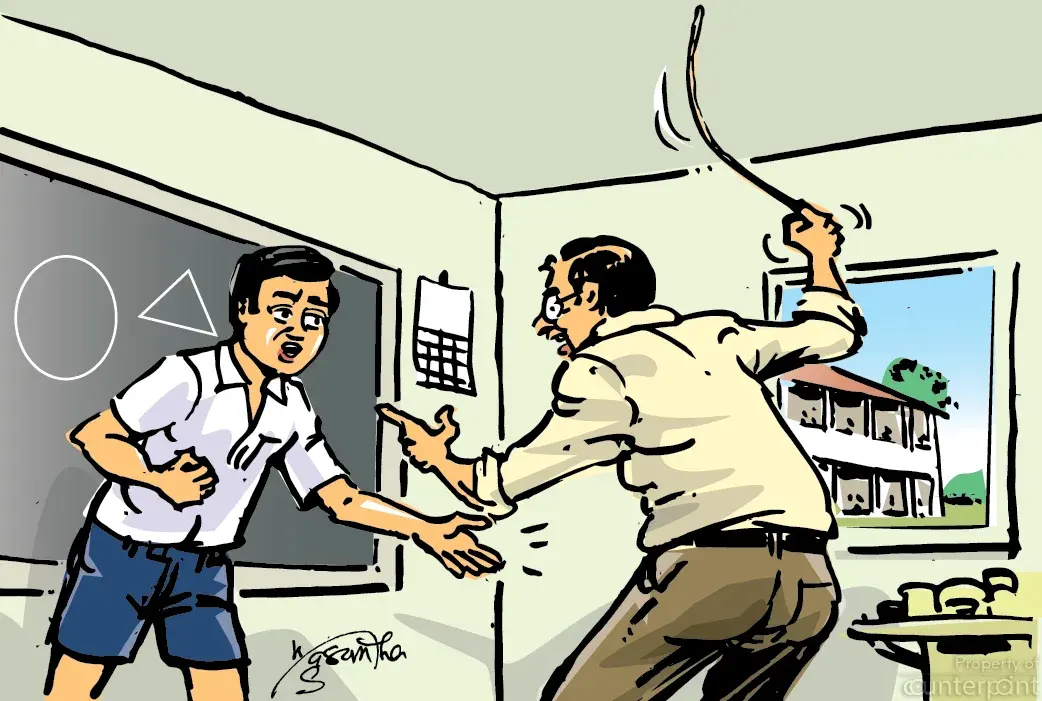
Around March this year, some parents of students of Royal College Primary contacted the Ministry of Education regarding certain abusive situations their children were being subjected to in school. They were reaching out to the Ministry out of sheer frustration as no corrective action had been taken by the school authorities.
Amongst the cases they highlighted was of a Grade 5 student who was injured when a musical instrument was thrown at him by one of the teachers. The injury which damaged some nerves resulted in the child being admitted to the Lady Ridgeway Hospital. He missed a month of schooling.
There were other complaints. Amongst which were allegations that certain teachers in the school were in the habit of hitting students with foot rulers, ribbed sticks, meter sticks and canes.
The complaint resulted in an investigation by the Education Ministry, and recommendations made for corrective action. But to no avail. Things continued as usual. In July this year, there was another incident where the teacher who injured the Grade 5 student is alleged to have injured three other year 4 students. Again, her choice of weapon was musical instruments.
The teacher, known to use abusive language, addressing students as “thadiya, yako, booruwa”, has not been disciplined or removed from the school as yet. The situation drew the ire of at least one former student, Padmasena Dissanayake, who, in an open letter to parents urged them to get the assistance of the police, the National Child Protection Authority (NCPA) and the media whenever a child is abused, and help inculcate positive disciplining in the school.
This practice continues, despite Sri Lanka being amongst 59 countries that signed the United Nations Convention on the Rights of the Child on the first day, - January 26, 1990, which we ratified on July 12, 1991.
The United Nations Committee on the Rights of the Child defines corporal punishment as: “any punishment in which physical force is used and intended to cause some degree of pain or discomfort, however light”.
[caption id="attachment_1632" align="alignleft" width="1024"]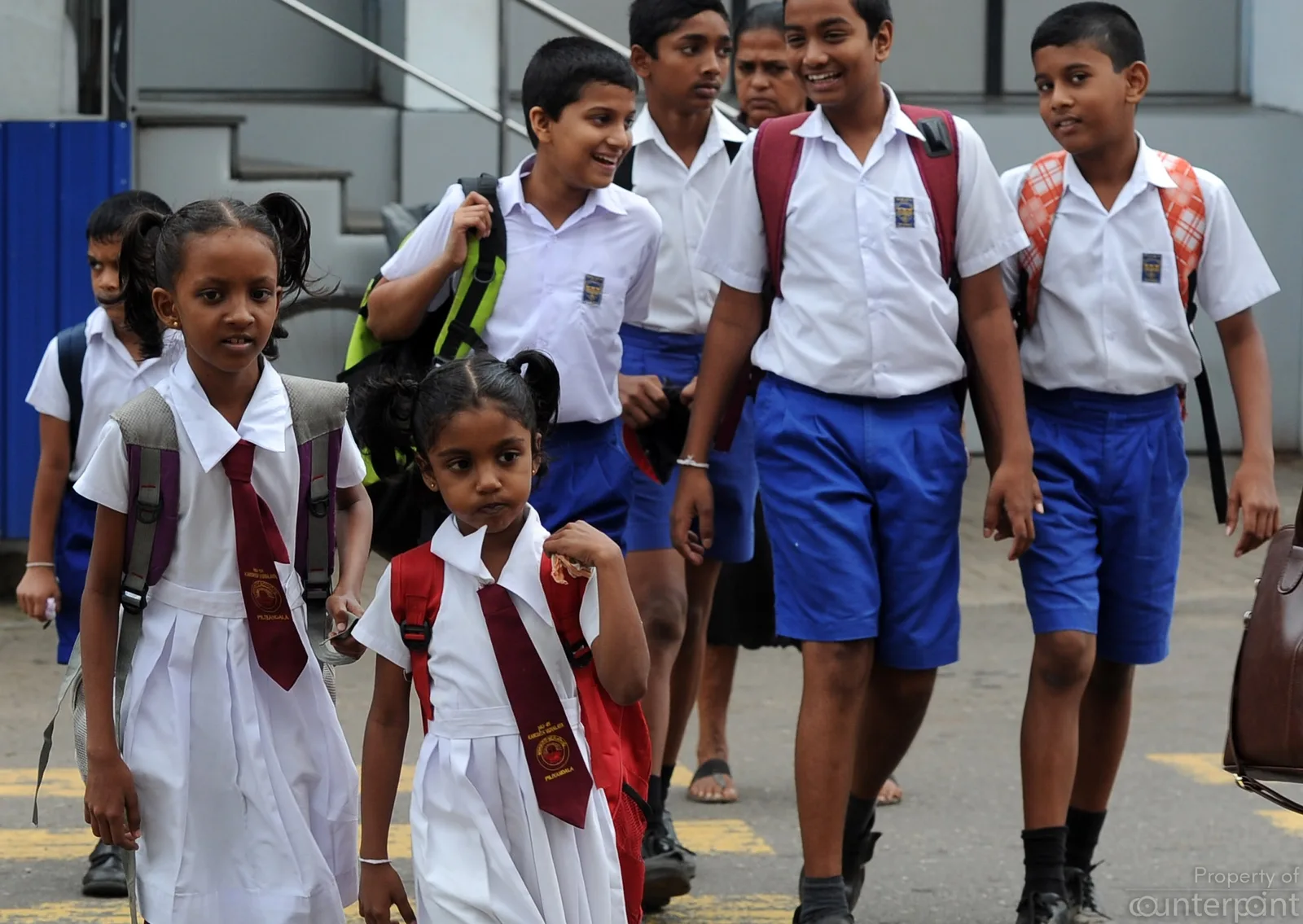 The Education Ministry banned corporal punishment in 2001. Yet, enforcing the ban has been lackadaisical at best, and 17 years later, children are subject to various unacceptable forms of punishment.[/caption]
The use of corporal or physical punishment and psychological aggression on students is not unique to Royal College or to schools run by the government. It is also extensively prevalent in private and international schools. This is despite the circular sent out by the Ministry of Education in 2001 which banned corporal punishment. In yet another circular in 2005, (2005/17) the education ministry drew the attention of school authorities to the fact that all physical and psychological forms of punishment were prohibited, and outlined positive measures to maintain discipline in schools . As recently as April 2016, the Ministry in a circular 12/2016, to all schools cautioned against the use of corporal punishment and once more, listed positive disciplinary methods. It also requested the forming of discipline committees in schools to discourage punishment methods that would be harmful to children.
The worrying issue is that none of these circulars apply to private education institutions, including mushrooming international schools because the education ministry has no regulatory powers over them. In fact there is no regulatory framework to supervise them whether it is the quality of education, facilities provided to students or use of physical and mental abusive methods on students.
In fact, “Stop Child Cruelty,” came about after a student at an international school was punished and the parent’s frustrating attempts to have the issue addressed. When no suitable action against the perpetrator was taken, and a complaint was lodged with the police, it is alleged that the student was subjected to verbal and mental abuse by teachers and the Principal.
With a vision to “facilitate a healthy school environment for children”, the organization is busy arranging several initiatives to raise awareness and have corporal punishment banned in schools by 2020.
While international schools, set up under the Board of Investment Sri Lanka (BOI), do not fall under the jurisdiction of the Education Ministry, the laws of the land, specifically, section 308A of the Penal Code, (Penal Code (Amendment) Act (No. 22 of 1995) –Sect 3, which states the following, do apply.
The Education Ministry banned corporal punishment in 2001. Yet, enforcing the ban has been lackadaisical at best, and 17 years later, children are subject to various unacceptable forms of punishment.[/caption]
The use of corporal or physical punishment and psychological aggression on students is not unique to Royal College or to schools run by the government. It is also extensively prevalent in private and international schools. This is despite the circular sent out by the Ministry of Education in 2001 which banned corporal punishment. In yet another circular in 2005, (2005/17) the education ministry drew the attention of school authorities to the fact that all physical and psychological forms of punishment were prohibited, and outlined positive measures to maintain discipline in schools . As recently as April 2016, the Ministry in a circular 12/2016, to all schools cautioned against the use of corporal punishment and once more, listed positive disciplinary methods. It also requested the forming of discipline committees in schools to discourage punishment methods that would be harmful to children.
The worrying issue is that none of these circulars apply to private education institutions, including mushrooming international schools because the education ministry has no regulatory powers over them. In fact there is no regulatory framework to supervise them whether it is the quality of education, facilities provided to students or use of physical and mental abusive methods on students.
In fact, “Stop Child Cruelty,” came about after a student at an international school was punished and the parent’s frustrating attempts to have the issue addressed. When no suitable action against the perpetrator was taken, and a complaint was lodged with the police, it is alleged that the student was subjected to verbal and mental abuse by teachers and the Principal.
With a vision to “facilitate a healthy school environment for children”, the organization is busy arranging several initiatives to raise awareness and have corporal punishment banned in schools by 2020.
While international schools, set up under the Board of Investment Sri Lanka (BOI), do not fall under the jurisdiction of the Education Ministry, the laws of the land, specifically, section 308A of the Penal Code, (Penal Code (Amendment) Act (No. 22 of 1995) –Sect 3, which states the following, do apply.
On Thursday, September 6, 2018, UNICEF unveiled its global initiative, “An Everyday Lesson: #ENDviolence in Schools, which included Sri Lanka as a country where corporal punishment is not fully prohibited in schools. Around the world, there are nearly 720 million children, still subjected to this form of punishment, the report said.
"What we need to understand is that violence impacts children and young people in many ways. And particularly for children in schools it has far-reaching consequences, such as decreased self-esteem and inability to learn and succeed. Some may even drop out of school altogether - ultimately making school an unpleasant place” said the UNICEF Representative for Sri Lanka, Tim Sutton, in a press release accompanying the report.
The report which advocates ‘fully prohibiting corporal punishment in those countries where protections are absent or incomplete; establishing effective and accessible response and referral systems; and providing resources to increase the knowledge, capacity and skills of school staff,’ also draws attention to the Committee on the Rights of the Child ‘Which specifically states that “children do not lose their human rights by virtue of passing through the school gates.”
In August this year, UNP MP Rohini Kumari Wijeratne, who is on the Parliamentary Committee on Education and Human Resources Development, introduced a Private Members motion in Parliament, entitled, “Preparing and Implementing a Programme to Properly Carry out Disciplinary Enquiries by Student Discipline Committees of Schools.”
Ms. Wijeratne told Counterpoint that, in her 19 year experience as a teacher, she has found that most discipline issues are carried out in a manner that protects the “good name” of the school and rarely to assist students with issues they are struggling with. “The current practice is to appoint a teacher as the counsellor to the Student Discipline Committees, she pointed out, adding that, often, even confidential information about a child is shared amongst teachers, resulting in students facing embarrassment and shame. I have proposed Counsellors with an education in child psychology or similar background be appointed to these committees. Often times, students engage in behaviour that is natural for that particular age, and it must be dealt with appropriately, in a manner that does not harm the child.”
A Child Counsellor and Educational Therapist who spoke on condition of anonymity, pointed out that today’s students have become victims of a multitude of negative situations. The Therapist who has worked in both government and international schools explained that even though there are teachers who have been trained in child psychology, the competitive nature prevalent, where every student is expected to be better than the best and perfection is required of everyone, including teachers, common sense is not applied when dealing with everyday discipline issues. “Parents expect their children to be high performers, teachers and schools are in competition to be top achievers. It’s a vicious cycle, where even small issues get magnified; confidential information about a student’s behaviour is shared with other parents and teachers, with no regard to how society will judge the student and the psychological damage it does to the child.”
Bullying, she says, is quite common.
[caption id="attachment_1660" align="alignleft" width="1024"]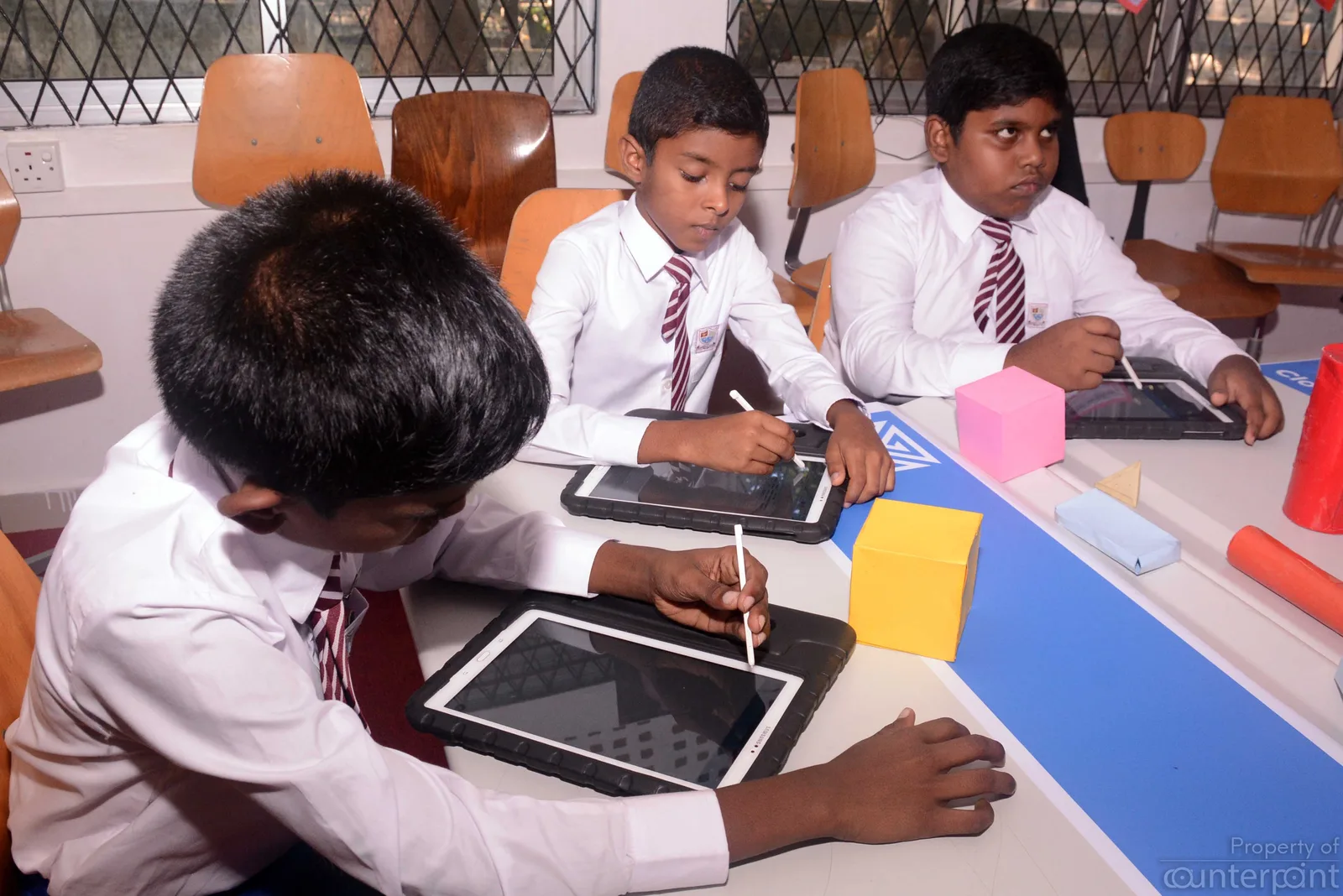 Our children bear the brunt of our irrational quest for perfection and top performance.[/caption]
Teachers need to be trained in stress management techniques along with the training or education in child psychology, she says, if negative attitudes and practises are to be eliminated in schools.
The evidence weighs high on the need to reinforce positive discipline measures in schools, even though some may argue that corporal punishment does no harm, and society is all the better for it. But society has moved on. What amounted to a slap on the wrist or “six cuts” to the bottom in the days of our youth is no longer acceptable. Nor is name calling or other forms of mental cruelty.
We are becoming a nation that is increasingly prone to violence to resolve even minor issues. Such behaviour is intergenerational. And schools, where children spend a majority of their growing up years, must become places that inculcate positive behaviour.
The NCPA states it conducts awareness training in schools annually, and on request to bring about a change of attitude in how students should be disciplined.
But that is not enough. It is incumbent on the State to review and repeal archaic laws and ensure that all legislation around the subject of corporal punishment is synchronised, loopholes removed, and rules are enforced.
Our children bear the brunt of our irrational quest for perfection and top performance.[/caption]
Teachers need to be trained in stress management techniques along with the training or education in child psychology, she says, if negative attitudes and practises are to be eliminated in schools.
The evidence weighs high on the need to reinforce positive discipline measures in schools, even though some may argue that corporal punishment does no harm, and society is all the better for it. But society has moved on. What amounted to a slap on the wrist or “six cuts” to the bottom in the days of our youth is no longer acceptable. Nor is name calling or other forms of mental cruelty.
We are becoming a nation that is increasingly prone to violence to resolve even minor issues. Such behaviour is intergenerational. And schools, where children spend a majority of their growing up years, must become places that inculcate positive behaviour.
The NCPA states it conducts awareness training in schools annually, and on request to bring about a change of attitude in how students should be disciplined.
But that is not enough. It is incumbent on the State to review and repeal archaic laws and ensure that all legislation around the subject of corporal punishment is synchronised, loopholes removed, and rules are enforced.
The Education Ministry banned corporal punishment in 2001. Yet, enforcing the ban has been lackadaisical at best, and 17 years later, children are subject to various unacceptable forms of punishment.[/caption]
The use of corporal or physical punishment and psychological aggression on students is not unique to Royal College or to schools run by the government. It is also extensively prevalent in private and international schools. This is despite the circular sent out by the Ministry of Education in 2001 which banned corporal punishment. In yet another circular in 2005, (2005/17) the education ministry drew the attention of school authorities to the fact that all physical and psychological forms of punishment were prohibited, and outlined positive measures to maintain discipline in schools . As recently as April 2016, the Ministry in a circular 12/2016, to all schools cautioned against the use of corporal punishment and once more, listed positive disciplinary methods. It also requested the forming of discipline committees in schools to discourage punishment methods that would be harmful to children.
The worrying issue is that none of these circulars apply to private education institutions, including mushrooming international schools because the education ministry has no regulatory powers over them. In fact there is no regulatory framework to supervise them whether it is the quality of education, facilities provided to students or use of physical and mental abusive methods on students.
In fact, “Stop Child Cruelty,” came about after a student at an international school was punished and the parent’s frustrating attempts to have the issue addressed. When no suitable action against the perpetrator was taken, and a complaint was lodged with the police, it is alleged that the student was subjected to verbal and mental abuse by teachers and the Principal.
With a vision to “facilitate a healthy school environment for children”, the organization is busy arranging several initiatives to raise awareness and have corporal punishment banned in schools by 2020.
While international schools, set up under the Board of Investment Sri Lanka (BOI), do not fall under the jurisdiction of the Education Ministry, the laws of the land, specifically, section 308A of the Penal Code, (Penal Code (Amendment) Act (No. 22 of 1995) –Sect 3, which states the following, do apply.
|
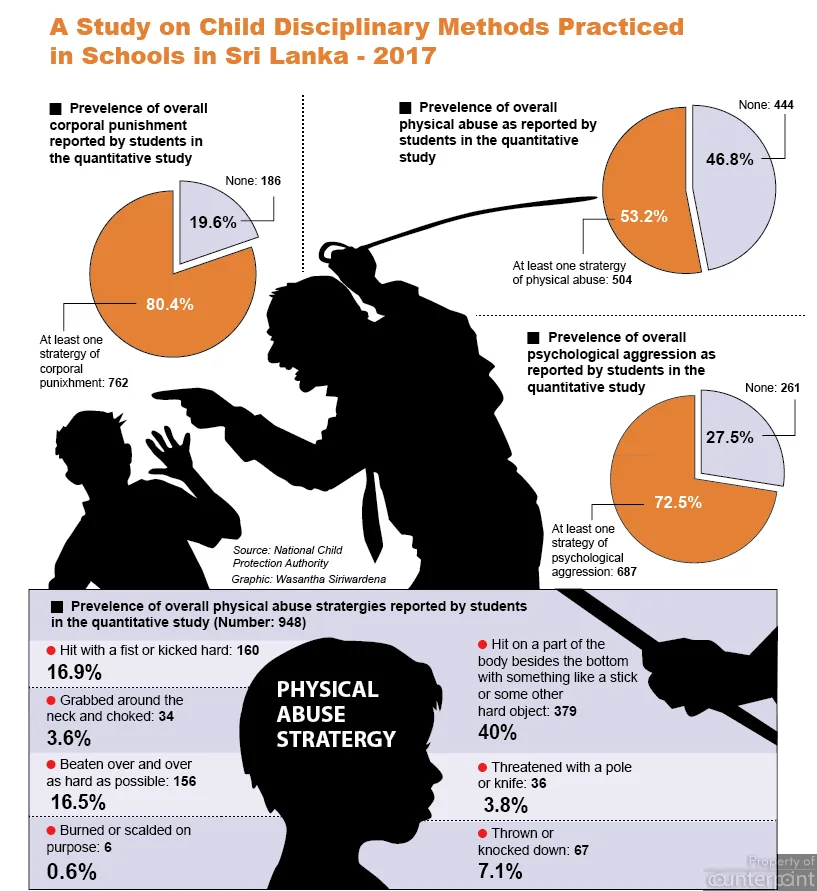 Our children bear the brunt of our irrational quest for perfection and top performance.[/caption]
Teachers need to be trained in stress management techniques along with the training or education in child psychology, she says, if negative attitudes and practises are to be eliminated in schools.
The evidence weighs high on the need to reinforce positive discipline measures in schools, even though some may argue that corporal punishment does no harm, and society is all the better for it. But society has moved on. What amounted to a slap on the wrist or “six cuts” to the bottom in the days of our youth is no longer acceptable. Nor is name calling or other forms of mental cruelty.
We are becoming a nation that is increasingly prone to violence to resolve even minor issues. Such behaviour is intergenerational. And schools, where children spend a majority of their growing up years, must become places that inculcate positive behaviour.
The NCPA states it conducts awareness training in schools annually, and on request to bring about a change of attitude in how students should be disciplined.
But that is not enough. It is incumbent on the State to review and repeal archaic laws and ensure that all legislation around the subject of corporal punishment is synchronised, loopholes removed, and rules are enforced.
Our children bear the brunt of our irrational quest for perfection and top performance.[/caption]
Teachers need to be trained in stress management techniques along with the training or education in child psychology, she says, if negative attitudes and practises are to be eliminated in schools.
The evidence weighs high on the need to reinforce positive discipline measures in schools, even though some may argue that corporal punishment does no harm, and society is all the better for it. But society has moved on. What amounted to a slap on the wrist or “six cuts” to the bottom in the days of our youth is no longer acceptable. Nor is name calling or other forms of mental cruelty.
We are becoming a nation that is increasingly prone to violence to resolve even minor issues. Such behaviour is intergenerational. And schools, where children spend a majority of their growing up years, must become places that inculcate positive behaviour.
The NCPA states it conducts awareness training in schools annually, and on request to bring about a change of attitude in how students should be disciplined.
But that is not enough. It is incumbent on the State to review and repeal archaic laws and ensure that all legislation around the subject of corporal punishment is synchronised, loopholes removed, and rules are enforced.
Share this story
RELATED NEWS
View all