Columns, Volume 2
Why Henry Kissinger could be wrong
November 28, 2019
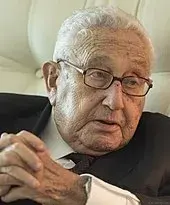
Legendary US Secretary of State and diplomat of consummate skill Henry Kissinger has raised the possibility of the world going to war unless the US-China trade battle is satisfactorily brought to a close. Addressing an international forum in Beijing recently Kissinger reportedly said, among other things: 'If the conflict is permitted to run unconstrained, the outcome could be even worse than it was in Europe….World War 1 broke out because of a relatively minor crisis….and today the weapons are more powerful.'
Regardless of the substantive merits of Kissinger's viewpoint, one believes the world would do right by heeding his words because the US-China trade war could indeed have some grave ill-consequences for the world unless it is contained. Dangerously irresponsible behaviour by either of the main actors could result in a dramatic heightening of international military tensions and the world could do without this. But a World War in the sense in which the world has come to know it? This is the question.
Observers of international politics would remember that WW1 was facilitated in the main by the existence of rival and antagonistic alliances of states which were united by common power aspirations. They could not have been described as 'power blocs' in the contemporary sense of that phrase. On one side were, Germany and Austria-Hungary and on the other, Russia, France and Britain. There were some relatively minor European states which were allied with either of these major alliances.
We did not have here any ideological polarities of the Cold War kind, which was a later development. However, it was power and influence which basically divided these alliances. Many of these allied states were colonial powers and were intent on acquiring and expanding on their power at the expense of their perceived rivals in the opposite camp.
Thus, power balancing between these rival alliances came to define international politics, which were mainly European-centred. Accordingly, the theatre of World War1 was mainly Europe. Generally, Germany and Austria-Hungary viewed with suspicion the conduct of Britain, France and Russia and vice versa.
[caption id="attachment_3808" align="alignleft" width="724"]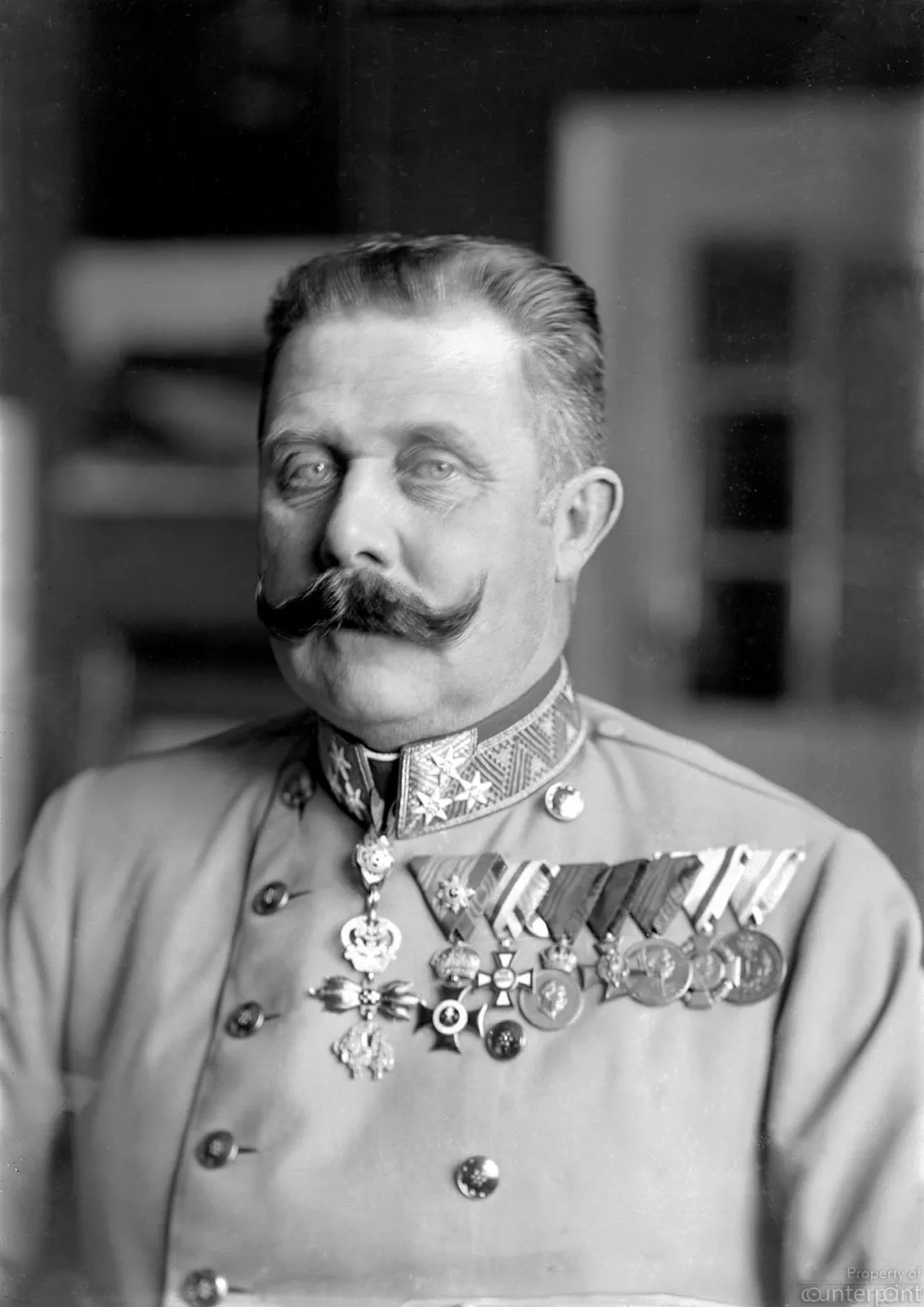 The assassination of Austrian Archduke, Franz Ferdinand set the stage for World War 1(Courtesy Wikipedia.org)[/caption]
As is well known, the assassination of Austrian Archduke, Franz Ferdinand and his wife in Bosnia, which was at the heart of the politics of these alliances at the time, triggered WW1 but the broader backdrop to the war was the struggle for power between the main alliances in question.
Russia happened to be allied with Bosnia at the time and when Austria-Hungary showed signs of going to war with Bosnia over the killing of the Austrian prince, Russia was obliged to threaten war against Austria-Hungary which brought Russia's arch rival Germany into the picture in view of its alliance with Austria-Hungary. The complete details need not engross us here. To make a long story short, the rival alliances were soon at war with each other to protect their respective friendly states from acts of war committed by their enemy states in the rival camp. Thus happened WW1.
From the point of view of our subject, what should be of interest is whether conditions that obtained in Europe in the run up to WW1 exist in the world today against the backdrop of heightened US-China tensions. Are there any similarities between the international power realities of the two ages that would justify the observer in predicting a conflict on the lines of WW1 today?
It is quite some time since the Cold War came to a close, signifying an end to the world's capitalism versus communism ideological contest. Needless to say, among other things, this conflict centred on rival socio-political and economic systems that divided almost the entirety of the world virtually down the middle. If not for the restraint exercised by the main power blocs, a world war could have occurred in Cold War times, considering the antagonisms that tended to occasionally get out of hand.
Among other factors, Mutually-Assured Destruction or MAD prevented the super powers from chancing their arm. This refers to the process of competitive arming between the super powers with the deadliest of weaponry. This process, though, continues and Kissinger was right in warning the world on this score. Russian President Vladimir Putin, for instance, speaks ominously of a deadly new weapons system his country is developing.
However, one could question whether World War conditions in their essentials prevail in the world today. While it would be naive to argue that armed conflicts among competing and rival states are not possible today, it would be misleading to state that seemingly antagonistic powers are spoiling for a fight over their keenly felt differences currently.
To begin with, there are no clearly visible and definable rival alliances of states or power blocs. There is no guarantee that any of the major powers would have allies falling over each other to go to their rescue in their time of need. This is true of both China and the US.
The reason for this phenomenon should be plain to see. Essentially and mainly, the terms of engagement among the most principled of states are economic and not political or ideological today. In analysing contemporary international relations, it is evident that it is economics and not politics or military considerations that are driving these ties. For example, the China-led Asian Infrastructure Investment Bank (AIIB) is having within its fold, quite a few prominent Western economic actors, such as, the UK, Canada, Germany, France, Italy and Spain. It is of note that the AIIB will be playing a pivotal role in the realization of China's 'Belt and Road' initiative that will be of world-wide reach almost.
The above is just one example of how countries are breaking traditional boundaries and restrictions to work in unison for their national interests, which have a high economic component. The West is no longer eager to link blindly with the US and it would disassociate itself from the US for pragmatic, practical reasons and self-interest. Gone are the days of die-hard alliances.
Accordingly, a WW1 scenario is unlikely to manifest itself in a hurry today. It doesn't follow that we have inherited a conflict-free world. Far from it; conflict and strife among countries would continue to be rife in the world. But we are not going to have World Wars of the destructive and mind-numbing kind that reduced parts of the world to a shambles. Countries will be guided in the main by self-interest and this rules out swift alliance-type formations that bring mutual destruction in their wake.
The assassination of Austrian Archduke, Franz Ferdinand set the stage for World War 1(Courtesy Wikipedia.org)[/caption]
As is well known, the assassination of Austrian Archduke, Franz Ferdinand and his wife in Bosnia, which was at the heart of the politics of these alliances at the time, triggered WW1 but the broader backdrop to the war was the struggle for power between the main alliances in question.
Russia happened to be allied with Bosnia at the time and when Austria-Hungary showed signs of going to war with Bosnia over the killing of the Austrian prince, Russia was obliged to threaten war against Austria-Hungary which brought Russia's arch rival Germany into the picture in view of its alliance with Austria-Hungary. The complete details need not engross us here. To make a long story short, the rival alliances were soon at war with each other to protect their respective friendly states from acts of war committed by their enemy states in the rival camp. Thus happened WW1.
From the point of view of our subject, what should be of interest is whether conditions that obtained in Europe in the run up to WW1 exist in the world today against the backdrop of heightened US-China tensions. Are there any similarities between the international power realities of the two ages that would justify the observer in predicting a conflict on the lines of WW1 today?
It is quite some time since the Cold War came to a close, signifying an end to the world's capitalism versus communism ideological contest. Needless to say, among other things, this conflict centred on rival socio-political and economic systems that divided almost the entirety of the world virtually down the middle. If not for the restraint exercised by the main power blocs, a world war could have occurred in Cold War times, considering the antagonisms that tended to occasionally get out of hand.
Among other factors, Mutually-Assured Destruction or MAD prevented the super powers from chancing their arm. This refers to the process of competitive arming between the super powers with the deadliest of weaponry. This process, though, continues and Kissinger was right in warning the world on this score. Russian President Vladimir Putin, for instance, speaks ominously of a deadly new weapons system his country is developing.
However, one could question whether World War conditions in their essentials prevail in the world today. While it would be naive to argue that armed conflicts among competing and rival states are not possible today, it would be misleading to state that seemingly antagonistic powers are spoiling for a fight over their keenly felt differences currently.
To begin with, there are no clearly visible and definable rival alliances of states or power blocs. There is no guarantee that any of the major powers would have allies falling over each other to go to their rescue in their time of need. This is true of both China and the US.
The reason for this phenomenon should be plain to see. Essentially and mainly, the terms of engagement among the most principled of states are economic and not political or ideological today. In analysing contemporary international relations, it is evident that it is economics and not politics or military considerations that are driving these ties. For example, the China-led Asian Infrastructure Investment Bank (AIIB) is having within its fold, quite a few prominent Western economic actors, such as, the UK, Canada, Germany, France, Italy and Spain. It is of note that the AIIB will be playing a pivotal role in the realization of China's 'Belt and Road' initiative that will be of world-wide reach almost.
The above is just one example of how countries are breaking traditional boundaries and restrictions to work in unison for their national interests, which have a high economic component. The West is no longer eager to link blindly with the US and it would disassociate itself from the US for pragmatic, practical reasons and self-interest. Gone are the days of die-hard alliances.
Accordingly, a WW1 scenario is unlikely to manifest itself in a hurry today. It doesn't follow that we have inherited a conflict-free world. Far from it; conflict and strife among countries would continue to be rife in the world. But we are not going to have World Wars of the destructive and mind-numbing kind that reduced parts of the world to a shambles. Countries will be guided in the main by self-interest and this rules out swift alliance-type formations that bring mutual destruction in their wake.
The assassination of Austrian Archduke, Franz Ferdinand set the stage for World War 1(Courtesy Wikipedia.org)[/caption]
As is well known, the assassination of Austrian Archduke, Franz Ferdinand and his wife in Bosnia, which was at the heart of the politics of these alliances at the time, triggered WW1 but the broader backdrop to the war was the struggle for power between the main alliances in question.
Russia happened to be allied with Bosnia at the time and when Austria-Hungary showed signs of going to war with Bosnia over the killing of the Austrian prince, Russia was obliged to threaten war against Austria-Hungary which brought Russia's arch rival Germany into the picture in view of its alliance with Austria-Hungary. The complete details need not engross us here. To make a long story short, the rival alliances were soon at war with each other to protect their respective friendly states from acts of war committed by their enemy states in the rival camp. Thus happened WW1.
From the point of view of our subject, what should be of interest is whether conditions that obtained in Europe in the run up to WW1 exist in the world today against the backdrop of heightened US-China tensions. Are there any similarities between the international power realities of the two ages that would justify the observer in predicting a conflict on the lines of WW1 today?
It is quite some time since the Cold War came to a close, signifying an end to the world's capitalism versus communism ideological contest. Needless to say, among other things, this conflict centred on rival socio-political and economic systems that divided almost the entirety of the world virtually down the middle. If not for the restraint exercised by the main power blocs, a world war could have occurred in Cold War times, considering the antagonisms that tended to occasionally get out of hand.
Among other factors, Mutually-Assured Destruction or MAD prevented the super powers from chancing their arm. This refers to the process of competitive arming between the super powers with the deadliest of weaponry. This process, though, continues and Kissinger was right in warning the world on this score. Russian President Vladimir Putin, for instance, speaks ominously of a deadly new weapons system his country is developing.
However, one could question whether World War conditions in their essentials prevail in the world today. While it would be naive to argue that armed conflicts among competing and rival states are not possible today, it would be misleading to state that seemingly antagonistic powers are spoiling for a fight over their keenly felt differences currently.
To begin with, there are no clearly visible and definable rival alliances of states or power blocs. There is no guarantee that any of the major powers would have allies falling over each other to go to their rescue in their time of need. This is true of both China and the US.
The reason for this phenomenon should be plain to see. Essentially and mainly, the terms of engagement among the most principled of states are economic and not political or ideological today. In analysing contemporary international relations, it is evident that it is economics and not politics or military considerations that are driving these ties. For example, the China-led Asian Infrastructure Investment Bank (AIIB) is having within its fold, quite a few prominent Western economic actors, such as, the UK, Canada, Germany, France, Italy and Spain. It is of note that the AIIB will be playing a pivotal role in the realization of China's 'Belt and Road' initiative that will be of world-wide reach almost.
The above is just one example of how countries are breaking traditional boundaries and restrictions to work in unison for their national interests, which have a high economic component. The West is no longer eager to link blindly with the US and it would disassociate itself from the US for pragmatic, practical reasons and self-interest. Gone are the days of die-hard alliances.
Accordingly, a WW1 scenario is unlikely to manifest itself in a hurry today. It doesn't follow that we have inherited a conflict-free world. Far from it; conflict and strife among countries would continue to be rife in the world. But we are not going to have World Wars of the destructive and mind-numbing kind that reduced parts of the world to a shambles. Countries will be guided in the main by self-interest and this rules out swift alliance-type formations that bring mutual destruction in their wake.RELATED NEWS
View all
WEELKY POLITICAL WATCH
Arrests eclipse battle over 22nd Amendment
Sep 04, 2026
Columns
Easter Sunday carnage probe: UNP makes strategic move
Jun 21, 2026

Columns
Indian Sinologist Shikha Pandey finds Xinjiang to be an appealing blend of the ancient and the ultra-modern
Nov 22, 2023
Current Affairs
World's medical fraternity wakes up to the need to study “medical atrocities”
Nov 16, 2023