Point of View, Counterpoint Political Desk
Govt. presents its third Budget amid political turbulence Trade unions girding up their loins for confrontation
By Counterpoint Political Desk
News about Sri Lanka was dominated this week by the presentation of Budget 2027, controversy over proposed security legislation, unrest surrounding Anuradhapura's Sacred City development, and mounting concerns over floods in urban centres, particularly Colombo City, and the threat of severe weather. Rising household expenses and questions about economic recovery also remained prominent.
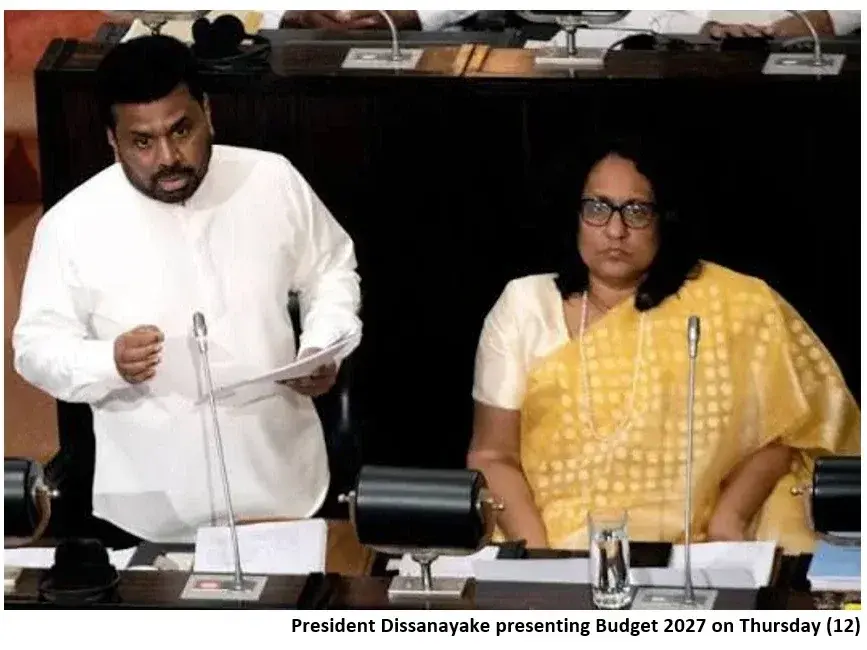
President and Finance Minister Anura Kumara Dissanayake presented Budget 2027 in Parliament on November 12, outlining a programme intended to move the country from what he described as economic stabilisation towards transformation. The proposals included public-sector salary increases, tax adjustments, development spending, social assistance and measures intended to strengthen the productive economy. The Budget also addressed debt sustainability and energy security, while the President announced that a Cabinet-appointed committee would examine whether Sri Lanka should enter another IMF programme after the current Extended Fund Facility expires in March 2027.
The Opposition questioned whether the proposals would provide sufficient relief to households struggling with the cost of living. The Budget debate is scheduled to continue until December 14, with the second-reading vote on November 20. In Sri Lanka, the implementation of Budgets is far from satisfactory, and most of budgetary allocations remain unutilized. This is an issue the Opposition recently raised in post-Budget media interviews.
Budget 2026 implementation: 33.3% financial progress
Implementation of Budget 2026 remains incomplete, with financial progress standing at 33.3 percent and physical progress at 37.5 per cent, according to the Budget Implementation Tracker
maintained by the Office of the Leader of the Opposition on Oversight.lk. The figures cover 62 Budget proposals across 21 ministries, with progress reported as at September 30, 2026.
Of the 62 proposals, implementation has commenced on 43, while 19 remain uninitiated. The total allocation for the proposals is Rs. 109.47 billion, of which approximately Rs. 50.15 billion remains unspent. Financial expenditure recorded against the proposals amounts to Rs. 20.52 billion, while physical implementation has reached Rs. 23.07 billion in terms of the tracker’s progress measurements.
The figures raise questions about the government's capacity to translate Budget announcements into tangible results within the financial year. Delays in implementation could undermine the expected economic and social benefits of public expenditure, particularly in development programmes and services intended to improve living standards. The tracker provides an opportunity for citizens and Parliament to scrutinise expenditure, identify implementation bottlenecks and demand accountability from ministries. However, the government must accelerate execution if Budget commitments are to produce meaningful results before the year ends.
Verité Research's Budget Promises Tracker, in its latest assessment of Budget 2025, examined 36 high-value expenditure proposals worth Rs. 212.25 billion. It found that 12 proposals (33%) had been fully implemented and three (8%) substantially implemented. Eight were partially implemented, five recorded poor progress and one was classified as a broken promise, while progress on seven remained undisclosed. Although implementation improved compared with previous years, nearly 40% of proposals had not demonstrated substantial implementation.
The Budget Implementation Tracker of the Ceylon Chamber of Commerce (CCC), meanwhile, examined 18 economic and business proposals in Budget 2026. Only one, the issuance of 5G communication licences, had been completed. Thirteen remained in progress, three were at the initial stage and one had not been started. The CCC emphasises that preliminary administrative action, Cabinet approval or funding allocation should not be mistaken for completed reform.
Thus, the proof of the pudding is in the eating where Sri Lankan Budgets are concerned.
Second-longest Budget speech
Following Ronnie de Mel's lengthy Budget speech, the Budget speech presented by President Dissanayake on November 12, 2026, for the coming year became the second-longest in history. It was delivered over four hours and 50 minutes.
President Dissanayake is the 25th Finance Minister of independent Sri Lanka. Among Finance Ministers have been distinguished political figures, such as J. R. Jayewardene, Sir Oliver Goonetilleke, M. D. H. Jayawardena, Stanley de Zoysa, Felix Dias Bandaranaike, Dr. N. M. Perera, U. B. Wanninayake, Ronnie de Mel, D. B. Wijetunga, Chandrika Bandaranaike, Mahinda Rajapaksa and Ranil Wickremesinghe.
Trade unions up in arms
Trade unions representing state sector engineers, executive officers, teachers and principals have already launched protests, claiming that their members have not received any benefits from Budget 2027. The Government Medical Officers Association (GMOA) has also declared that allowance increases from the Budget are not sufficient.
Budget 2027 contains some commendable features and is aimed at achieving macroeconomic stability and economic transformation. The government’s claim that the Treasury was overflowing with
funds raised people’s expectations of a substantial relief package, but the government has striven to ensure that the Budget conforms to IMF programme conditions. Sri Lanka is likely to consider entering into another agreement with the IMF after its current 48-month Extended Fund Facility (EFF) concludes in March 2027, according to Deputy Minister of Finance and Planning Anil Jayantha Fernando and President Dissanayake. So, the next Budget, too, will have to be with the parameters set by the IMF.
Security bills face constitutional and political challenges
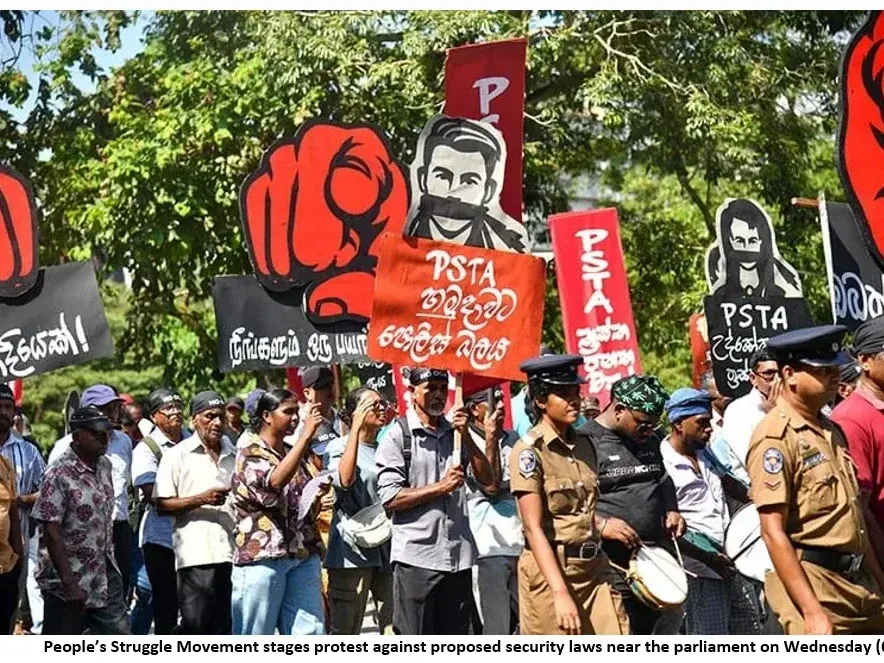
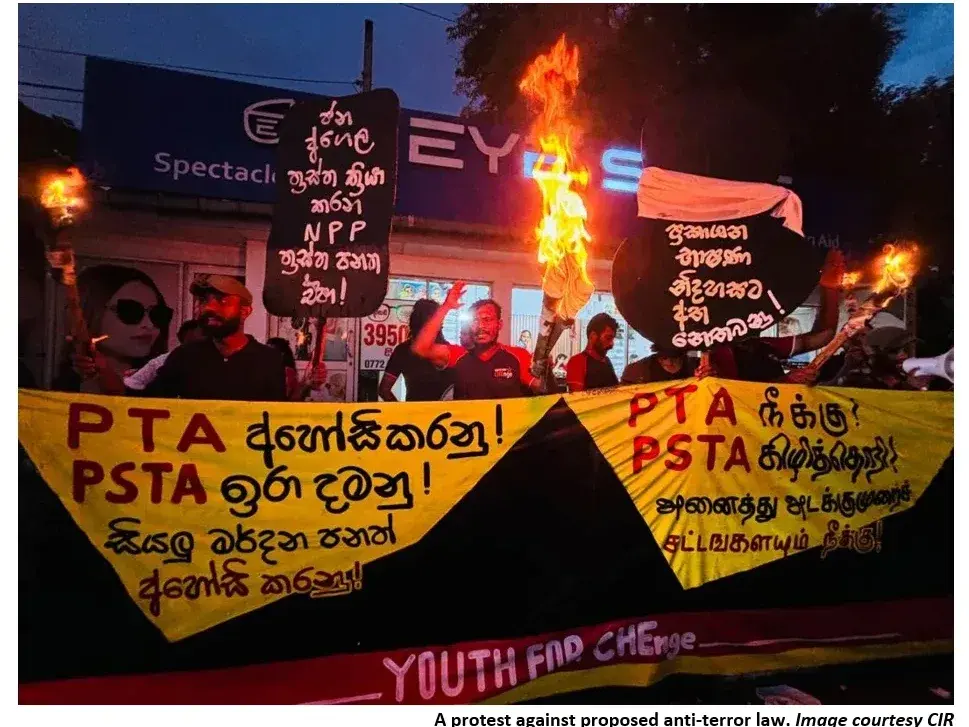
The proposed Protection of the State from Terrorism Bill (PSTA) and Prevention of Organised Crimes Bill remain contentious. President Dissanayake earlier pledged that the government would not proceed with the Bills without consultations with the public and relevant stakeholders. On November 12, Parliament announced that certain provisions of the proposed terrorism legislation were inconsistent with the Constitution, according to a Supreme Court determination. The developments intensified scrutiny of the government's proposed security laws and its commitment to democratic safeguards.
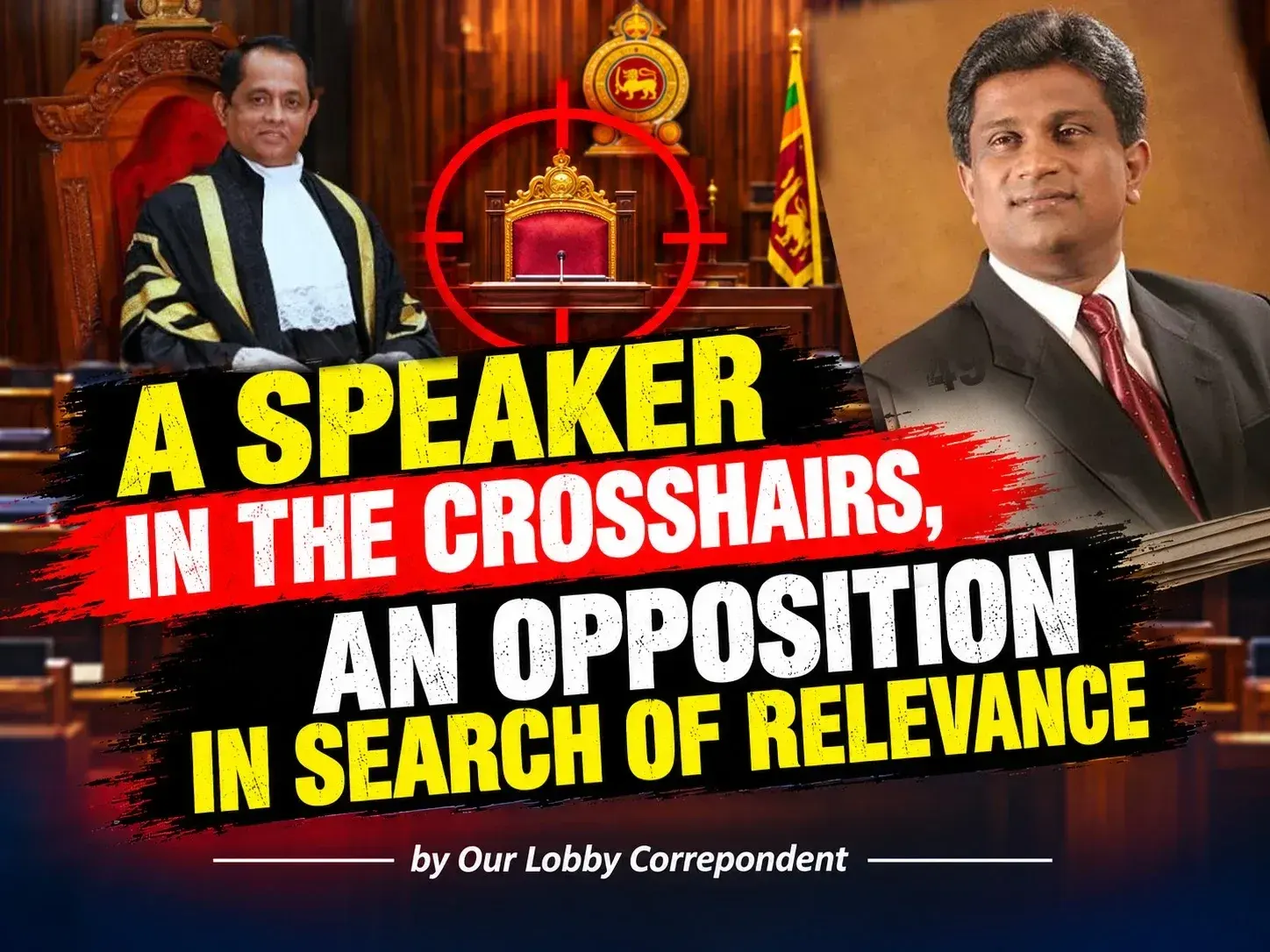
The Supreme Court has determined that several provisions of the PSTB are inconsistent with the Constitution, according to Speaker Dr. Jagath Wickramaratne who conveyed the apex court determination to the Parliament, but the Bill can be passed with a simple majority subject to committee-stage amendments requiring police applications for extended custody, replacing the Court of Appeal with the Supreme Court for judicial oversight, deleting a redundant provision and clarifying the scope of executive orders subject to judicial review.
Ruwanweli Maha Seya protests escalate
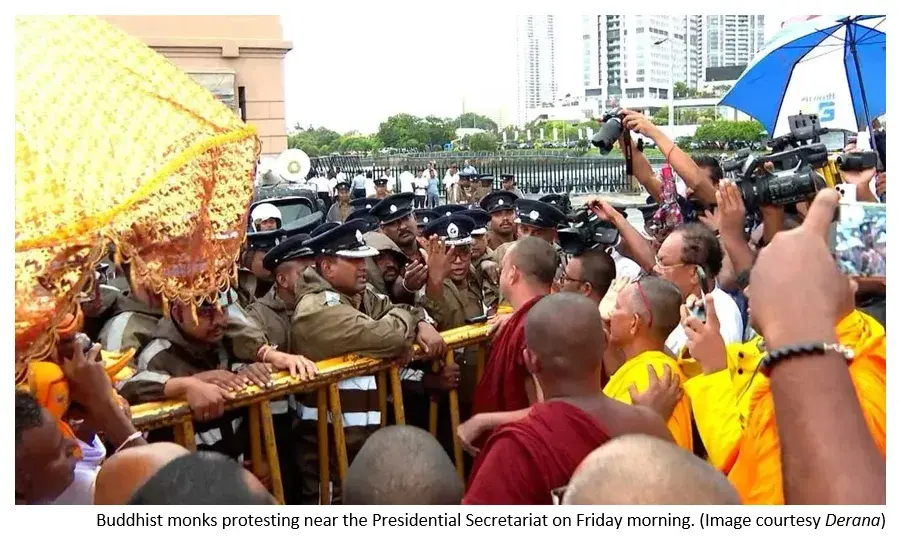
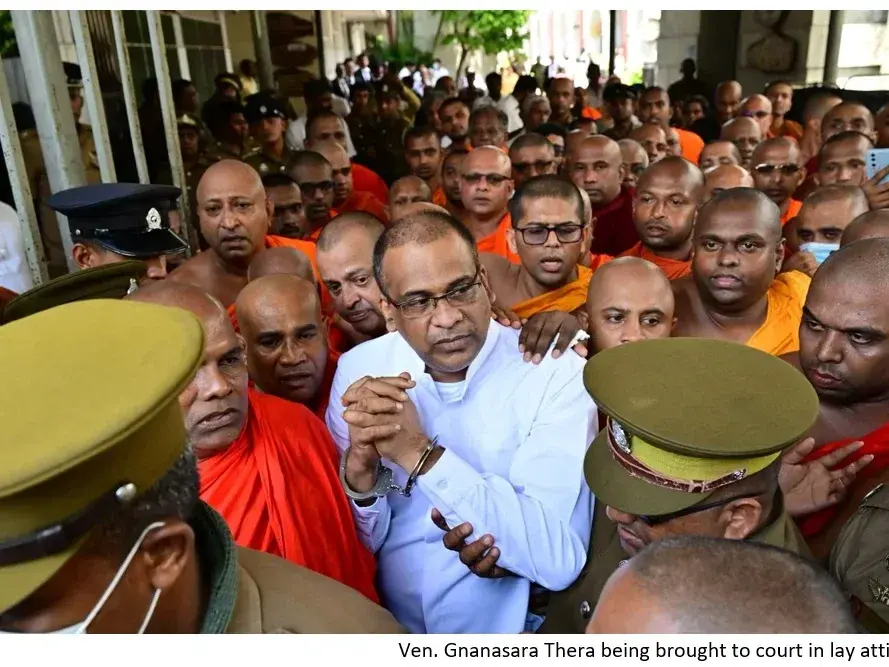
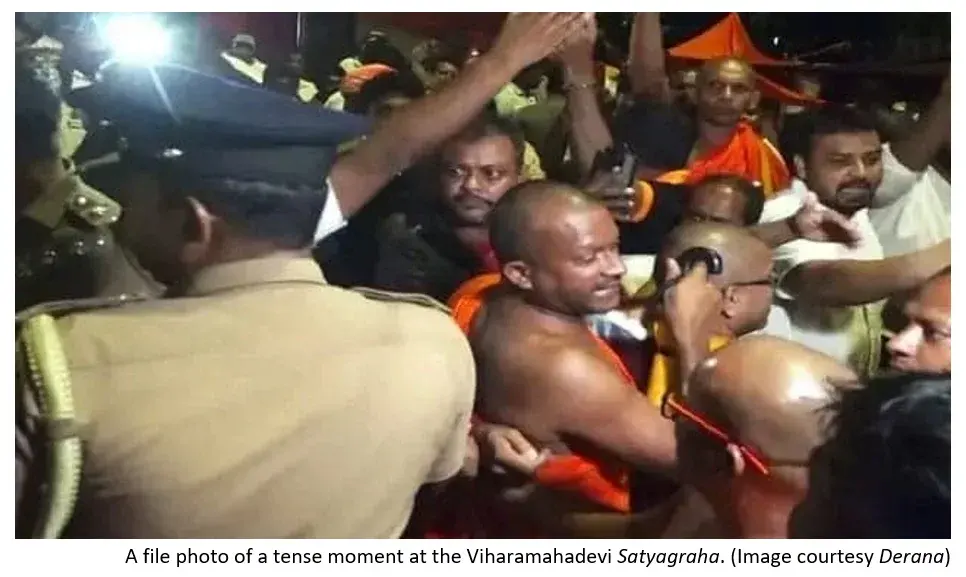
There is no end in sight to monks’ protests triggered by reincarceration and of Ven. Gnanasara Thera, who was subsequently produced in court, dressed in civilian attire, a few weeks ago. The protesters received a fresh rallying cry from tensions surrounding the proposed Anuradhapura Sacred City Development Plan escalated into confrontations near the Ruwanweli Maha Seya. Protesting monks have accused the government of trying to ‘Indianize’ Anuradhapura at the behest of New Delhi to strip the ancient city of its Buddhist heritage.
A group of monks, led by Ven. Balangoda Kassapa, engaged in a protest against the Anuradhapura development plan, staged a hunger strike near Ruwanweli Maha Seya. Clashes involving protesters and another group led to injuries and police intervention. Ven. Balangoda Kassapa Thera and other monks were arrested, while seven persons, including the monk, were subsequently remanded until November 26. The counter-protest was led by a former Buddhist monk who still wears the traditional robe and is widely considered loyal to the government.
The protesting monks and several Buddhis organizations have blamed the government for instigating the aforementioned clash to disrupt the monks’ fast. The controversy has raised questions about religious sensitivities, heritage conservation, urban development and the government's handling of protests.
Colombo floods and political battles
Colombo experienced severe flash flooding following exceptionally heavy rainfall on November 6. The Colombo Municipal Council (CMC) reported that approximately 129 mm of rain had fallen within an hour, overwhelming drainage infrastructure.
The flooding prompted calls to revive the World Bank-assisted Colombo City Flood Mitigation
Project. Authorities also announced plans to establish an emergency response task force involving the Tri-Forces, Police and relevant government institutions. The incident renewed concerns about inadequate drainage, unauthorised constructions in the city and the vulnerability of urban areas to extreme rainfall.
Both the government and the CMC have drawn heavy criticism for failure to maintain the stormwater drainage systems in the city despite their much-publicized promise before the 2025 local government polls to develop the city within six months.
Cyclonic storm threat raises concerns over severe weather
A low-pressure system developing over the southeastern Bay of Bengal prompted warnings of potentially severe weather. According to a weather advisory issued on November 13, the system could develop into a depression around November 15 and possibly intensify into a cyclonic storm by November 16. Heavy rainfall, flash floods and landslides were among the principal concerns. The warnings came amid already adverse weather conditions and renewed attention to disaster preparedness.
LPG price increase adds to household expenditure
LAUGFS Gas announced a substantial increase in domestic LPG prices effective midnight on November 13. The increases of Rs. 1,775 and Rs. 732 respectively were attributed to higher international LPG prices and import costs. The revision is likely to intensify concerns about household budgets, particularly among lower- and middle-income families.
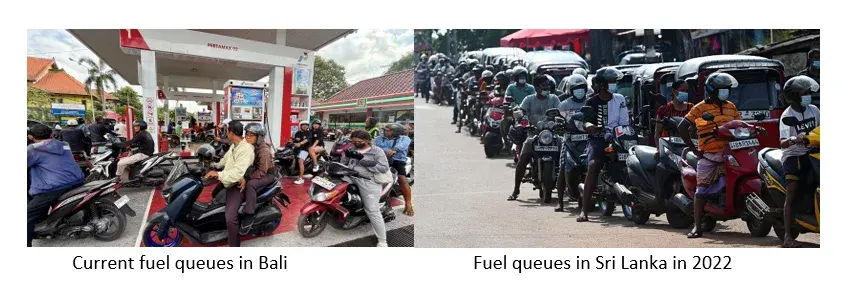
The government is under pressure to bring down gas prices, and direct LAUGFS to price its gas reasonably. The petrol and diesel prices have also increased steeply, sending the cost of living up, much to the resentment of the public. Fuel price hikes are mainly due to the conflict in West Asia, which is not showing signs of escalation thanks to the defeat of US President Donald Trump’s Republican Party in the recent midterm elections. The NPP government will be lucky if world oil prices drop, making it possible to reduced petroleum prices here.
Kawanthissa elephant death: Investigation deepens
The death of the celebrated tusker Kawanthissa continued to attract public attention. An interim post-mortem report submitted to the Mahawa Magistrate's Court on November 12 disclosed that three bullet fragments had been found in the elephant's abdomen. The Magistrate ordered the Criminal Investigation Department to take over the investigation into the shooting and remanded two suspects until November 25. The case has renewed calls for stronger wildlife protection and accountability for the killing of elephants.
Judicial independence controversy
Another issue that grabbed headlines was the sudden transfer of Gampaha Magistrate Bandula Gunaratne, who sought contempt proceedings against the IGP over failure to implement a court order, became a subject of parliamentary controversy. Opposition MPs claimed that the transfer undermined judicial independence. It will be interesting to see what will become of the Magistrate’s request that contempt of court proceedings be instituted against the IGP.
The week's developments underline three broad challenges confronting Sri Lanka: Economic recovery versus public hardship: Budget 2027 seeks to consolidate recovery and promote
transformation, but rising household expenses and demands for meaningful relief remain pressing. Governance and institutional accountability: Controversies over security legislation, judicial transfers and public protests have renewed scrutiny of the government's commitment to democratic governance and institutional independence. Climate vulnerability and public infrastructure: Flooding and the developing cyclonic threat have exposed the urgency of improving drainage, disaster preparedness and environmental management.
The coming week will be particularly important, with the commencement of the Budget debate, developments in the Anuradhapura protests and the evolving weather situation likely to remain at the forefront of public attention.
Share this story
RELATED NEWS
View all
Point of View
The North-East in Sri Lanka’s budget for 2027 skips Palaly Airport and Kankesanthurai Port, but pledges to resettle 13,000 war-displaced families
Nov 13, 2026
Point of View
Eventful week: Judge’s lightning transfer, Colombo floods, controversial laws and protests
Nov 07, 2026
Point of View
Raging battle over no-confidence motion and intl. concern over proposed security legislation
Oct 31, 2026
Point of View
Game of chicken between govt. and protesting monks continues
Oct 25, 2026