Mirror Wall
Whom the Gods would destroy, they first make mad!

By Kassapa
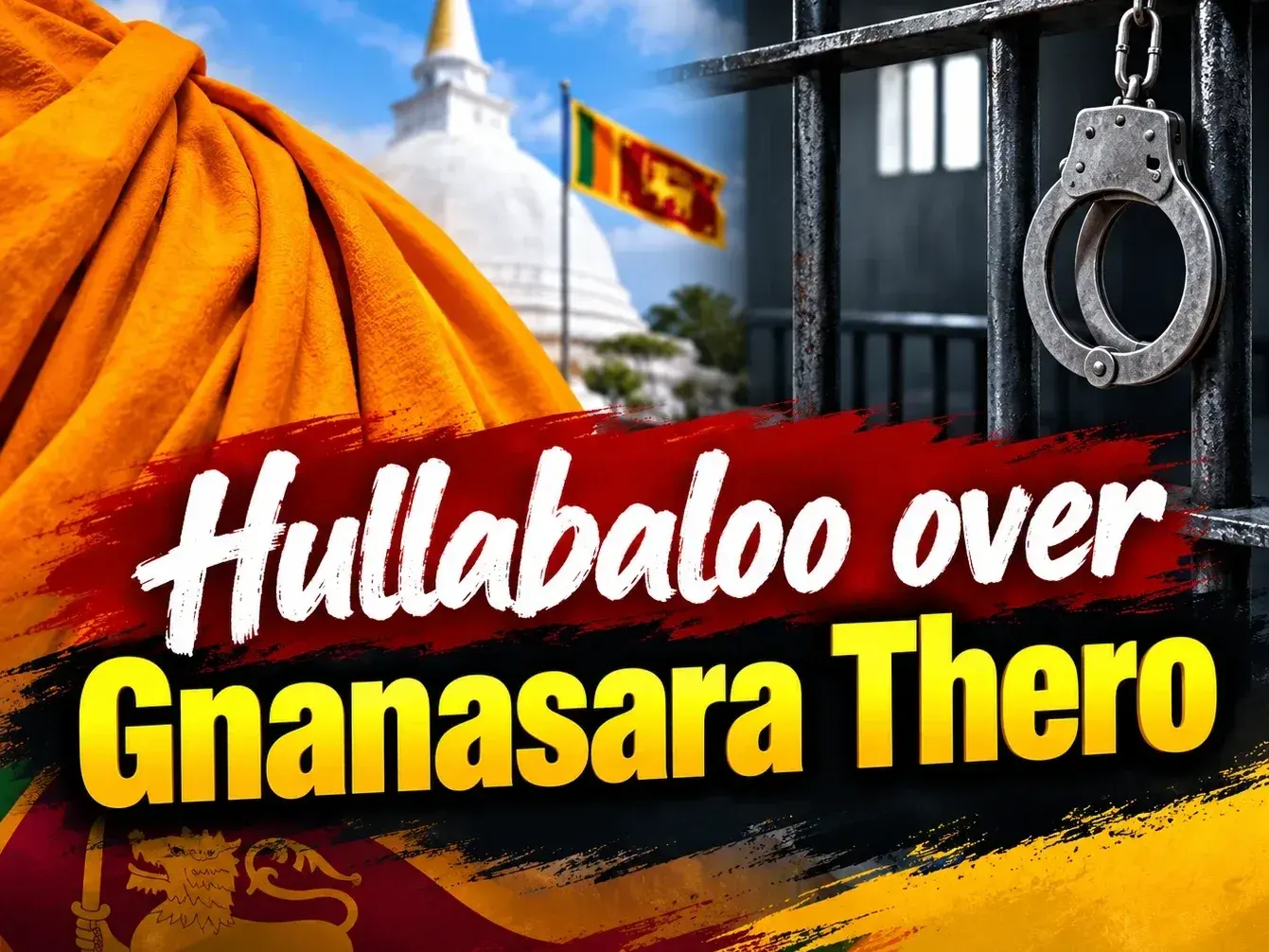
With each passing day, the Gnanasara saga takes an interesting turn. Galagoda Aththe Gnanasara thero, the controversial Buddhist monk who was jailed for contempt of court but pardoned by then President Maithripala Sirisena had his pardon annulled by the Supreme Court, triggering a series of tragi-comedic events.
At first, Gnanasara thero went missing. He was subsequently located, arrested and sent to prison with his sentence reactivated. He was then brought to court for a different case in layman’s attire, triggering a storm of protest. Since then, the government has yielded an inch, changing regulations, so prisoner monks can be brought to court clad in robes.
In the meantime though, a section of Buddhist monks has warmed to their favourite slogan of ‘saving Buddhism’ from, in this instance, the government. They organised a march from Kandy to Colombo which ended in a damp squib not only because of wet weather but also because of a lack of participants. The ‘river of people’ simply didn’t materialise. They have now settled into a protest at Vihara Mahadevi Park where ‘thovil’ rituals are being held to heap curses on the government and the President.
Their demand is simple: just disregard the legal processes and pardon Gnanasara thero. The all-powerful Executive Presidency allows President Anura Kumara Dissanayake to do that and he should do so forthwith or else, he is a traitor to Buddhism and a thousand curses will befall him, they say. To ensure the latter, ‘thovil’ are being performed. In keeping with the ‘thovil’ tradition, a miniature effigy of the President, double-pocket shirt and all, is to be stuck with needles. That image has now gone viral on social media provoking sarcastic comments that portray the monk protestors as uneducated, primitive and working against the basic tenets of Buddhism.
The protest by these monks received publicity greater in proportion to its actual impact, especially in two television networks known for their partiality towards the opposition. While all this was going on, there was a time when one wondered whether the government would capitulate, given it was the Buddhist clergy they were challenging, head on.
After some silence, Dissanayake responded. Although not directly referencing Gnanasara thero by name, he said those who were punished by the courts would not be pardoned. That would make a mockery of the justice system and the rule of law, he told a meeting in Badulla. He did make specific mention of how demands are being made to change decisions of the highest court in the land, the Supreme Court, and assured he would never do so. The message was clear: there would be no presidential pardon for Gnanasara thero from Anura Kumara Dissanayake. Allowing him to attend court in robes would be as far as the government was willing to yield.
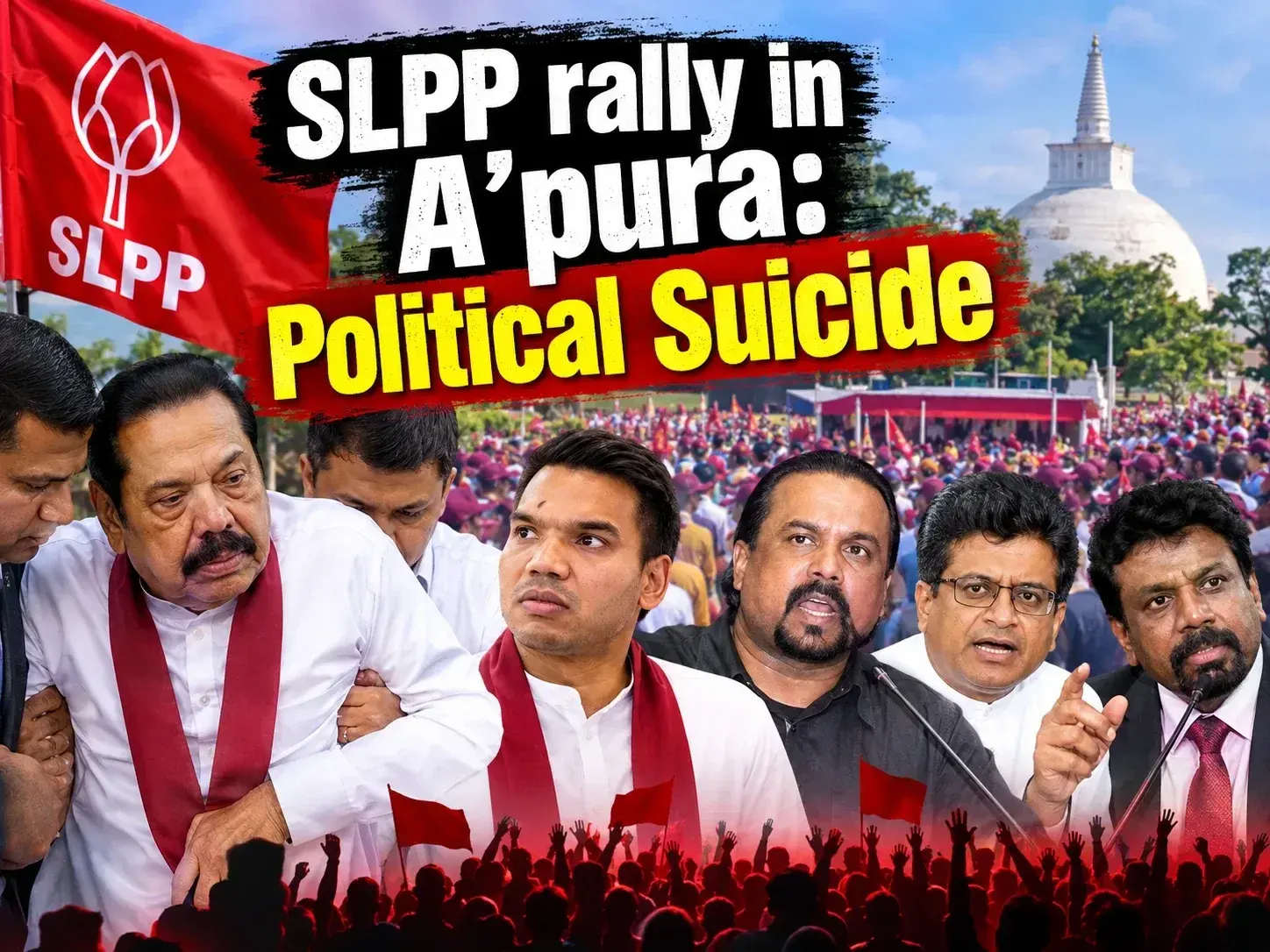
Politically, it is an interesting stand-off. Thus far, the demand for Gnanasara thero is being backed by the ‘usual suspects’ such as Wimal Weerawansa, Udaya Gammanpila and Dilith Jayaweera as well as the Sri Lanka Podujana Peramuna (SLPP) which is well-known for its ‘let us save Buddhism from the conspirators’ stance. Tacit support, in the way of statements and social media endorsements has also been coming from the Samagi Jana Balavegaya (SJB), which maybe committing a politically fatal blunder.
The absurdity of this situation is reflected in one simple fact: just a few weeks ago, the above-mentioned factions all stood alongside each other forgetting their political rivalries to oppose the 22nd Amendment, saying the amendment which increased the retirement age of judges amounts to an interference with the judiciary. Now, the same groups are banding together again, demanding the reversal of a decision handed down by the highest court in the land! And, they must think that the majority of the public- apart from those who follow them blindly, no matter what- are buffoons, not to see through such political opportunism.
At this time, the SLPP is too preoccupied with its own travails to lend its total support to the monks’ protest because its National Organiser Namal Rajapaksa is in remand custody, his mother Shiranthi is out on bail, his father Mahinda is ailing and his uncle Basil is evading summons. Make no mistake however, the SLPP will align with the monks as best as they can, at the first available opportunity.
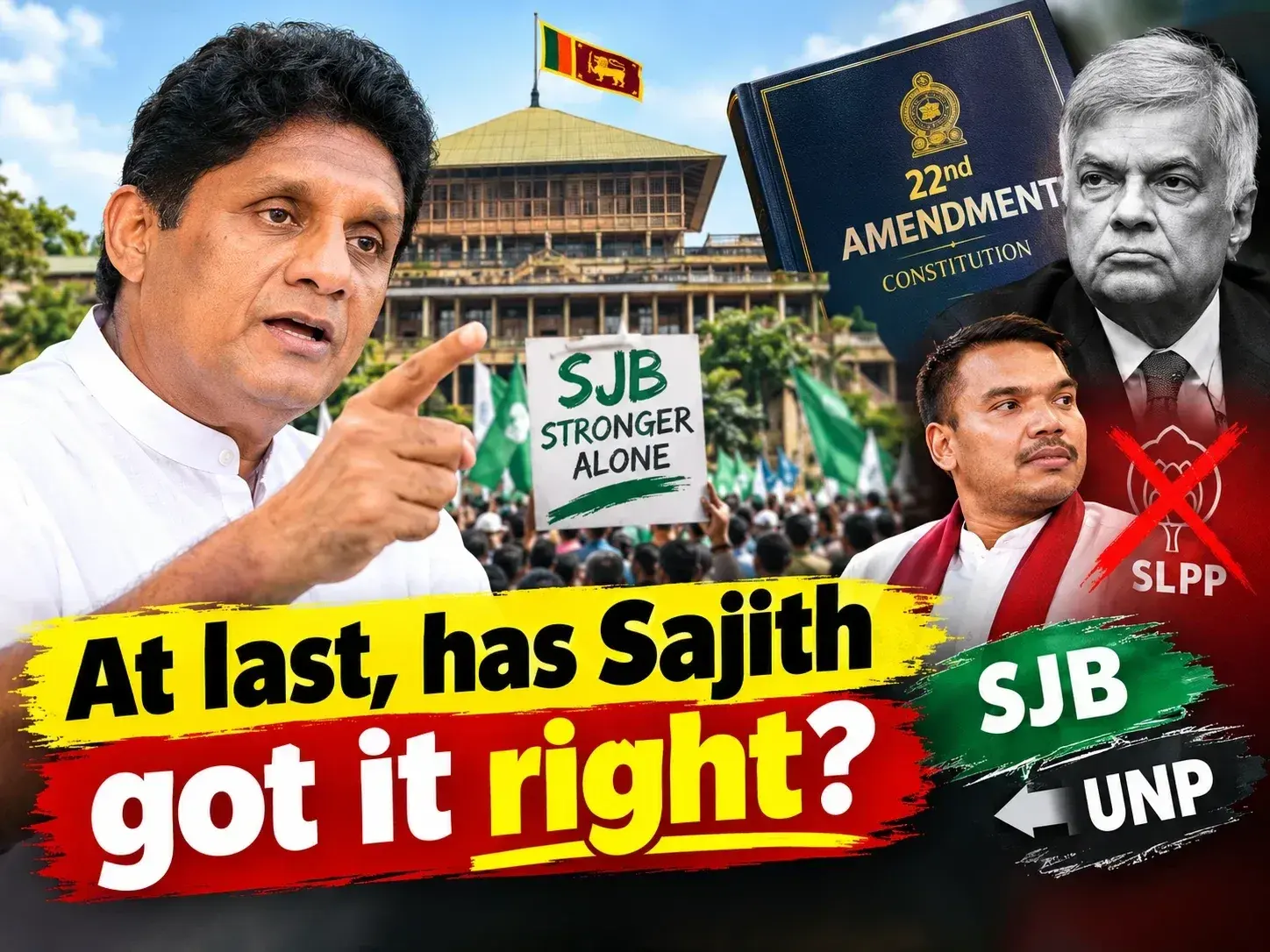
What is tragic is the SJB’s stance. Being a breakaway faction of the United National Party (UNP), voters identified it as the more inclusive, secular, liberal, tolerant alternative to the exclusive, nationalist, intolerant SLPP. We are not certain what Sajith Premadasa and the leadership group of the SJB is thinking, but by aligning themselves with the protests launched by the monks, the SJB risks being tarred by the same brush that is used to smear the SLPP. If the SJB is trying to steal the SLPP’s Sinhala Buddhist nationalist vote, they will never achieve that; that domain is reserved for the SLPP until the Rajapaksas are around.
The sight of party seniors Ranjith Madduma Bandara and Lakshman Kiriella being admonished severely by no less a person than the Mahanayake of the Malwatte chapter was social media gold for the government. More importantly, it betrayed the fact that even the venerable Mahanayake thero was able to read the underlying political current better than the SJB duo. Premadasa was not part of this meeting but it is also unlikely that Madduma Bandara and Kiriella would have adopted this stance without Premadasa’s endorsement.
Besides, a significant segment of the SJB’s supports comes from the Tamil and Muslim populations, especially in urban areas such as Colombo. By adopting a strong pro-Sinhala nationalist stance and standing together with monks with similar sentiments, the SJB risks alienating this segment of this vote base at a time when some of them have already gravitated towards the ruling National Peoples’ Power (NPP).
The priest’s protests are likely to fizzle out, just like their protest march did, but it underscored an important factor in Sri Lankan politics: opposition parties still believe that religion is the opium of the masses. Opium is intoxicating, even exhilarating but it also makes people mad.
Share this story