Current Affairs
Netanyahu’s Likud trails Eisenkot’s Yashar in Israeli pre-poll surveys
By P.K.Balachandran
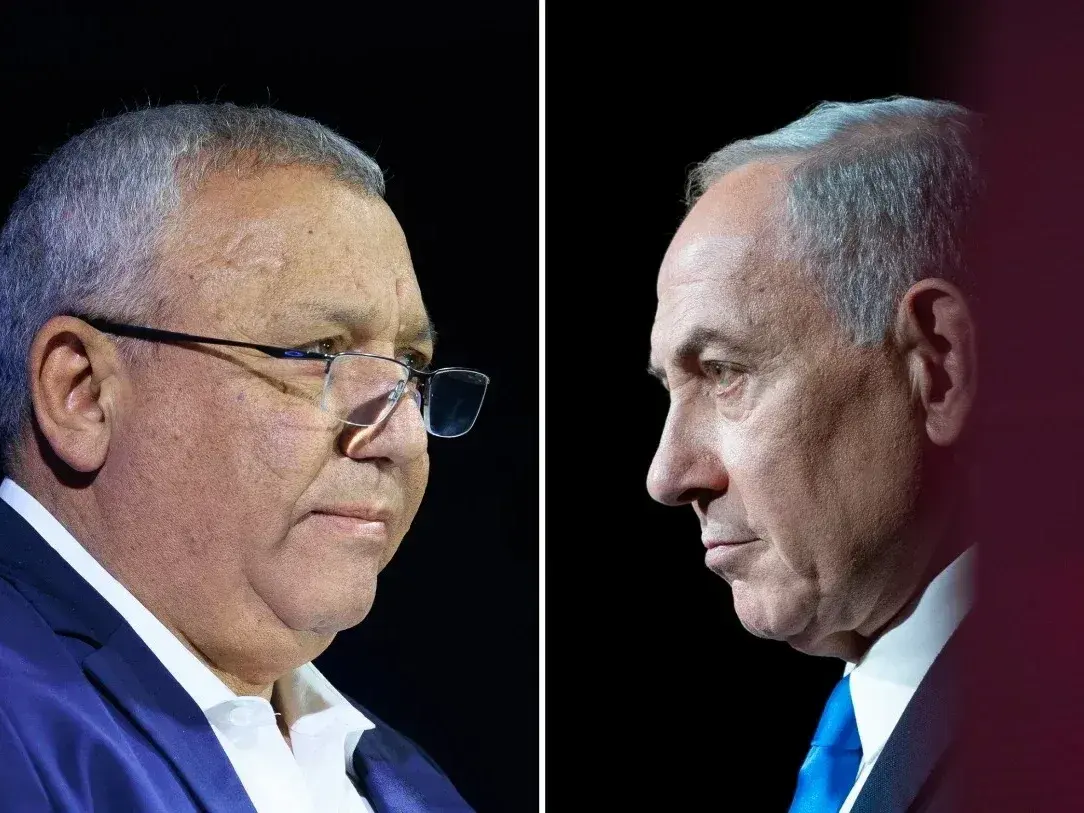
Colombo, October 22 - Elections to the Israeli parliament, the Knesset, to be held on 27 October, are expected to produce a photo finish between Prime Minister Benjamin Netanyahu’s Likud party and Gadi Eisenkot’s Yashar party, a new outfit created only a year ago.
According to the latest opinion surveys published by The Jerusalem Post, Prime Minister Benjamin Netanyahu’s Likud party is trailing behind Gadi Eisenkot’s Yashar party.
The elections carry global importance given the intensifying armed conflicts in the Middle East and Tel Aviv’s critical role in them.
An N12 News pre-poll survey published on Wednesday ranked Gadi Eisenkot’s Yashar party ahead with 23 of the total 120 seats. Channel 13’s survey also put Yashar ahead, but with 20 seats. In both polls, Prime Minister Benjamin Netanyahu’s Likud party came second with 19 seats.
Overall, N12 News projected that the opposition as a whole would win 55 seats and Netanyahu’s alliance 51. The Channel 13 poll showed Eisenkot’s bloc getting 52 and Netanyahu’s 49.
As the contest is extremely close, parties will be jockeying for alliances to form the government. Israeli parties share a broadly Zionist orientation, though they differ in the intensity of their positions on security, settlements and relations with the Arabs. Political alliances are therefore made and broken on pragmatic as well as ideological grounds.
Seats in the Israeli parliament are allocated on the basis of proportional representation. The whole country is one electoral district. Voters choose a party list, not an individual candidate. Seats are distributed proportionally according to the share of valid votes. The qualifying threshold for a party to enter the Knesset is 3.25 per cent. Parties often enter into surplus-vote agreements. If a party in such an agreement fails to clear the threshold, its votes are wasted and cannot be transferred. Surplus votes can be transferred only between parties that have both passed the threshold.
Current Position
Benjamin Netanyahu’s Likud (Labour party) currently holds 32 of the total 120 seats. The governing bloc as a whole has 60 seats (Likud 32, Shas 11, Religious Zionism 7, Otzma Yehudit 6 and New Hope 4). The opposition also holds 60 seats, leaving every vote critical in securing a majority in the House. Netanyahu is therefore in a precarious position.
Nature and Base of Parties
Netanyahu was first elected in 1996 and has served as prime minister for roughly 20 of the last 30 years. His career has been built on hawkish stances against Israel’s adversaries, expansion of West Bank settlements and opposition to Palestinian statehood. His current government, in power since 2022, is widely regarded as the most right-wing in Israeli history. He now faces significant questions. His campaign against Hamas has not produced a decisive outcome, and efforts directed at Iran have met with limited success.
Critics allege that earlier policies toward Hamas indirectly strengthened the group relative to the Palestinian Authority, and that warnings ahead of the October 2023 attack that killed approximately 1,200 Israelis were insufficiently heeded. Netanyahu has opposed an official commission of inquiry into those events. Fighting with Hezbollah continues, and the West Bank remains volatile for Israeli settlers. An International Criminal Court arrest warrant remains outstanding against him on charges related to the Gaza conflict.
Gadi Eisenkot’s Yashar Party
Gadi Eisenkot’s Yashar (Upright) party was founded in 2025 and currently holds no seats, yet it has emerged as Netanyahu’s principal rival. A former chief of staff of the Israel Defence Forces (2015–2019), Eisenkot, 66, has served in the Knesset since 2022 but has limited ministerial experience. Of Moroccan origin (a Mizrahi Jew), he operates in a political culture long dominated by figures of European (Ashkenazi) background.
But Eisenkot is a firm Zionist. During Israel’s 2006 Lebanon war he articulated the “Dahiya Doctrine,” which called for the use of disproportionate force against civilian infrastructure linked to militant groups. He gained prominence during the prolonged Hamas hostage crisis and after the deaths of his son Gal and two nephews in Gaza in 2023 and 2024. However, he opposes formal annexation of the West Bank on the grounds that it would exceed Israel’s capacity to manage the territory.
Eisenkot has rejected reliance on Palestinian parties to form a government and, because of his insistence on compulsory military service, is unlikely to partner with ultra-Orthodox parties that seek to preserve exemptions for Haredi men.
Itamar Ben-Gvir’s Otzma Yehudit
Itamar Ben-Gvir’s Otzma Yehudit (“Jewish Power”) holds six seats in the Knesset. Once regarded as too extreme for mainstream politics, the party has pulled Netanyahu’s government further to the right since 2022 and is expected to gain seats, particularly among West Bank settlers. It supports annexation of the West Bank.
A Knesset member since 2021, Ben-Gvir became National Security minister in 2022 despite earlier criminal convictions for incitement to racism and support for a terrorist organisation. He has been sanctioned by the UK, France and other states over his rhetoric and policies regarding Gaza. He asserts Jewish sovereignty over the Al-Aqsa compound in Jerusalem.
Otzma Yehudit advocates “voluntary emigration” of Palestinians from Gaza; its rallies have featured chants of “Death to Arabs.” Party figures have discussed the death penalty for certain Palestinian offences and, in extreme statements, the use of nuclear weapons against Gaza.
His relations with ultra-Orthodox communities remain tense over the issue of conscription.
Bezalel Smotrich’s Religious Zionist Party
Bezalel Smotrich’s Religious Zionism Party holds seven seats and has grown through its partnership in the ruling coalition. It performed strongly in 2022 thanks to an electoral pact with Otzma Yehudit.
Smotrich, 46, the son of an Orthodox rabbi, draws support from a more religious base than Ben-Gvir and favours the application of Jewish religious law (Halacha). He has served as finance minister since 2022.Smotrich calls for the abrogation of the Oslo Accords, the dismantling of the Palestinian Authority, and Israeli settlement of both Gaza and the West Bank. Prosecutors at the International Criminal Court have sought his arrest on allegations related to the West Bank.
Naftali Bennett and Yair Lapid
Former prime ministers Naftali Bennett (2021–22) and Yair Lapid (July–December 2022) announced a joint ticket in April, later named B’yachad (“Together”).
Bennett, 54, is a long-time opponent of Palestinian statehood and a former leader of the Yesha Council representing West Bank settlers. A software entrepreneur, he served as Netanyahu’s chief of staff from 2006 to 2008 before the two fell out.
Yair Lapid, a former television host and writer, founded Yesh Atid (“There is a Future”) in 2012. Though a secular centrist, he opposes Palestinian statehood and supports the settlement enterprise in principle while distancing himself from the more extreme positions of Ben-Gvir and Smotrich.
Yair Golan’s The Democrats
Yair Golan’s “The Democrats” hold four seats. Formed in 2024 from the Labor Party and the smaller Meretz, the party describes itself as a liberal-democratic Zionist force.
Golan, 64, was among the few Israeli politicians to criticise the scale of Palestinian civilian casualties in Gaza, describing it at one point as a “national psychosis,” though he later clarified that he held the military rather than political decision-makers primarily responsible.
A former deputy chief of staff (2014–2017), he re-enlisted after 7 October 2023 and is credited with helping to rescue Israelis during the Hamas attacks, earning him a reputation as a war hero among many Israelis. The Democrats oppose annexation of the West Bank, support a two-state solution, have fielded an Arab candidate, and are the only major party openly willing to consider coalition arrangements with Arab parties.
Avigdor Lieberman’s Yisrael Beiteinu
Avigdor Lieberman’s Yisrael Beiteinu (Israel Our Home) holds six seats and draws support primarily from Israel’s roughly 1.5 million Russian-speaking citizens. Lieberman, 68, emigrated from the former Soviet Union. The party has previously served in coalition governments and Lieberman has held senior posts including deputy prime minister.
It supports universal conscription, settlement expansion and tougher policies toward Iran, Hamas and Hezbollah. Lieberman has faced corruption investigations and was convicted in 2001 of assaulting a child. Once an ally of Netanyahu, he is now outside the governing coalition and claims to have warned both Netanyahu and Eisenkot of a possible Hamas attack before 7 October.
Shas and United Torah Judaism
Shas (short for Sephardic Guardians) and United Torah Judaism, are ultra-Orthodox parties which draw strong support from Haredi Jews, who constitute about 14 per cent of Israel’s population. Both prioritise religious authority in public life. Shas, with 11 seats (the text earlier cites 14 in places; current figures vary by source), is backed mainly by Sephardi and Mizrahi ultra-Orthodox voters. It has participated in seven of the last ten Israeli governments and remains part of the current coalition.
In recent years it has moved further right, aligning with Ben-Gvir. Its Knesset leader is Aryeh Deri, 67, who has held multiple ministerial posts and served a prison sentence for bribery in the early 2000s. Shas focuses on protecting Torah study and the interests of its conservative base; in return it has supported Netanyahu on Gaza and settlement policy.
United Torah Judaism (UTJ), with seven seats, represents Ashkenazi ultra-Orthodox streams and is a union of Agudat Yisrael and Degel HaTorah. It is chaired in the Knesset by Yaakov Asher, though ultimate authority rests with senior rabbis.
Like Shas, its priorities centre on preserving ultra-Orthodox life. Although many of its voters live in settlements, the party is officially non-Zionist, holding that a fully Jewish state should await the arrival of the Messiah. Some of its rabbis have criticised the Gaza war because of Israeli military casualties. The conscription issue has strained its relationship with Netanyahu. In May, UTJ withdrew support and called for the government’s collapse after legislation securing military exemptions failed.
The party is now reported to view Eisenkot as a potentially preferable coalition partner.
Palestinian franchise and Israeli Arab parties
Millions of Palestinians in the West Bank, East Jerusalem and Gaza, under Israeli occupation for nearly six decades, lack Israeli citizenship and cannot vote. Approximately two million Palestinian citizens of Israel, however, do possess the franchise. Arab turnout has historically been lower than the Jewish average, but a higher participation rate of around 70 per cent is projected this time given the gravity of current issues.
Three of the main Arab-led parties—Hadash, Ta’al and Balad—are contesting together as the “Joint List” under Hadash leader Yousef Jabareen, 54.
The list holds five seats. In September, Israel’s Central Elections Committee banned the parties on the claim that they denied Israel’s existence as a Jewish and democratic state. The Supreme Court overturned the ban on 2 October. The parties, which are secular, demand greater civil rights for Palestinian citizens of Israel, criticise Israeli policy in Gaza and West Bank settlements, and support a two-state solution.
But ideological differences persist among them Hadash includes communist and left-wing elements and fields both Arab and Jewish candidates. Ta’al is a moderate nationalist party. Balad has also proposed a Jewish candidate.
The Joint List aims to become a power-broker, although no Arab party has yet been invited into a governing coalition and most Jewish-led parties rule out cooperation.
Mansour Abbas’s Ra’am (United Arab List) holds five seats. Led by Abbas, 52, it is the only Arab-led party to have served in government, during the short-lived Bennett–Lapid coalition of 2021–22.
It was also banned in September before the Supreme Court reinstated it. Rooted in political Islam and socially conservative, Ra’am criticises Israeli conduct in Gaza and settlements but adopts a more pragmatic stance toward the Israeli state than the Joint List. Abbas prioritises civil rights for Palestinian citizens of Israel over the national aspirations of Palestinians in the occupied territories.
For the first time Ra’am has fielded a Jewish candidate, former police chief and Yesh Atid MK Yoav Segalovitz.
The outcome of the 27 October vote will hinge on turnout, surplus-vote agreements and the ability of the major blocs to construct a workable majority of at least 61 seats. With both the Netanyahu-led and Eisenkot-led camps currently projected near the 50-seat mark, the weeks after the election are likely to feature intense negotiations among the smaller parties that hold the balance of power.
END
Share this story
RELATED NEWS
View all

Current Affairs
Bloody killings mar the backdrop of Bollywood films
Oct 20, 2026

Current Affairs
UNHRC Special Rapporteurs write to Sri Lankan President their concerns about the NGOs’ bill
Oct 02, 2026
Current Affairs
Denial of the right to vote is not new in India
Oct 01, 2026
Current Affairs
The 1948 UNSC resolution on Kashmir was in India’s favour
Sep 25, 2026