Current Affairs
Geopolitical changes put India’s foreign policy at the crossroads
Colombo, July 10
- Till the beginning of this year, it appeared as if India was on the rise. It had become the world’s fourth largest economy and its leader, Prime Minister Narendra Modi, was inspiring Indians to dream of being a “super power”. Indians were convinced that the world cannot ignore them given the ever-expanding Indian market. The encomiums that Modi was receiving across continents graphically illustrated India’s rising international status.
But there were serious chinks in India’s armour. It was at odds with its neighbours. Pakistan, has been persistently demanding Kashmir, and to press its claim, was sending terrorists to India to wreak havoc. Bangladesh, which had been subservient to India so long as Sheikh Hasina was in power, turned hostile upon her ouster, and had been befriending India’s rivals, Pakistan and China. Be that as it may, India was confident that it had the wherewithal to be the hegemon.
At the broader international level, India boldly followed an independent foreign policy in its national interest. It bought oil from Russia despite US sanctions against the latter. It continued to operate Chabahar port in Iran notwithstanding American sanctions against Iran. India refused to condemn the Russian invasion of Ukraine, despite being a strategic partner of the US which was backing Ukraine. India’s relations with China was abnormal due to the border dispute and India’s membership in the anti-China QUAD, and yet it carried on a flourishing trade with China.
Vanishing Comfort Zone
But India’s comfort zone suddenly vanished later in 2025. US President Donald Trump’s “Make America Great Again” programme hit India hard. Scores of Indian illegal immigrants were chained in the foot and flown back to India in a military transport plane like cattle. India was rendered speechless by Trump’s brazen display of insensitivity.
Trump repeatedly condemned India for its protectionist trade policies and threatened punishing tariffs. A trade pact with India got stalled as the US sought drastic reductions in India’s tariffs and demanded entry of American dairy and farm products into India, which would threaten the livelihoods of millions of poor Indian farmers.
Pahalgam Terror Strike
Then came the terrorist attack in Pahalgam in Kashmir on April 22, in which 26 Hindu men were killed allegedly by a group based in Pakistan. India reacted by keeping the Indus-Water Sharing Treaty in abeyance thus denying irrigation water to Pakistan. It then conducted air raids against “terror bases” in Pakistan. The four-day India-Pakistan air and missile war ended only when US President Trump intervened.
While Pakistan appreciated Trump’s intervention and nominated him for the Nobel Peace Prize, India gave no credit to him. Indians found fault with him for equating or hyphenating India and Pakistan, which was hurtful to proud Indians, the self-styled “Numero Uno” in South Asia.
While Pakistan claimed that it had shot down six Indian fighter jets, India was eloquently silent on this, raising doubts about its superiority while raising the politico-military profile of Pakistan in the eyes of the West. And Trump rubbed salt into the wound by inviting the Pakistani army chief Field Marshal Asim Munir for a luncheon meeting at the White House. The US also invited the Pakistani air chief Air Marshal Zaheer Babar Sidhu for a discussion, indicating a revival of old US-Pakistan military ties aimed at India. The US also expressed optimism about mining rare earths in Pakistan and the joint promotion of crypto currency. The US was adding an economic dimension to its ties with Pakistan.
India Pursued Demonization of Pakistan
For its part, India kept pursuing its pet project of demonizing Pakistan as an incubator and exporter of terrorism, but only with partial success. The world was apparently reluctant to buy the Indian case without adequate proof. The West was also not happy with India for threatening Pakistan’s nuclear installations. India sent seven all-party delegations to 33 countries to explain its stand. But success eluded these missions.
Over a period of time, India had been shedding its ties with the Global South. It became equivocal on the Iran-Israel war and Israel’s genocidal attacks in Gaza. India’s “nuanced and principled stand” on these issues, gave the impression that it was a handmaiden of the US and Israel. This weakened its case in key international forums.
SCO Meeting
At the Shanghai Cooperation Organization’s meeting of Defence Ministers in Qingdao in China on June 25 and 26, India refused to sign a statement which did not mention the terror attack at Pahalgam and Pakistan’s alleged links with it. The document referred to Balochistan, indirectly blaming India for unrest in the region without naming it explicitly.
On the Iran-Israel war, India did not condemn Israel’s brazen attack on Iran’s nuclear facilities and sought avoidance escalation.
Success at QUAD Foreign Ministers’ meet on July 1
At the QUAD meeting in Washington on July 1, India was able to score as it was an exclusive club of pro-West nations. In its resolution QUAD said, that it “unequivocally condemns all acts of terrorism and violent extremism in all its forms and manifestations, including cross-border terrorism, and renews its commitment to counterterrorism cooperation.”
“We condemn in the strongest terms the terrorist attack in Pahalgam, Jammu and Kashmir on April 22, 2025, which claimed the lives of 25 Indian nationals and one Nepali citizen, while injuring several others. We call for the perpetrators, organizers, and financiers of this reprehensible act to be brought to justice without any delay and urge all UN Member States, in accordance with their obligations under international law and relevant UNSCRs, to cooperate actively with all relevant authorities in this regard.”
BRICS Summit July 6
Perhaps because of the absence of Chinese President Xi Jinping from the BRICS summit in Rio de Janeiro on July 6, India was able to get Pahalgam and cross-border terrorism mentioned in the statement.
BRICS condemned in the “strongest terms the terrorist attack in Jammu and Kashmir on 22 April 2025, during which 26 people were killed and many more injured. We reaffirm our commitment to combating terrorism in all its forms and manifestations, including the cross-border movement of terrorists, terrorism financing and safe havens.”
“We reiterate that terrorism should not be associated with any religion, nationality, civilization or ethnic group and that all those involved in terrorist activities and their support must be held accountable and brought to justice in accordance with relevant national and international law. We urge to ensure zero tolerance for terrorism and reject double standards in countering terrorism. We emphasize the primary responsibility of States in combating terrorism and that global efforts to prevent and counter terrorist threats must fully comply with their obligations under international law, including the Charter of the United Nations.”
Alternative to SAARC?
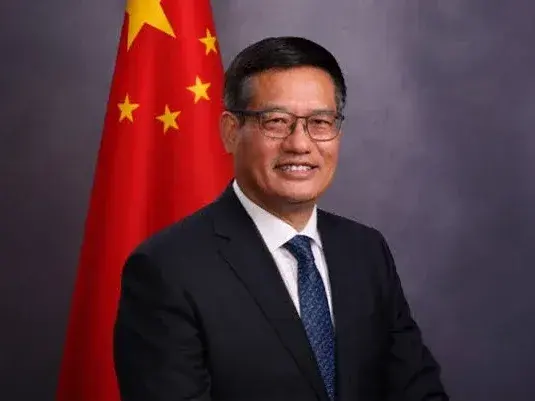
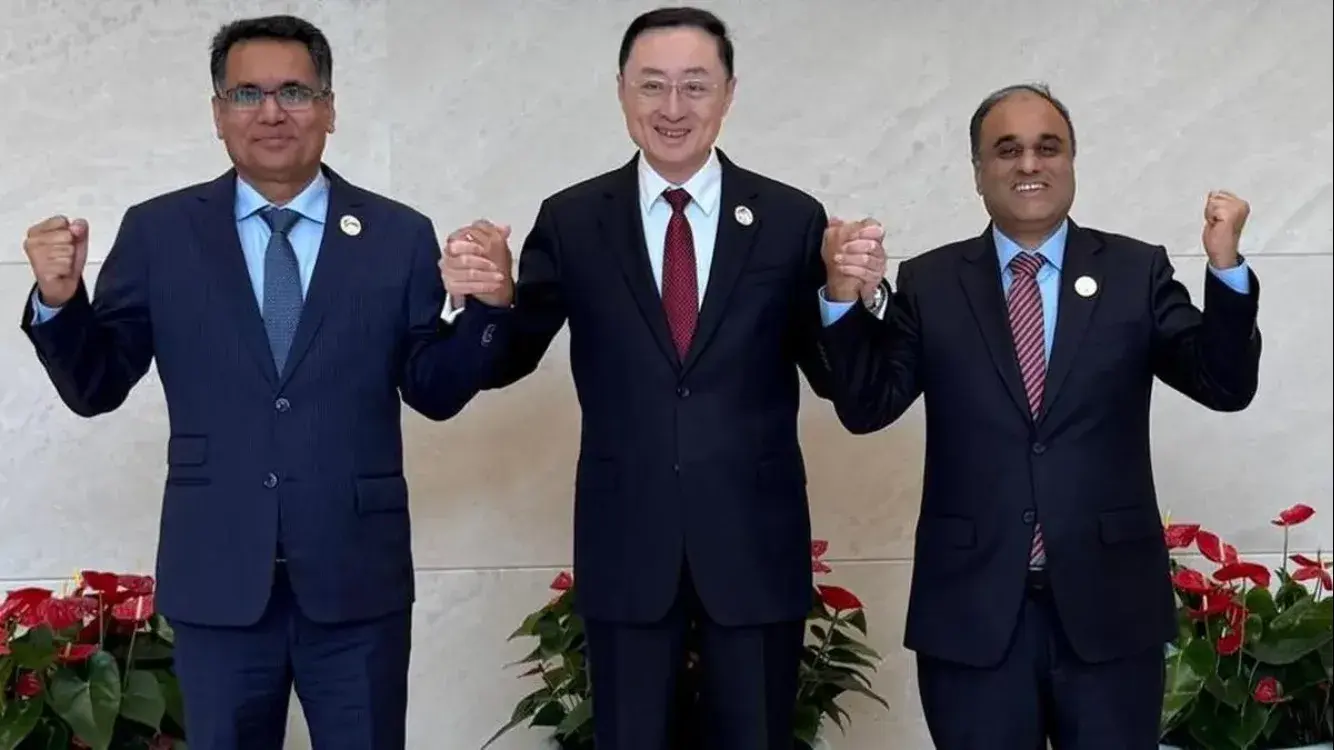
On June 20, China, Pakistan, and Bangladesh met at Kunming in China to deepen trilateral cooperation across various sectors. The meeting was attended by the Chinese Vice Foreign Minister Sun Weidong, Acting Foreign Secretary Ruhul Alam Siddique representing Bangladesh, and Additional Secretary Imran Ahmed Siddiqui representing Pakistan. Pakistan’s Foreign Secretary Amna Baloch participated via video link.
The three countries committed to exploring collaborative projects in key areas such as trade, industry, maritime affairs, water resources, agriculture, climate change, health, education, youth engagement, culture, and think tank collaboration. They decided to form a trilateral working group to oversee implementation of the agreed initiatives.
The joint statement said that the trilateral framework is rooted in “true multilateralism and open regionalism” and emphasized that it is “not directed at any third party,” thus indicating that India is welcome to join and is not anti-India.
However, many in India describe this meeting as a bid to form an alternative to SAARC which had been made dysfunctional by India’s persistent opposition to Pakistan over cross-border terrorism issue.
However, the trilateral groomed by China could be an alternative because it would be a group of like-minded countries. More importantly it will have one leader only, namely China. And given China’s penchant for executing development projects, China can fulfil a felt need in the member countries for development projects, circumventing political divisions which stymied SAARC’s projects.
Unexpected geopolitical changes have put the Modi government’s much extolled independent foreign policy at the crossroads. It is time India’s policy makers had brainstorming sessions to make sense of the emerging world and chalk out a new and realistic path.
END
RELATED NEWS
View all

Current Affairs
Sri Lankan Presidential pardons- the good and the bad
Sep 11, 2026
Current Affairs
The pros and cons of joining BRICS- the dilemma of Pakistan and Bangladesh
Sep 09, 2026
Current Affairs
Disaster in Nepal gets embroiled in geopolitics.
Sep 08, 2026
Current Affairs
Why Mecca Pact, and what does it imply for its members, Israel and India?
Aug 18, 2026