Current Affairs
Pakistan is faced with the prospect of a two-front conflict, if not a two-front war
By P.K.Balachandran
Colombo, October 18 – For Pakistan, what was a “one-front war” with India in May, got complicated in October, with a “hot war” being fought with Afghanistan on its Western borders and a “war of words” with India in the East.
Before long, Pakistan could face a “two-front hot war” with Afghanistan and India if efforts are not quickly made to cool tempers in Pakistan and India.
Even as the Pakistan air force and ground troops were attacking bases of the Afghan Taliban and the Tehrik-i-Taliban Pakistan (TTP) in Afghanistan, Pakistan accused India of aiding and abetting the Afghan Taliban and the TTP. Pakistan had, for long, been charging India of colluding with the Afghan Taliban.
Muttaqi’s Presence in India
But what provoked the latest barrage of accusations against India was the presence of the Afghan Foreign Minister Amir Khan Muttaqi in India where the red carpet was rolled out for him.
India assured Muttaqi of economic aid and the upgrading of the status of the Indian mission in Kabul albeit without formal recognition. In return, Muttaqi supported India on the question of Jammu and Kashmir, angering Pakistan which disputes India’s claim to this State.
Pakistan concluded that Afghanistan and India were in cahoots and a decision was taken to deliver a punishing blow to Afghanistan that had been allegedly supporting the TTP.
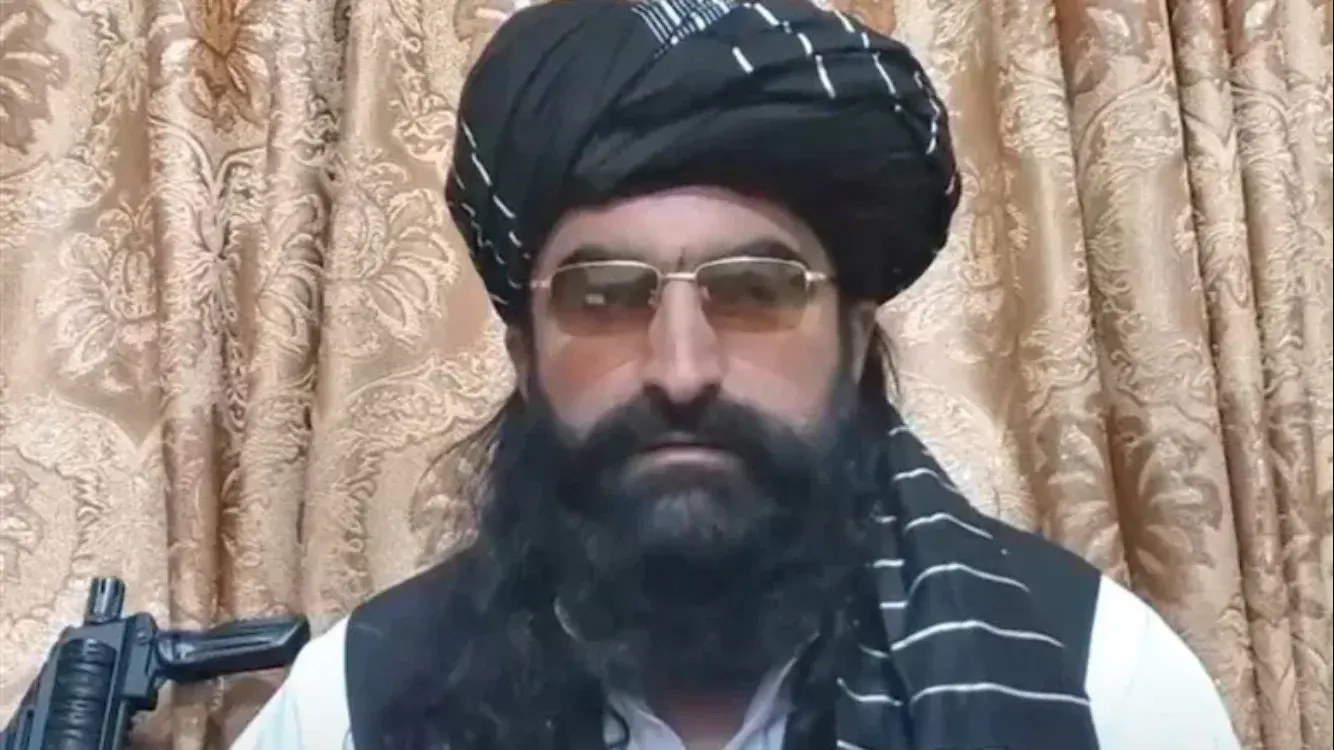
Observers did not fail to notice that Pakistan conducted its first air strike against Afghanistan even as Muttaqi was talking to the Indians in New Delhi. The opening salvo was telling as it was aimed at Kabul, the Afghan capital, and the target was a TTP leader, Noor Wali Mehsud.
Afghan government troops, the Afghan Taliban and the TTP fought back and attacked Pakistani troops inside Pakistan. However, Saudi Arabia, Qatar and Iran promptly intervened and stopped the fighting.
But the tension between Afghanistan, Pakistan and India continued. The air is now thick with belligerent statements from Pakistan and India. Afghanistan, however, is relatively restrained because it is not in a position to take aerial attacks by Pakistan any more, and there is no country to support it militarily. India is too far away and separated by hostile Pakistan.
But Pakistan could attack India only to send a message to both Kabul and New Delhi. Islamabad may get encouraged by the spirited performance of its air force in the conflict with India in May, and by the domestic support it can get for any kinetic action against India.
The Pakistan government has been describing India as the villain in the Pak-Afghan conflict by naming one of the Pakistani terror groups as “Fitna al Hindustan” (Mischief of India). Therefore, Pakistan government might come under popular pressure to have a go at India.
Pakistan’s Defence Minister Khawaja Asif said, "I do not want escalation but the risks are real. If it comes to war, God willing, we will achieve a better result than before. History shows that India was never one united nation except briefly under Aurangzeb. Pakistan was created in the name of Allah. At home, we argue and compete. But in a fight with India, we come together."
Earlier, Indian Army Chief Gen Upendra Dwivedi issued a sharp warning to Pakistan, stating, "Either stop supporting terrorism or get ready to lose its geographical presence." He added that India is fully prepared this time and would not show the restraint it did during "Operation Sindoor 1.0."
Defence Minister Rajnath Singh had similarly cautioned that any misadventure from Pakistan in the Sir Creek region would be met with a decisive response capable of altering both history and geography.
Prime Minister Narendra Modi had stated that Operation Sindoor (of May) was only suspended not stopped. It could be revived if the Pakistanis became adventurist, he said.
The Pakistan Army responded saying such rhetoric risks triggering "cataclysmic devastation" if a conflict breaks out between the neighbours.
"In the face of highly provocative statements of the Indian Defence Minister and its Army and Air Chiefs, we caution that a future conflict might lead to cataclysmic devastation. In case a fresh round of hostilities is triggered, Pakistan shall not hold back. We shall resolutely respond, without any qualms or restraint," it said in the statement.
"In the face of unwarranted threats and reckless aggression, the people and the Armed Forces of Pakistan have the capability and resolve to take the fight to every nook and corner of the enemy’s territory. This time, we shall shatter the myth of geographic immunity, hitting the farthest reaches of the Indian territory. As for the talk of erasing Pakistan from the map, India must know that if the situation comes, the erasure will be mutual."
The commander of India’s Western Army commander Lt. Gen. Manoj Kumar Katiyar said on Tuesday that Pakistan may attempt a Pahalgam-type terror attack again. He maintained that Pakistan continues its policy of "bleeding India through a thousand cuts but the Indian Army is fully prepared to deal with it.”
Therefore, before long, Pakistan could be facing a “two-front hot war” with Afghanistan on the Western borders, and with India on the eastern, unless of course, efforts are made to cool tempers in both countries.
Outside Support
In the event of a second confrontation with India, Pakistan hopes to get the support of the US and financial support from Saudi Arabia, with which it had signed a Mutual Defence Pact recently.
Pakistan had struck up a thick friendship with the US in the aftermath of the May air war. Pakistan had praised President Trump’s intervention to end the war and save the sub-continent from a nuclear holocaust. Pakistan promptly nominated Trump for the Nobel Peace Prize.
India, on the other hand, refused to recognize Trump’s role and did not say that he deserved the Nobel prize, hurting Trump’s ego. Trump has since emerged as an admirer of the Pakistani army chief Field Marshal Asim Munir also. Munir is playing a crucial role in giving the US access to the rare earths mining sector in Pakistan.
On his part, Trump has been going after India. He would not give in to India on the tariff issue. On top of the 50% tariff already imposed, he has said that he will raise the levies by 50% if India does not stop buying oil from sanctioned Russia.
The absence of Prime Minister Modi at the Sharm el Sheikh summit in Egypt to mark the signing of the Gaza peace deal would have disappointed Trump who ended up making the Pakistani Prime Minister Shehbaz Sharif deliver a speech at the summit and was happy with the praise showered on him.
Pakistan also hopes to get China’ help as it has developed a lasting and iron-clad relationship with Beijing despite its close ties with the US. Pakistan and China had been collaborating in international forums to deny India access to an UN-sanctioned terrorist Masood Azhar of Jaish-e-Mohammad sheltered by Pakistan. China could make incursions into India’s northern or eastern borders in case it decides to join an India-Pakistan war on Pakistan’s side.
Though, at the moment, India lacks powerful backers (as the world’s response to its Operation Sindoor showed in May), India’s inherent economic strength will prevent any long war. Powerful and economically strong countries of the world will doubtless intervene diplomatically to being about a ceasefire.
There are also domestic political compulsions for Pakistani and Indian leaders to grandstand on the issue. The Pakistani leadership (comprising the Sharif government and the military) is facing a legitimacy issue because a substantial section of the population in Khyber Pakhtunkhwa province, which supports jailed leader Imran Khan, think that the government lacks the peoples’ mandate. Whipping up nationalist fervour against perceived external enemies (in this case Afghanistan and India) and following it up by some kinetic action on the border would help gain popular support.
And after failing to get vocal international support on Operation Sindoor (except from Israel and Afghanistan) the Modi government needs to show some muscle power to retrieve its image. Moreover, in November, Modi’s Bharatiya Janata Party (BJP) will be facing critical elections in Bihar, a large North Indian State. It is up against a tough challenge mounted by the opposition. Many political pundits expect the results of the Bihar elections to determine the attitude and actions of the powers-that-be in New Delhi.
END
RELATED NEWS
View all

Current Affairs
Sri Lankan Presidential pardons- the good and the bad
Sep 11, 2026
Current Affairs
The pros and cons of joining BRICS- the dilemma of Pakistan and Bangladesh
Sep 09, 2026
Current Affairs
Disaster in Nepal gets embroiled in geopolitics.
Sep 08, 2026
Current Affairs
Why Mecca Pact, and what does it imply for its members, Israel and India?
Aug 18, 2026