Current Affairs
Pros and cons of having pre-election Caretaker Governments
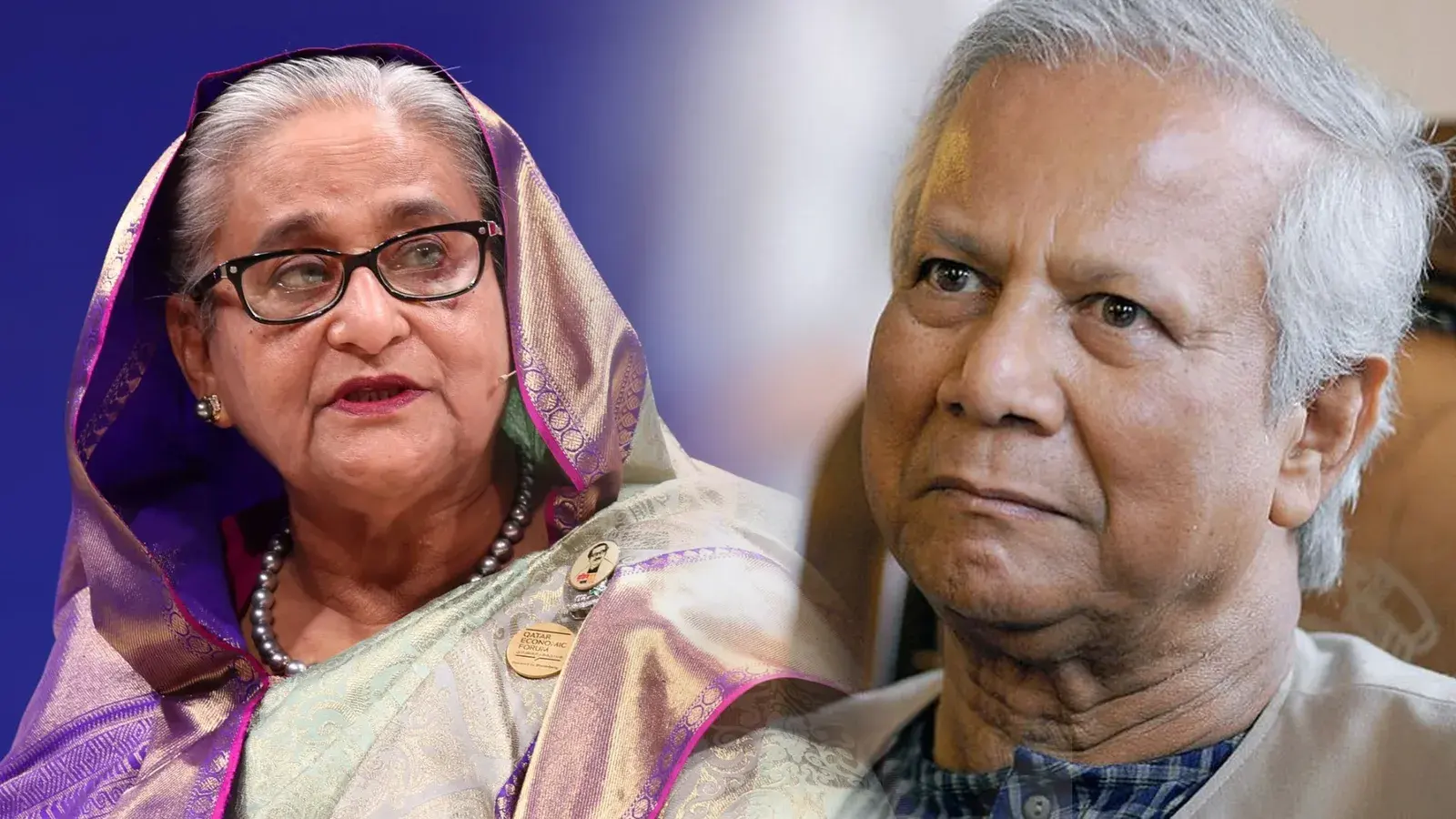
On November 20, the Bangladesh Supreme Court restored the nonpartisan Caretaker Government (CG) system to conduct free and fair elections in a political eco-system with a long history of brazen malpractices.
By P.K.Balachandran
Colombo, November 22 –“It’s not the people who vote that count, it’s the people who count the votes” said Joseph Stalin about elections in democratic countries. Indeed, election malpractices are a glaring flaw in the working of democracies.
But countries have tried out various legal and administrative methods to address the issue. One of these is the setting up of a non-party, neutral, Caretaker Government (CG) to administer the country during an election to ensure that there is no misuse of power to gain undue electoral advantage.
The grant of INR 10,000 to women, and the brazen misuse of the Election Commission of India to disenfranchise 4.7 million voters in Bihar just before the November 6 State Assembly elections did contribute to the victory of the ruling National Democratic Alliance (NDA). Therefore, there is an urgent need to adopt a neutral CG to conduct free and fair elections in India.
The CG system has been tried out in Bangladesh and Pakistan, though with mixed results. The experience of neutral non-party CGs in conducting elections in these countries bring out both their uses and flaws. But the system has proved to be intrinsically good, and the best available, at any rate.
Bangladesh Re-establishes CG System
On November 20, the Bangladesh’s Supreme Court restored the nonpartisan CG system for future parliamentary elections. The coming parliamentary elections in February 2026 will be deemed to have been conducted by a neutral government because the Interim Government of Dr.Muhammad Yunus is by definition “non-partisan Interim Government”.
The seven-member Supreme court had ruled unanimously on two appeals and four petitions to annul its own 2011 verdict to abolish the CG system.
The annulment of 2011 verdict now in 2025 is in accordance with the July 2024 anti-fascist declaration issued during the mass struggle against the authoritarian Awami League regime headed by Sheikh Hasina.
History
The CG system was introduced in Bangladesh in 1996 on the unanimous demand of political parties. After the introduction of the CG system, two elections were held under CGs headed by former Chief Justices of the Supreme Court. These CGs ensured that polling and the transfer of power were smooth.
However, disputes about the neutrality of subsequent CGs resulted in the CG system being scrapped though the 15thConstitutional Amendment introduced by the Sheikh Hasina-led government in 2011.
The scrapping was ostensibly done at the Supreme Court's suggestion. But the opposition charged that Hasina had engineered the judgement to manipulate every election in favour of her party, the Awami League.
As predicted, the Awami League government oversaw the elections held in 2014, 2018 and 2024 without a CG and won all. The Bangladesh Nationalist Party (BNP) headed by former Prime Minister Khaleda Zia, boycotted the 2014 and 2024 elections, demanding the restoration of the CG system. Hasina rejected the demand saying that in established democracies like the UK and US, elections were always held under the incumbent governments’ watch and not a CG.
The CG system in Bangladesh was the result of an all-party struggle against the 10-year rule of military dictator Gen. H.M. Ershad. The struggle ended with the exit of Ershad in 1990. But the CG system did not come into being immediately after Ershad’s exit because the next government , led by the BNP, did not implement the CG system.
Four years later, in 1994, the main opposition parties, the Awami League and Jamaat-i-Islami, gave the BNP a deadline of December 27 1994 to accept their demand for a CG. When this was not accepted, 147 MPs of the Awami League and other parties resigned. A violent movement led by the Awami League forced Khaleda Zia to introduce the “Caretaker Government bill” in parliament on March 21 1996, which was passed five days later. She then dissolved parliament on March 30,1996.
Chief Justice Habibur Rahman became the head of the Caretaker Government and parliament elections were held. The Awami League was elected and Sheikh Hasina became Prime Minister.
The next parliamentary election was conducted by a CG led by former Chief Justice Latifur Rahman. In that election, the BNP won and Khaleda Zia became Prime Minister.
However, the next CG led by KM Hasan Sahib, was controversial because of his close association with the BNP. An Awami League-Jamaat -i-Islami agitation followed. Forty people were killed in the violence in Paltan on October 28, 2006. KM Hasan Saheb resigned.
The BNP government then appointed Iazuddin Ahmed. But he was a BNP man. The Awami League and the people again agitated forcing Iazuddin to resign. Martial Law was imposed and Fakhruddin Ahmed became head of the Caretaker Government. Under Fakhruddin Ahmed’s leadership, the ninth parliamentary elections were held. The Awami League won and formed the government with a two-thirds majority.
Constitutionality of CG System Questioned
While the Awami League was in power, the Supreme Court was faced with a question about the constitutionality of the CG system. It was asked whether the CG system conflicted with parliamentary democracy. In a parliamentary democracy unelected persons could not govern the State it was pointed out.
And if the constitution has a permanent provision to appoint the most recently retired Chief Justice as the head of the CG, that would also be a violation of parliamentary democracy and the constitution. The impartiality of the CG could not be guaranteed in if a just retired Chief Justice was made head of the CG.
The jurisdiction of the CG also remains a critical sticking point. Historically, caretaker administrations in Bangladesh were given limited authority to govern. However, given the past instances of overreach, particularly under Fakhruddin Ahmed, there were calls for clearer constitutional guardrails to prevent unelected interim governments from exceeding their mandate.
Professor Ali Riaz, vice president of the Bangladesh National Consensus Commission, has said that while political parties broadly support reviving the caretaker framework, they are divided over the extent of its authority and specific powers.
The method for appointing the head of the CG continues to be a divisive issue. Currently, the BNP and the National Citizen Party (NCP) are arguing for a fully political, consensus-based mechanism, rejecting any judicial or Presidential role.
By contrast, the Jamaat-e-Islami supports the appointment of retired Supreme Court justices. Other proposals include the creation of an All-Party Parliamentary Committee or even a National Constitutional Council to nominate the head of the CG.
Constitutional challenges also persist. Bangladesh’s current constitution does not provide for an unelected interim government, revealing serious legal ambiguities. The constitution has to be amended and only an elected parliament can do that.
The Supreme Court’s advisory opinion has been sought to clarify whether the present Yunus-led interim administration can be ratified retroactively.
Political observers warn that unless these questions are resolved, the caretaker system could once again face a legitimacy crisis.
Pakistan
As regards the CG system in Pakistan, it was not mentioned in the 1973 Constitution, nor its predecessors, the 1956 and 1962 Constitutions. The concept of a CG was added to the 1973 Constitution by the military dictator, Gen. Ziaul Haq, in 1985, through the Revival of Constitution of 1973 Order, 1985 (RCO for short).
Gen. Zia was motivated to bring in the CG system because of the rigging of the 1977 election and the subsequent imposition of martial law. Gen Ayub Khan’s election rigging to defeat Fatima Jinnah in the 1965 elections was also a factor.
On the question of the CG’s head (called Caretaker Prime Minister), Zia’s law provided that in case there was no consensus within three days following the dissolution of the National Assembly, two nominees should be sent to a committee constituted by the Speaker of the Assembly. In case of the failure of the committee to appoint a Caretaker Prime Minister within three days of referral, the nominees shall be referred to the Election Commission of Pakistan (ECP) for final decision within two days.
In 2013, the Pakistan Supreme Court said in the Khawaja Muhammad Asif vs Federation of Pakistan case, that the CG had limited powers and authority. He could not make major policy decisions, appointments, transfers, or promotions that would affect the future elected government. The court also observed that there were no guidelines or parameters to regulate the CG’s activities, and that such guidelines should be provided by parliament or the Election Commission of Pakistan (ECP).
In 2017, the National Assembly passed the Election Act, 2017, in which Section 230 specified the powers and functions of the CG. Basically, the CG can perform only the day-to-day administrative functions and assist the ECP in conducting elections in accordance with the law.
Section 230 prohibits the taking of major policy decisions that might infringe upon the authority of the future elected government, entering into significant contracts or agreements that could be detrimental to the public interest, engaging in substantial international negotiations with foreign countries or international agencies or ratifying international binding agreements, except in exceptional cases.
It also prohibits giving promotions or making significant appointments of public officials, though acting or short-term appointments can be made in the public interest. Transferring public officials without considering its expediency and obtaining the commission’s approval is also prohibited. Attempting to influence the election process or engaging in any activity that might impact or negatively influence free and fair elections is, of course, banned.
But all these provisions were observed in the breach because political considerations outweighed all other considerations, be they legal or moral.
There is also an underlying fear of the hand of the ubiquitous and dominant power of the military called “The Establishment.” The ECP also, has not been neutral.
Caretaker Governments are not a panacea for ensuring free and fair elections. But the main obstacle to holding free and fair elections is not the CG or the country’s laws, it is the powerful military establishment that has a history of meddling in politics and undermining civilian governments.
Also, in weak polities like Pakistan and Bangladesh, technocrats, retired judges and bureaucrats are highly susceptible to partisan or external pressures. Therefore, the solution to the problem lies in strengthening political parties, enlightening voters, and constantly and thoroughly scrutinizing the Election Commissions.
END
RELATED NEWS
View all

Current Affairs
Sri Lankan Presidential pardons- the good and the bad
Sep 11, 2026

Current Affairs
The pros and cons of joining BRICS- the dilemma of Pakistan and Bangladesh
Sep 09, 2026
Current Affairs
Disaster in Nepal gets embroiled in geopolitics.
Sep 08, 2026
Current Affairs
Why Mecca Pact, and what does it imply for its members, Israel and India?
Aug 18, 2026