Current Affairs
Reincarnation is Buddhism’s bridge with Judaism
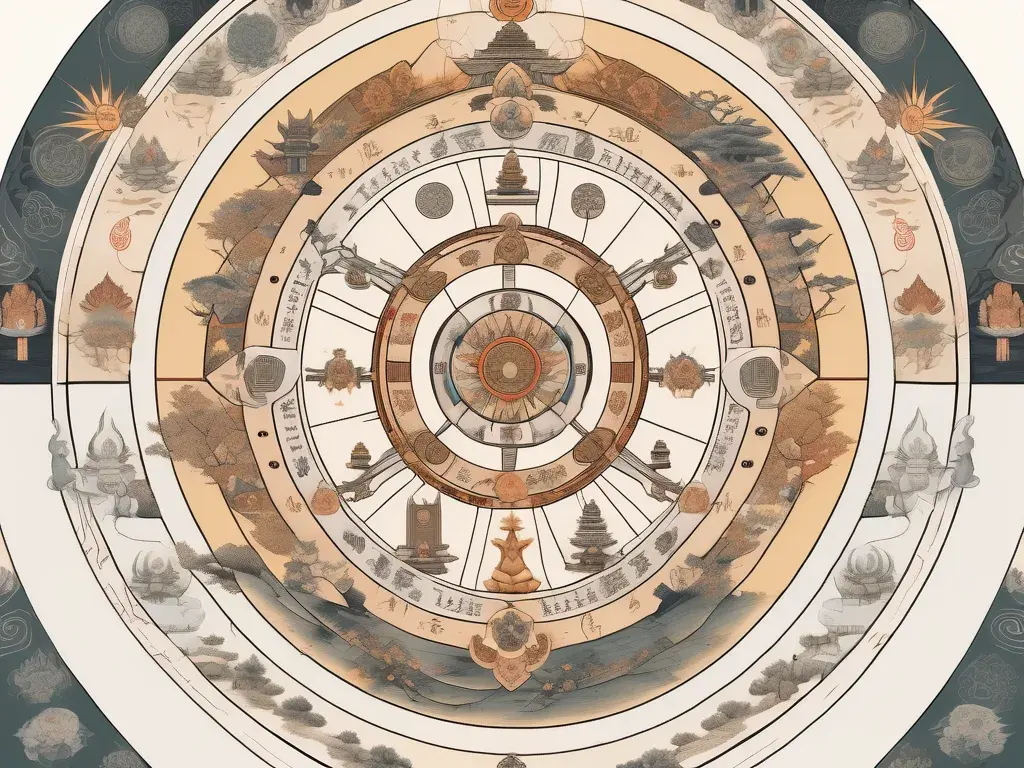
Apart from Buddhists and Hindus, Jews, Druze and Americans also believe in reincarnation.
By P.K.Balachandran
Colombo, July 23 – Like Hindus and Buddhists, Jews and Druzes of West Asia also believe in reincarnation. The concept of reincarnation is integral to Judaism, though it is not emphasised. In the case of the Druze, it is both central to their religion and a pillar of their social order.
Other Abrahamic religions like Christianity and Islam do not have the concept of reincarnation. There is no life after death as one proceeds either to heaven or hell. Christianity has “resurrection” but not “reincarnation.”
Resurrection is different from reincarnation in a few key ways. First, resurrection is a physical event in which a person is brought back to life after death. Reincarnation, on the other hand, is the belief that a person’s soul can reincarnate into other bodies after death. Second, resurrection is an event that happens to a single person, while reincarnation is a process that can happen to many people over time. Finally, resurrection is an event that happens to people who have died, while reincarnation is a process that can happen to people who are still alive.
Reincarnation in Other Cultures
A survey done by PEW Research Centre in predominantly Christian America done in 2023, found that a quarter of Americans said that reincarnation was either “definitely or probably” true.
Reincarnation is actually part of European thought. It was propounded by the Greek philosopher Plato (428/427 BC – 348/347 BC). Plato attributed the idea of reincarnation to his mentor Socrates. In “The Republic” Plato developed the idea of the living coming from the dead. He propounded the theory that humans have an immortal soul that will be reincarnated.
Plato’s theory of re-incarnation challenged established notions of fate and destiny. He tempered the idea of fate being inevitable by introducing the concept of “Choice”. Plato said that each person chooses his life. The Buddhist and Hindu theory of “Karma” also embodies choice. It is one’s action (Karma), a Choice, which shape’s one future in this life, the next and the next. This clashes with ideas of Fate and Destiny.
Plato envisaged being born even as an animal. In Buddhism too, man can be reborn as an animal and vice versa, depending upon his Karma or deeds.
Reincarnation in Judaism
According to Rabbi Yerachmiel Tilles, reincarnation is an integral part of Jewish belief. Judaism has a theory of "revolving souls” in which souls pass through a succession of lives. It is called "Gilgulim".
According to the Torah, every Jew must fulfil all 613 “Mitzvot” Whicj are commandments, obligations, or associated deeds that serve as a means of fulfilling one’s religious duties and connecting with God. If a person doesn't succeed in one lifetime, he comes back again to the world as a reincarnation again try, until he finishes the 613 Mitzvot.
The concept of Gilgulim has always been around, but many Jews are not aware of it, and if aware, deny it, Tilles says.
The Jewish Torah is the law of God as revealed to Moses and is recorded in the first five books of the Hebrew scriptures known as the Pentateuch.
The Torah is a multi-layered document. Many of its deeper levels are not readily accessible and may not lend themselves to obvious, practical applications in daily life. Therefore, the more esoteric aspects of the Torah are not of interest to significant sections of the Jewish community including some rabbis and scholars, Tilles says.
In Judaism reincarnation is not fatalistic. At every point of moral decision in a Jew’s life, he or she has free choice to choose the path. Reincarnation or Gulgulim does not imply pre-determination. It is, rather, an opportunity for rectification and soul-perfection, Tilles explains.
Events in a person's life may lead him towards certain places, encounters, etc., in ways that may or may not make sense. This way providence provides each person with opportunities to fulfil the “mitzvot” necessary for the perfection of his soul. But the responsibility lies with the individual. The choice is left entirely to the individual.
One of the ways in which God makes an individual maintain his ability to exercise complete freedom of choice is by not allowing him knowledge of his previous incarnations. There is no guidance other than what is given in the Torah.
Rabbi Benjamin Resnick points out that in the popular imagination, transmigration of the soul, that is, its journey through many incarnations, is “Samsara”, which is the cycle of death and rebirth. It is the core of Dharmic religions like Buddhism, Hinduism, Sikhism, and Jainism. Jews also have the concept of Gilgul which is very much in line with Samsara. Samsara is depicted as a wheel in Buddhist art. Interestingly, “Gilgul” means “to spin.” The soul spins through a great many bodies, striving for higher and higher perfection.
In Buddhism, “Nirvana” means extinguishing the flames of desire and greed. According to scholars, in Judaism, the ultimate goal of transmigration is to merge with a kind of compounded flame, in which the soul’s spark is subsumed by the boundless light of God.
As in Buddhism, in the Jewish mystical tradition too, one’s actions in this life can affect one’s subsequent reincarnations, for good or ill. Souls are reborn specifically to perfect certain aspects of themselves or to complete unfinished tasks. Ideally, each subsequent Gilgul marks an ascent to a higher rung of spiritual attainment.
However, progress is not a given. In fact, a sinful life can lead to a diminished form of reincarnation, including reincarnations as animals, plants, or even inanimate objects. This is akin to the Buddhist belief. A particularly colourful example is the possibility of being reborn as “water”, which is the consequence of committing murder. The idea is that the soul of a murderer will always be flowing, forever deprived of a home.
Certain great souls reincarnate specifically to assist other souls on their journey or to rectify some past wrong. These helpful transmigrations can happen when a great soul is reincarnated into a new body—for instance the soul of Moses. It is reborn in every generation according to some traditions.
The Jews believe that a soul may “impregnate” the body of a living person (a phenomenon known as “Libbur”) in order to help that person with a certain religious task.
Druzes’ Concept of Reincarnation
The Druze are a non-Islamic, Arabic-speaking-community living in Israel, Syria and Lebanon. Last week, the Druze caught international attention when Israel bombed Syria to uphold their rights. The Islamic regime in Syria was persecuting the Druze. Being non-Islamic, Israel is more accommodative to the Druze, giving them a measure of autonomy within Israel, denied to Muslims.
The Druze see death as a transition to a new chapter, a new life. In other words, the Druze believe in reincarnation. They have a concept of “Notq” which refers to talking about a previous life. Notq defines Druze identity by contributing to the preservation of the community’s boundaries.
The Druze call themselves Mawahidun (unifiers) and their religion Din al-Tawhid (religion of the oneness [of God). Druze religion is secret, only known to the religious Druze. It does not allow newcomers or converts. Marriage outside the community is forbidden. These characteristics are maintained by religious commands called Hafaz al-Ikhwan.
The belief in reincarnation helps the Druze maintain their religious and social order. For the Druze, the number of souls is fixed. At the moment of death, the soul migrates to the body of a new born and begins a new life in a new body of the same gender. The Druze also believe that they will continue to be born as a Druze. The soul does not migrate to the body of a non-Druze.
The Druze believe that through reincarnations one gets the opportunity to experience different life situations. This principle creates a sense of equality and brotherhood among the members of the community.
Remembering the Past Life
Dr. Maha Natoor, a Pediatric Occupational Therapist with Clalit Health Services in Israel, has studied the Druze belief in the narration of a past life called “Notq” and its social relevance.
Notq is usually displayed by children aged two to five. Most Notq is about a tragic or sudden death in the previous life. In some cases, the kids display knowledge or exceptional talent in areas that they have not been exposed to in the present life.
Some parents encourage the child to speak and even help them find the family of the previous incarnation, while some others ignore or silence the child. Occasionally, Notq stories involve conflicts and complexities, such as the fear of parents in the present incarnation that their child will live in two worlds, the past and the present.
But the person who experiences Notq may have difficulty in reconciling between two stories, the first, the story of the present life and the second, the story of his past life. The circumstances may differ drastically creating psychological tension and perhaps tension with people around, Dr.Natoor says.
Notq has been noticed in Sri Lanka, India, Brazil, and Alaska and psychologist have studied the phenomenon.
Social Functions
Belief in reincarnation has social functions and social practices among the Druze. Because the body is deemed to be marginal to one’s existence (a temporary abode of a soul) to be cast away upon death, the Druze do not have tombstones or even the ritual of visiting the graves of the dead.
At the psychological level the belief in reincarnation helps the bereaved to cope with the loss of a loved one, and helps people deal with other kinds of distress.
END
RELATED NEWS
View all

Current Affairs
Sri Lankan Presidential pardons- the good and the bad
Sep 11, 2026

Current Affairs
The pros and cons of joining BRICS- the dilemma of Pakistan and Bangladesh
Sep 09, 2026

Current Affairs
Disaster in Nepal gets embroiled in geopolitics.
Sep 08, 2026

Current Affairs
Why Mecca Pact, and what does it imply for its members, Israel and India?
Aug 18, 2026