Mirror Wall
The Sallay Factor

By kassapa
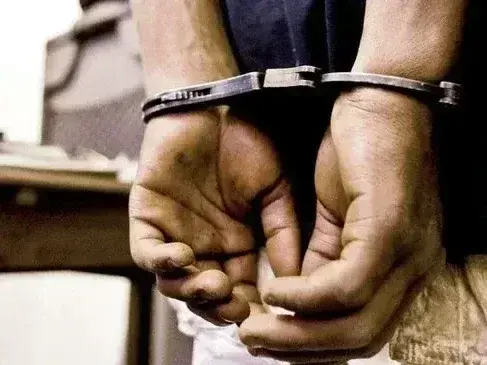
The arrest of Major General Suresh Sallay, the former Director of the State Intelligence Service had political circles buzzing last week. While the government chose to say as little as possible, many opposition politicians went out on a limb to defend the detained officer. In that paradox hangs a tale.
Sallay was detained in relation to ongoing investigations into the 2019 Easter Sunday attacks that claimed the lives of 269 people and, arguably, brought down the unholy alliance between Maithripala Sirisena and Ranil Wickremesinghe, propelling the politically untried and untested Gotabaya Rajapaksa into power.
Several facts are relevant to any formulation about the sequence of events. Within days of the Easter attacks, Rajapaksa announced his candidacy for the next presidential election. Critics see a sinister side to that, saying in hindsight it was too much of a co-incidence. Loyalists claim it was a politically astute move to make: a former Secretary to the Ministry of Defence who presided over the ministry when the war against terrorism was won declaring he could ‘save the country from terrorism’ again, soon after a terror attack.
Sallay gets dragged into the conjecture about who masterminded the attacks when Hanseer Azad Maulana, a former associate of Sivanesathurai Chandrakanthan better known as Pillayan, tells Britain’s Channel 4 television network in an interview that Pillayan and Sallay maintained links with each other. Pillayan is also now in custody. Sallay, on his part, has always maintained his innocence, pointing out that he was stationed in Malaysia as the Minister Counsellor for Sri Lanka’s government from 2016 to 2018, the time period preceding the attack.
A case against those who were responsible for the attack is now being heard. This trial-at-bar is being heard expeditiously despite attracting little publicity. However, these proceedings deal with the attack itself and sheds little light on who masterminded the attack. Hence the search for the elusive mastermind who conceptualised the carnage.
From a government perspective, a lot rides on finding a definitive answer to that question. That is because it solemnly pledged to the country and more specifically to the Catholic community that it will conduct an impartial investigation into the attacks. Not to do so will leave it open to criticism not only from the opposition but also from the influential Catholic church led by the vociferous Cardinal Malcolm Ranjith.
Nevertheless, it has opted to provide minimal information about Sallay’s arrest, only going so far as to say that the arrest followed evidence uncovered relating to the Easter attacks. Refraining from detailing specific information, Police have said that the decision was a result of ongoing investigations as well as previous inquiries. The Police would only go so far as to say that if the arrest had not been made, there would have been criticism against the Police for failing to follow due processes.
At the time of writing ministers and parliamentarians from the ruling party and even the Cabinet spokesman have opted to impart as little information as possible as to why Sallay was detained. They may have been told to mind what they say lest it jeopardises investigations or they may even not know the real reasons. Either way, that is a sensible strategy because what the public want are genuine answers, not political explanations.
The opposite is true in the opposition. Anyone who thinks he is someone seems to have a view- and it is mostly opposing Sallay’s arrest. As if on cue, enter the ‘usual suspects’: Wimal Weerawansa, Udaya Gammanpila and Dilith Jayaweera plus the learned President’s Counsel, Ali Sabry.
Weerawansa sees Sallay’s arrest as a move by the government to appease the Tamil diaspora and claims Gotabaya Rajapaksa is next in line for detention. Gammanpila claims the arrest is a ploy by the government to shift focus away from the questionable coal tender. Jayaweera hails Sallay as a war hero and sees his arrest as a politicisation of the investigative process. The icing on the cake came from Sabry who forgot his lawyer’s training when he said that Sallay was someone ‘who once placed their lives on the line to protect the nation’, as if that conferred some special immunity on him.
The recurrent underlying theme- that Sallay should be accorded special privileges and be immune from investigation because he served the nation well as an Army officer- is of course laughable. Those who now defend Sallay are also the very people who did not raise an eyebrow when Sarath Fonseka who was more of a ‘war hero’ than Sallay ever was, was stripped of his rank and thrown into jail.
Adding his voice to this chorus was former President Ranil Wickremesinghe who says that the Easter attacks have been investigated ad nauseum by several committees and having another investigation now amounts to misappropriation of state funds- the same offence he is being charged with!
Seeing a political motive behind Sallay’s arrest implies several insinuations. Sallay is not a politician; he is a military officer. Therefore, for his arrest to be politically motivated, it suggests he was acting under political direction. What is interesting is that neither the investigating Police nor the government have said this. It is the opposition which makes the link. So, is the opposition prematurely letting the cat out of the bag?
The cacophony arising from the opposition camp suggests that they are worried about what revelations Sallay will provide to investigators. Surely, as head of the country’s intelligence service, Sallay will be well versed with how investigations of this nature are conducted and how to ‘play the game’. Equally compelling is the fact that, if he is indeed innocent of any wrongdoing, Sallay will know better than anyone else how to get out of the mess that he finds himself in. He does not need the help of opposition politicians to do so.
However, whether the government likes it or not, Sallay’s arrest marks a significant landmark in the investigation. If it unearths significant findings that lead to revealing the identity of the mastermind, it will be a major boost for the ruling party. On the other hand, if this does not happen, the opposition will be quick to pounce on it as yet another failure of the government.
As for the opposition, it would be better off waiting for further developments, instead of saying too much, too soon. Let the investigators do their work. Then, hopefully, the truth will prevail, regardless of who stands to benefit from that politically.