Mirror Wall, Cover Story
Marrying the UNP and the SJB- Here we go again!
By Kassapa
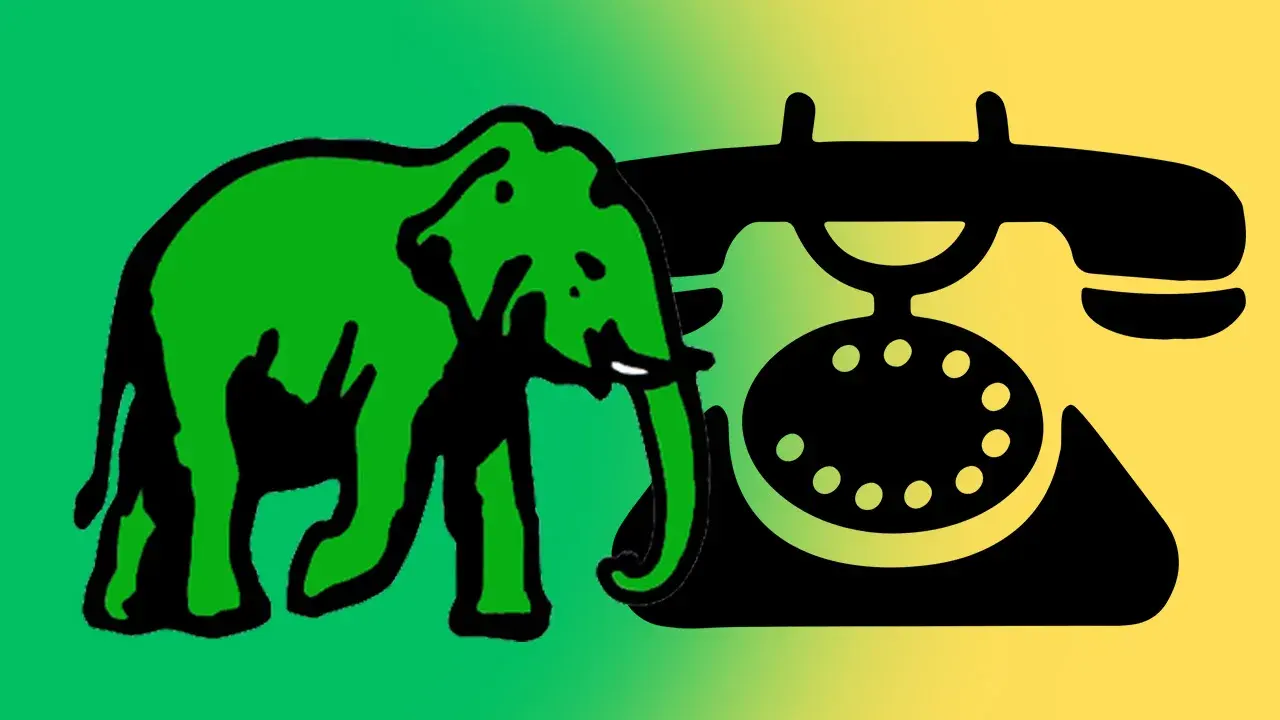
Now that United National Party (UNP) leader Ranil Wickremesinghe has returned from Singapore after successful medical treatment, there is once again a buzz in UNP and Samagi Jana Balavegaya (SJB) circles. The question on everyone’s lips is, when are the two parties planning to ‘tie to knot,’ so to speak?
SJB leader Sajith Premadasa is now not averse to a link up with the UNP. Finally, he has come to the realisation that, divided, both parties will fail. United, they stand a chance at the next national elections, and a good one at that, given how the ruling National Peoples’ Power (NPP) are blotting their copybook as was most recently evidenced with the Coal tender saga and their stubborn refusal to sack Energy Minister Kumara Jayakody.
Premadasa’s rapprochement with the UNP was very much in evidence at the recent birthday commemoration of Gamini Dissanayake. There Premadasa revealed that he was invited to politics not by Wickremesinghe but by Dissanayake. One recalls that there was little love lost between Ranasinghe Premadasa and Gamini Dissanayake but Sajith Premadasa relates well to the next generation of Dissanayakes, Navin and Mayantha.
Be that as it may, the challenge now is to reconcile the UNP and the SJB. Since their separation, the SJB has forged its own path, appointing electoral organisers and has a grassroots level party network. While most stalwarts of the SJB can trace their origins to the UNP, there is also a significant younger generation of SJB politicians who were never members of the UNP. They wouldn’t want the pride of place they enjoy in the party diluted by coalescing with the UNP.
Besides, SJBers point out that by ‘merging’ with the UNP, all they will be getting is a claim to the past glory of the Grand Old Party and the familiar ‘elephant’ symbol. It has little else to offer. Its membership has dwindled and it is no longer the force it once was under J.R. Jayewardene or even Ranasinghe Premadasa. This is why a section of the SJB wants an alliance with the UNP, not total amalgamation of the two parties.
Bigger questions remain. This comes in the form of Wickremesinghe’s vision for the future. He is firmly of the view that merely merging the UNP and the SJB or having a partnership of the two parties will not suffice. He is advocating for a ‘joint opposition’ that includes the Sri Lanka Podujana Peramuna (SLPP). Having worked with the SLPP when he was President following Gotabaya Rajapaksa’s resignation, Wickremesinghe believes there are elements of the SLPP that can be taken advantage of.
More importantly, Wickremesinghe believes that dividing the ‘anti-NPP’ vote among a UNP-SJB combine and the SLPP would only help the NPP. This did not happen at the last presidential election because the SLPP was reduced to 2.5 per cent of the vote. Nevertheless, it did happen vis-à-vis the UNP and the SJB: the votes of Premadasa and Wickremesinghe combined would have easily defeated Anura Kumara Diaanayake.
The electoral arithmetic has changed significantly since then, however. This was evident at the last local government elections. The NPP’s vote plummeted by more than two million. The SLPP is slowly but definitely on the rise. With the burden of incumbency weighing heavily on the NPP, there is a feeling that the NPP will commit more blunders in the next three and half years to come to make it sufficiently unpopular at the next elections, although Dissanayake remains very much ahead of Premadasa and Namal Rajapaksa. To take advantage of this though, the anti-NPP vote must be harnessed into a single candidate, not split between two of them is Wickremesinghe’s argument.
There is also a ‘dark horse’ who is preparing himself diligently for the next presidential contest: Patali Champika Ranawaka. Ranawaka comes across as a politician who is sensible and is not hamstrung by allegations of corruption. His biggest drawback is the lack of a mainstream political party supporting him. The SJB or the SLPP will not endorse him but he will eat into the anti-NPP vote. Even in this scenario, having a ‘joint opposition’ candidate becomes important.
These arguments, made by Wickremesinghe and his loyalists are anathema to Premadasa. He is not willing to sit alongside the Rajapaksas. He copped a lot of flak recently for literally doing that at the launch of Udaya Gammanpila’s book on the Easter terror attacks, both from within his own party and those outside it.
The SJB spent most of its years in the opposition lambasting the Rajapaksas and the SLPP. To now align with them for political expedience will lead to a significant loss of credibility, the likes of which Wickremesinghe suffered at the 2024 presidential election campaign, Premadasa loyalists feel.
The other, unspoken ‘elephant in the room’ is of course, who a joint opposition candidate would be. Considering the many strategic and verbal blunders committed by Premadasa in recent months, there is a concern that Namal Rajapaksa may emerge as a candidate with better prospects than Premadasa. That is not necessarily because he is. It is also because Rajapaksa’s father is still alive and venerated by at least a section of voters as the man who saved the country from terrorism. Premadasa’s father was assassinated over thirty years ago. Many voters have only heard of him and what they have heard are not the best of stories.
Therefore, the way things stand now, the SJB appears to be ready for reconciliation with the UNP, much more than it ever was. However, it insists that it should be on its own terms because it is the larger party, even if the UNP is the older one. Then, those terms will include going it alone and having nothing to do with the SLPP. That is not to Wickremesinghe’s liking. As a result, a lot more work needs to be done to bring the two parties together. Whether Wickremesinghe and Premadasa can reach some agreement remains to be seen but for now, the parties will continue to go their separate ways.