Mirror Wall
The ‘United’ Opposition and their Learned Friends
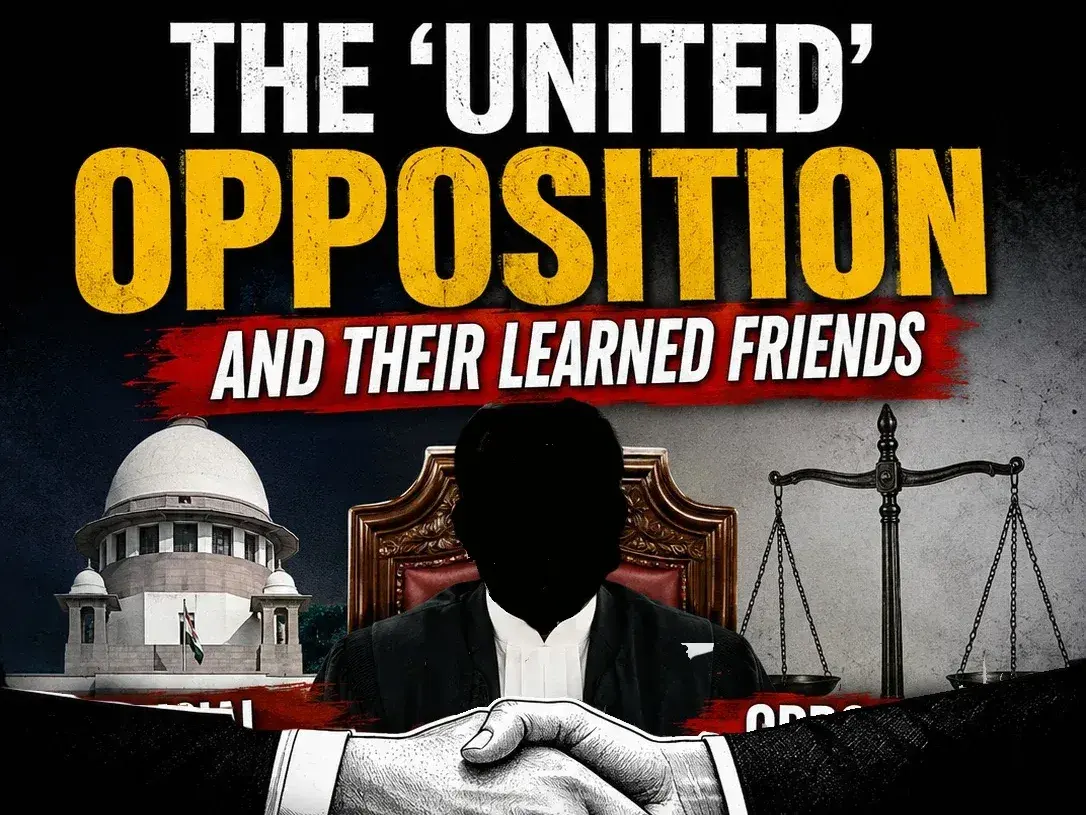
The government’s plans to raise the retirement age of judges has run into a storm of protests. On the one hand, the Bar Association of Sri Lanka (BASL) has been vocal in its opposition. On the other hand, almost all opposition parties have been queuing up to register their protest.
One can understand the latter’s angst. Their stalwarts are embroiled in a plethora of court cases and slowly but surely some are being punished. Just this week, Samagi Jana Balavegaya (SJB) parliamentarian Chaminda Wijesiri was handed an eighteen-month sentence for a road rage incident in Bandarawela. Many other high-profile cases are proceeding at considerable speed.
In legal circles, it is no secret that the driving force behind dispensing justice expeditiously is the current Judicial Services Commission (JSC), headed ex-officio by Chief Justice Preethi Padman Surasena. The current JSC has meted out punitive measures to sitting judges with dubious records, elevated those doing their job properly and allowed the judicial system to run independently. They have been supported by the National Peoples’ Power (NPP) government and President Anura Kumara Dissanayake who have adopted a strict ‘hands off’ approach.
Though unsaid, it is the government’s desire to let the current dispensation in the justice system to run for as long as possible. They feel this is required to rid the country of the corrupt and the criminal. That said, it is fully aware that Chief Justice Surasena is his own man. He was first appointed to the High Court by then President Mahinda Rajapaksa. He was elevated to the superior Courts by then President Maithripala Sirisena. He has given decisions that aggrieved both of them. He would also not hesitate to give judgments against President Dissanayake who appointed him Chief Justice if that is what the law dictates. That is as it should be and the NPP leadership knows this. Nevertheless, they want him at the helm.
It is the same reason why the opposition want a change. They too are aware that, with the current JSC and its focused approach on eliminating the suspect elements in the judicial system, they stand little chance. Hence their ‘my enemy’s enemy is my friend’ approach and joining of forces to tackle the issue.
This is what led to the grand meeting of opposition parties at the office of the Leader of the Opposition this week. People who one did not imagine could be in the same room together, did exactly that. There was Wimal Weerawansa listening to Ranil Wickremesinghe. Udaya Gammanpila and Champika Ranawaka sat at the same meeting. Namal Rajapaksa, who first mooted the idea of a meeting opposition parties, was warmly welcomed by Sajith Premadasa.
There were two notable absentees though. Former President Maithripala Sirisena, invited for the event, offered the lame excuse that he had a religious ceremony at his village temple in Polonnaruwa. The Tamil National Alliance’s M.A. Sumanthiran was honest. He too opposed the move to raise the retirement age but told Premadasa that he couldn’t be seen hobnobbing with racist party leaders.
If the opposition’s argument- that raising the retirement age of judges amounts to an interference in the judiciary- then the country will be stuck forever with current retirement ages, fixed in the Constitution nearly fifty years ago when other countries have moved on and made major changes. The theory that it amounts to an inducement to the present judges to give judgments in the government’s favour is an insult to the integrity of the judiciary, especially in the superior courts.
It is even more laughable when the proposal to form a ‘grand coalition’ to oppose the retirement age issue comes from Namal Rajapaksa. It was his father, Mahinda Rajapaksa, then at the height of his presidential powers, who unceremoniously impeached then Chief Justice Shirani Bandaranayake for the ‘crime’ of not giving a judgment in favour of the government. Ironically, two members of the Parliamentary Select Committee who stood in judgment against Bandaranayake, Wimal Weerawansa and Nimal Siripala de Silva, were also present at the meeting last week, protesting against the so-called “interference with the independence of the judiciary”!
The other talking point was whether this newfound camaraderie among opposition parties would lead to some sort of grand alliance against the NPP. If the sentiment in the room was anything to go by, most certainly not. There were those who were there with the attitude of a dog being taken for a bath, being dragged reluctantly because they couldn’t afford not to be present. At least four potential presidential contenders at the next election were in the room- Premadasa, Rajapaksa, Ranawaka and Dilith Jayaweera- and none of them left the meeting believing that they should make way for a ‘common’ candidate.
Finally, many are left wondering why the BASL, led by Rajeev Amarasuriya, was running with this issue. Amarasuriya told a television talk show that the proposed reforms should be approved by the people at a referendum, knowing very well that was a matter for the Supreme Court or the Executive President to determine. A special general meeting of the BASL was convened on Wednesday where a resolution opposing the reforms was unanimously adopted.
A NPP parliamentarian has accused Amarasuriya of doing a ‘deal’ with Premadasa. That is likely not to be the case. Still, the proposed reforms are by no means draconian. Raising the retirement ages of all categories of judges is a progressive move, adopted by many countries in the world. The BASL’s opposition raises the question as to whether it is in the grip of a cabal who are opposed to the NPP and are using the Association to further their cause. Amarasuriya might be believing in what he is fighting for, but he appears to be the poster boy for a more sinister campaign manoeuvred by others with ulterior political motives.
At the end of the day, it is very likely that the government will see the amendment through. When the dust settles on this hullabaloo, Chief Justice Surasena will still be in office for a further two years and the Constitution will have its next Amendment. The opposition, as always, will then go their separate ways, sniping at each other.