Mirror Wall
Nanda Malini- The Politics of her Power
Share this story
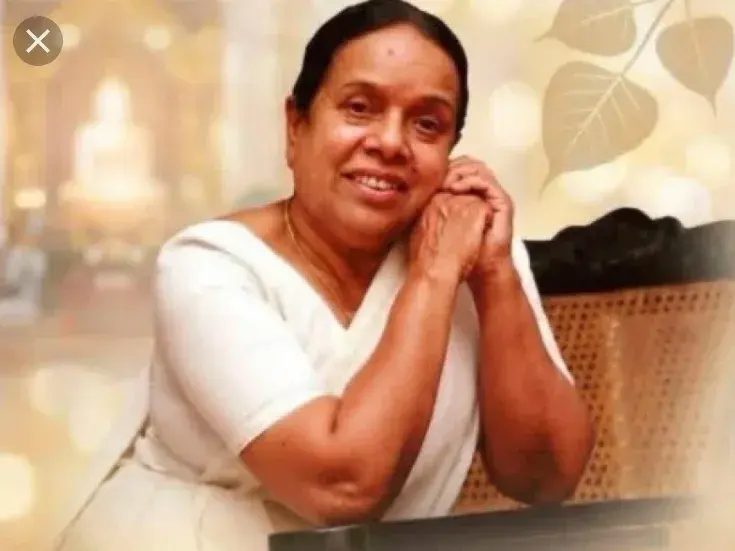
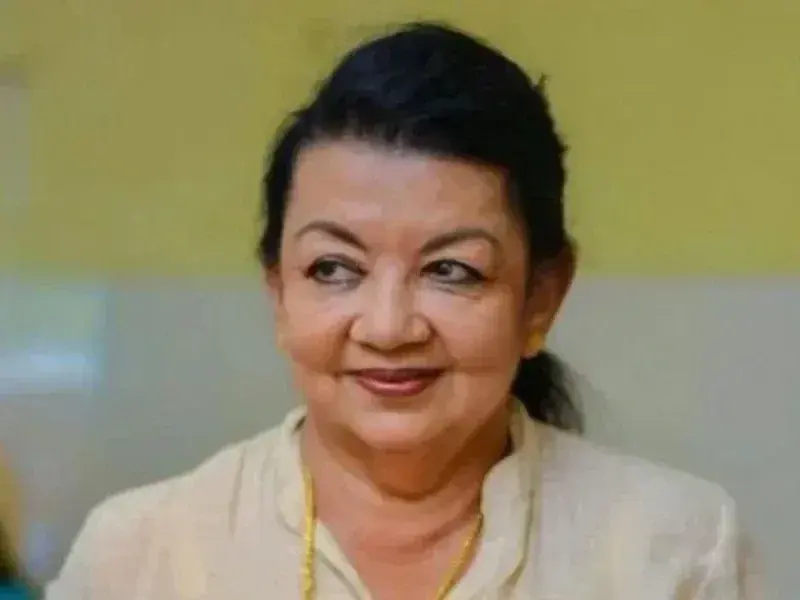
The country’s premier songstress over the last seven decades, Nanda Malini passed away last week. He demise, just shy of her 83rd birthday evoked a countrywide outpouring of grief and quite fittingly for someone who tirelessly fought for a cause, much reflection about the power wielded by this diminutive, white-saree clad singer. As with everything Sri Lankan, there was politics written all over it.
Nanda Malini was a brilliant singer whose repertoire was wide. If W.D. Amaradeva was the icon of the Sri Lankan male singer, Nanda Malini was the female equivalent. That was not what made her unique. There were others, especially in that era, with similar talent. What made her stand out was the outspoken stance she adopted, often framed in the lyrics of her songs, against authoritarianism and oppression of the people by their rulers. Until the very end, she did not yield one bit.
When J.R. Jayewardene was the height of his power and Nanda Malini was not even at the peak of her popularity, she was one of a handful of artistes who signed a petition against the move the deprive Sirima Bandaranaike of her civic rights. From then on, she was a target.
Matters only escalated when she protested loudly against the incarceration of Vijaya Kumaratunga, an act which endeared her to Chandrika Kumaratunga. They remained close associates until the very end but Nanda Malini never sought a single favour from the country’s longest serving President while she was in office or thereafter.
The crunch came during the second Janatha Vimukthi Peramuna (JVP) insurrection in the late ‘80s. While thousands of youth were rebelling against a government in the waning days of the Jayewardene Presidency and then the initial phase of the Ranasinghe Premadasa regime and murders were being carried out by both the JVP and government affiliated death squads, Nanda Malini took a stand. She launched ‘Pavana’, a concert where inflammatory lyrics penned mostly by Sunil Ariyaratne challenged the Premadasa government directly. That government not only banned ‘Pavana’, it also banned Nanda Malini’s songs being aired over the airwaves of the Sri Lanka Broadcasting Corporation.
Both Nanda Malini and Ariyaratne became targets. They had to flee the country. They survived to tell the tale. Nanda Malini returned to the country and went on to reach the pinnacle of her singing career. She was well supported steadfastly by Sunil Ariyaratne in this, for without his forceful lyrics, Nanda Malini would never have been the iconic singer she was.
Yet, never once did she identify with a distinct political camp. She did not get on to political platforms. When politicians wanted to shine in her reflected glory, she shunned them. If one was left with the impression that Nanda Malini was “anti-United National Party’ because of her protests on behalf of Bandaranaike and Kumaratunga, it would be wrong.
When the Rajapaksas overstepped their mark, leading to the economic crisis and the ‘aragalaya’ that followed, Nanda Malini was at Galle Face, holding placards in support of the protestors and singing along with them, despite being eighty years of age and by then, battling a crippling, life-threatening illness to which she would succumb. That was the woman of steel that Nanda Malini was.
Luck came Nanda Malini’s way late, as late as a year ago, when the SLBC, the same station which banned her songs over four decades ago, named a studio in her honour. Through frail and feeble, she attended that ceremony, an event that brought a tear to many an eye.
A few weeks prior to her demise, Nanda Malini was the subject of vilification on social media. Her crime: singing songs which allegedly urged thousands of youth to rebel against the government, sending them to their death. The crime was not perceived to be with those who killed indiscriminately, but with Nanda Malini who urged people to rise up against oppression!
Even in death, Nanda Malini remained controversial. The government’s offered a state funeral. This was declined by her family, in keeping with her wishes for her funeral to be a simple event. Nevertheless, two days of mourning was declared. This was criticised. Why weren’t such honours bestowed on Malani Fonseka and Jackson Anthony, was it because they were strong supporters of the Rajapaksas, it was asked. The debate raged on social media, although it must be noted that Malani Fonseka’s funeral was held at Independence Square with state honours.
On must also record that, when condolences were expressed in Parliament over Nanda Malini’s passing, Opposition Leader Sajith Premadasa spoke. It was his father’s regime that persecuted Nanda Malini, forcing her to flee the country. Tacitly acknowledging this, Premadasa said, “we must point the finger at ourselves”. Premadasa, often at the butt end of many a criticism, deserves credit for having the courage to admit this.
There is no doubt that Nanda Malini is one of those phenomena that occurs once in several generations. Her greatness lies not only in her obvious talent but in her ability to not be tempted by the invitations that come with it, to become a political tool. Malani Fonseka, Jackson Anthony, and Latha Walpola all had talent but they did not have the courage of their convictions to hold their heads high, above the political tide that we all swim in.
This is why Nanda Malini resonated with the people. Yes, they admired her for her songs but they adored her even more, seeing how a single mother of two daughters who must have had numerous economic issues even at the height of her popularity, not seeking the easy way out by aligning herself with the powers that be. At all times, she was true to her conscience. This is what made her truly special. That is also why the songs of Nanda Malini will outlast her and be a beacon of hope for generations to come. That is her legacy to the nation for which we must be truly grateful.