Mirror Wall
Namal, Nimal and the New Nexus
Share this story
By Kassapa
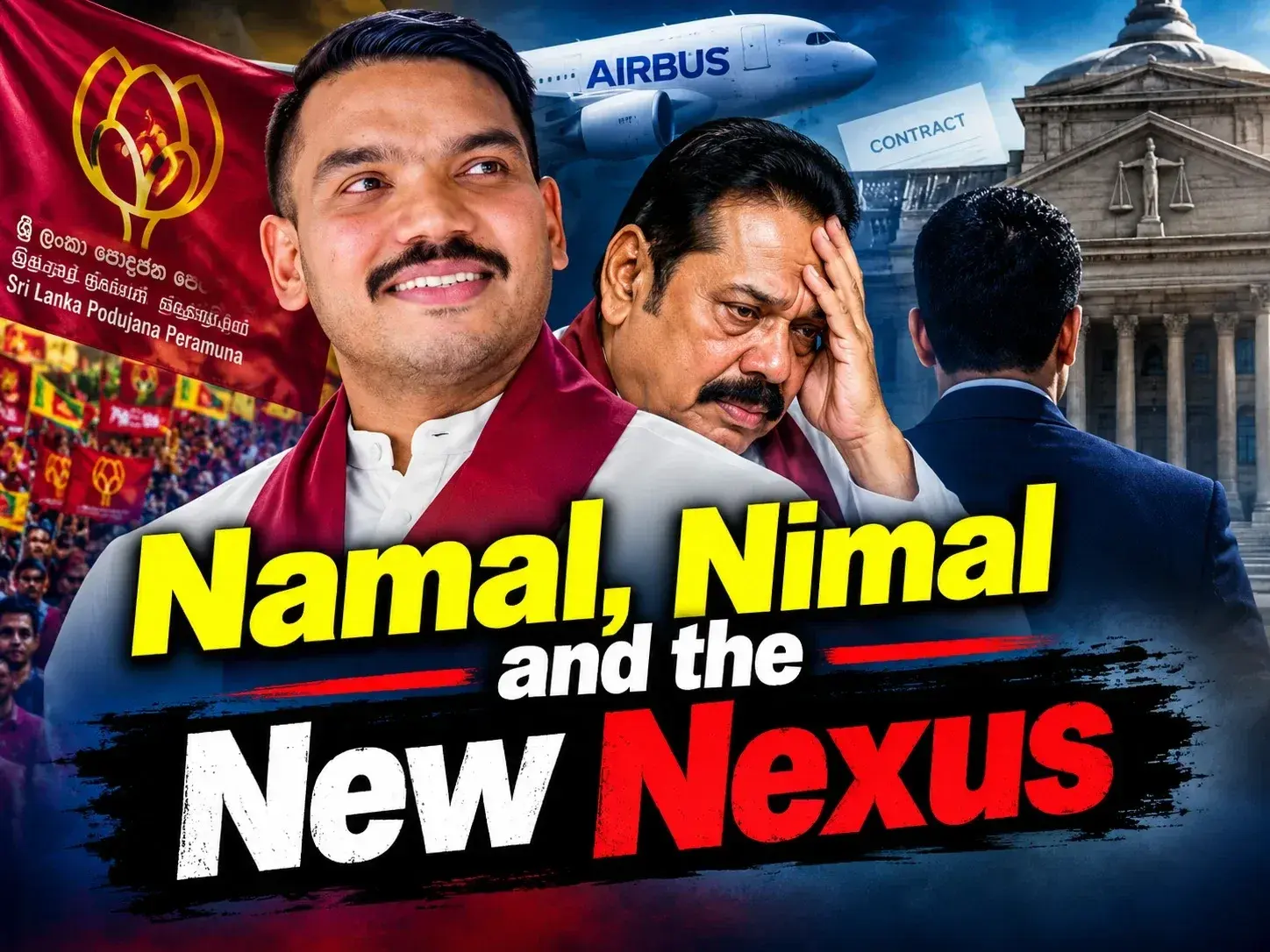
The talk in political circles this week is about the arrest and refusal of bail to Namal Rajapaksa, National Organiser of the Sri Lanka Podujana Peramuna (SLPP), the de facto leader of the party, with Mahinda Rajapaksa taking a back seat due to poor health and advancing age.
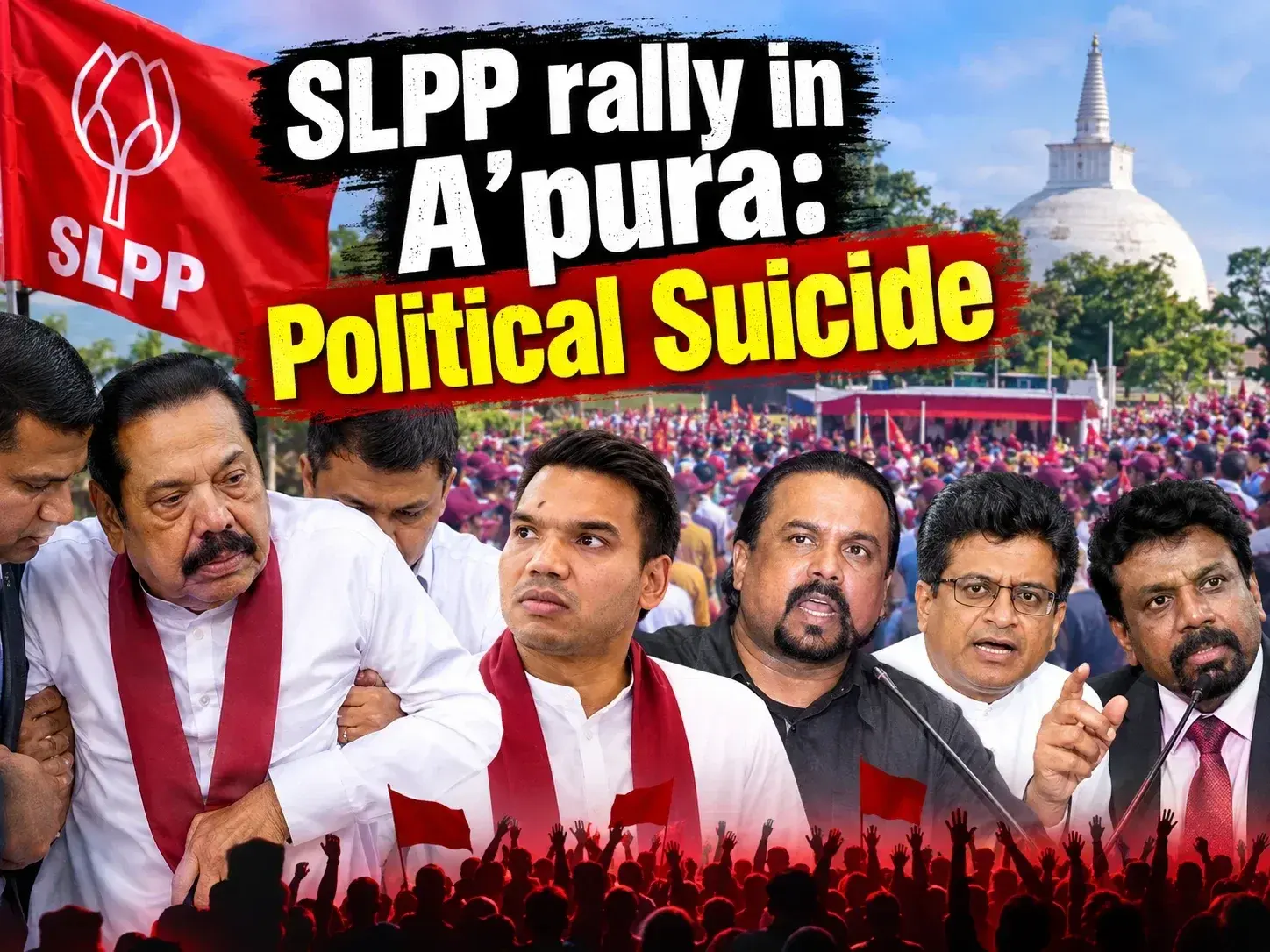
The SLPP is trying its desperate best to make a case that Rajapaksa was detained and refused bail to sabotage the series of its rallies it is launching, commencing with one in Anuradhapura on September 12. That is certainly not the case. Rajapaksa’s advisors knew all along that trouble was brewing in relation to the Airbus transaction. It was only a matter of when, not if, Rajapaksa would be detained.
Rajapaksa has kept a brave face throughout this episode. Former President Mahinda Rajapaksa who visited him in prison was visibly distressed but tried to downplay the issue saying it wasn’t certain whether it was a political witch-hunt but added that “we are very used to this” which implied it was.
Indeed, this is not the first time Rajapaksa has been detained. It probably won’t be the last either. The case related to ‘Krrish’ transaction is also pending and may result in a similar outcome. However previous detentions were under the United National Party (UNP)-led ‘yahapalanaya’ regime and Rajapaksa was relaxed enough to dropping into the Financial Crimes Investigation Division (FCID) in his jogging attire!
The political, lawenforcement and judicial landscapes have changed drastically now. The National peoples’ Power (NPP) government and President Anura Kumara Dissanayake are determined to keep its election promises and punish the corrupt. The Police are less subservient to the Rajapaksas and the judiciary has been asserting its independence fiercely under Chief Justice Preethi Padman Surasena.
Since Rajapaksa’s detention, there have been frantic discussions in the SLPP about the Anuradhapura rally. Suggestions include having Mahinda Rajapaksa attend, even if he is not able to make a speech. A proposal to have Namal’s wife, Limini, address the gathering is also under consideration. The SLPP wants to demonstrate that, despite Rajapaksa’s absence, they are able to muster a crowd and conduct a successful meeting.
That is not the issue. There is already discussion, albeit in hushed whispers in the corridors of the SLPP’s party headquarters at Nelum Mawatha, on the question of “After Namal, who?”. It is well and good to parade either Mahinda or Limini Rajapaksa at Anuradhapura but party members are worried about the possibility of Namal Rajapaksa being away from the political landscape until his case is over - a very real possibility- and thereafter too, if he is found guilty. Because the SLPP is a family-centric party built for the purpose of ensuring the transition of power from one generation of Rajapaksas to another, there is no second-tier leadership that can fit into that vacuum.
Whether this will actually happen depends on the strength of the evidence given by Nimal Perera, Rajapaksa’s erstwhile business buddy who has now provided an affidavit which alleges that a bribe from the Airbus transaction was indeed given to Rajapaksa as cash. Perera is away in Australia citing death threats but might be able to attend court proceedings using video technology. How he will stand the rigours of cross examination may well determine the outcome of the case. Of course, even if the Airbus case does not result in a conviction, then there is the ‘Krrish’ case, which reportedly has a paper trail of bank transactions that are quite incriminating.
Despite all these considerations, the biggest surprise following Rajapaksa’s arrest came from a different source, from the UNP. Even before Rajapaksa’s own SLPP, the UNP issued a statement condemning Rajapaksa’s arrest claiming that it was done with intention of stifling the September 12 rally. If the UNP hoped to win any public sympathy from this, it had the exact opposite effect.
The cases against Rajapaksa were filed under the UNP-led ‘yahapalanaya’ regime. They lay dormant for years because the leaders of that regime had an understanding with the SLPP leadership that they would protect each other. Some 47 cases were filed during the ‘yahapalanaya’ government by the Commission Investigating Allegations of Bribery or Corruption (CIABOC) with not all of the commissioners of CIABOC signing the relevant documents. They were setting up the cases to fail. Some of these cases are being reopened and heard now and earning convictions.
Viewed in that context, the UNP statement is not surprising. If anything, it is to be expected. After all, UNP leader Ranil Wickremesinghe was hoisted to the presidential chair by the SLPP. The question however is what this UNP-SLPP nexus will do to the very fragile relationship between the UNP and its offshoot, the Samagi Jana Balavegaya (SJB)?
On many an occasion talks between the UNP and the SJB failed because of the intransigence of the leaders of the two parties. Wickremesinghe insisted on aligning with the SLPP, arguing that a divided opposition will only benefit the NPP. However, SJB leader Sajith Premadasa, whatever his faults, was steadfast in his opposition to an alliance that includes the SLPP.
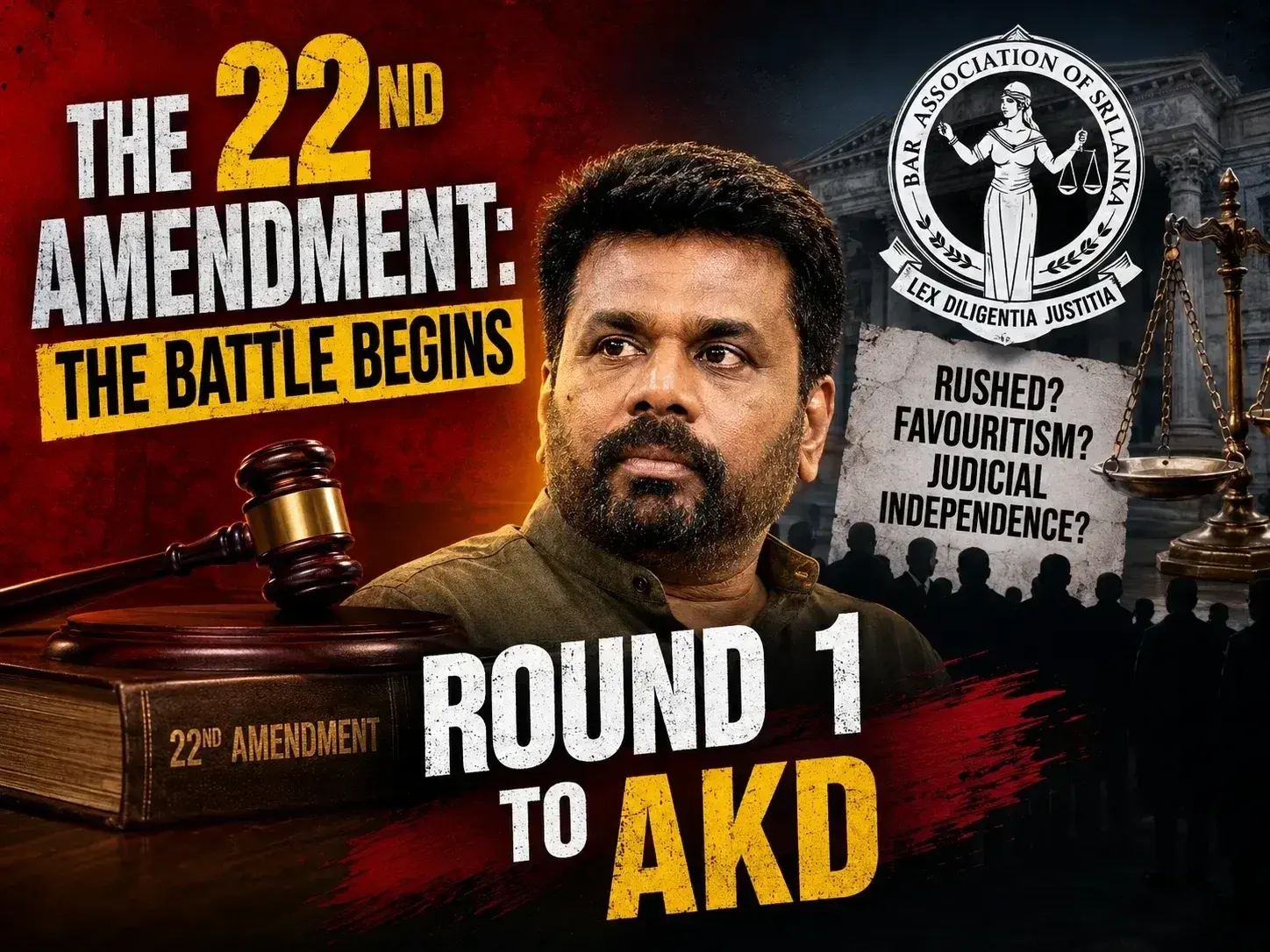
During recent events, such as the proposed 22nd Amendment to the Constitution, the SJB and the SLPP did work together but Premadasa and Namal Rajapaksa, both presidential offspring, know they will be battling each other in the next presidential election. So, one will not yield to another. It will obviously be to Premadasa’s advantage if Rajapaksa’s is found guilty and is unable to contest in 2029, even if he cannot say so publicly. So, while the SJB may offer platitudes about Rajapaksa’s arrest, they are unlikely to be greatly dismayed about it.
Rajapaksa’s detention and potential conviction does open up the possibility of a two-horse race between President Anura Kumara Dissanayake and Premadasa at the next poll but then, there are many others including Wickremesinghe, Patali Champika Ranawaka and Dilith Jayaweera, who believe that they are better candidates than Premadasa, even though they do not possess the necessary grassroots set up to run a campaign and win an election.
So, the 2029 presidential race, if there is one, promises to be an exciting prospect, with or without Rajapaksa. Three years is an era in politics and it would only be foolish to make any more specific predictions now.