Mirror Wall
Hullabaloo over Gnanasara Thero
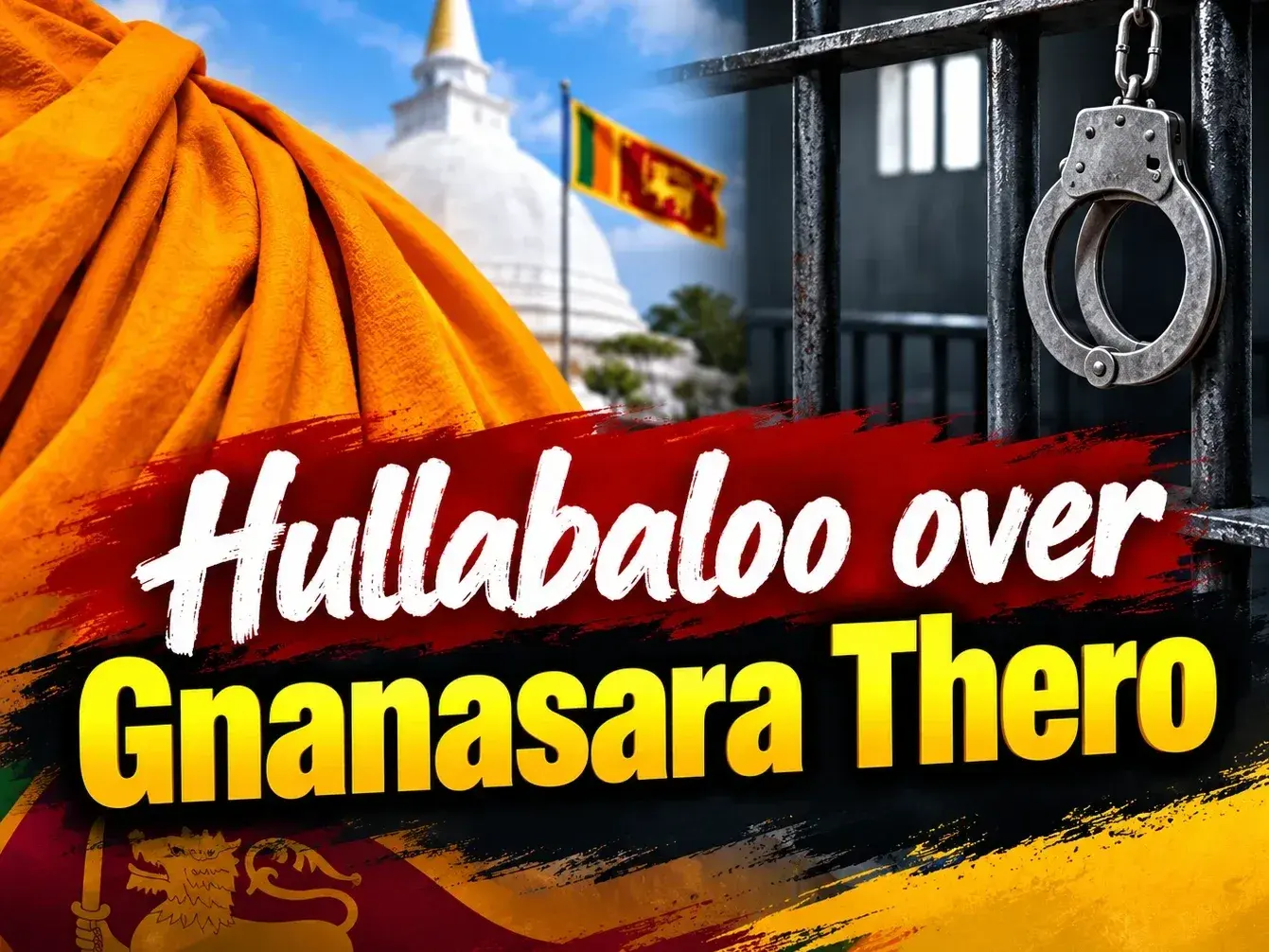
If the government had heaved a sigh of relief when Galagoda Aththe Gnanasara Thero, the firebrand Buddhist monk, had his presidential pardon overturned, it would have made a big mistake. If it believed the monk would be behind bars for the remainder of his prison sentence, it could not have been more wrong.
Apart from his conviction for contempt of court, Gnanasara Thero has several other cases pending. When he was brought to court for one of them, he was attired in civilian clothing. The Buddhist clergy- even respected sections of it, including the Mahanayake Theros were aghast. The authorities had no right to disrobe a monk, they argued, only senior monks could do so.
Prison authorities insisted that they were acting according to the law, which dictates that anyone carrying a sentence of over three years, when brought out of prison, should be dressed in a prisoner’s garb. Yes, these laws are archaic, but they are still laws. Prison officers were also not acting with a particular malice towards Gnanasara Thero; many other clerics had been subjected to the same treatment before, but no one had dissented!
The Mahanayake Theros wrote to the Commissioner General of Prisons, registering their annoyance. That earned a hearing with President Anura Kumara Dissanayake where senior monks of the different Nikayas presented their grievances.
What followed was another masterclass in communication from the President, just as he had done with the Bar Association of Sri Lanka (BASL) a few weeks ago. For a while it appeared that the President was delivering a sermon to the senior monks. The thrust of his argument was that, while he agreed with the monks, the law said something different and he was not prepared to contravene the law. “I am not the law”, he said and acknowledged that if the law needed to change, he was prepared to start that process. Indeed, a committee was appointed to review the relevant laws and report within a short two-week time period. The senior monks left the meeting all smiles, very much appeased that they had been heard and their issue addressed in a favourable manner.
Contrast this with the fate of the Samagi Jana Balavegaya (SJB). A delegation of their party seniors had an audience with the Ven. Thibbotuwave Sumangala Thero on the same issue. Senior SJBers, Ranjith Madduma Bandara and Lakshman Kiriella attempted to blame the ruling party for “bombing the Dalada Maligawa” only to be rebuked strongly by the Mahanayake Thero who reminded them that this was done by the Tamil Tigers. “It was said this party will not allow the ‘perahera’, that did not happen,” the Mahanayake Thero pointed out.
The video clip of that interaction has now gone viral on social media. Chief priests are rarely so vocal in their interactions with politicians. Although the delegation of the SJB did not include its leader Sajith Premadasa, that video has done considerable damage to the SJB’s reputation as a multi-cultural and multi-ethnic party. It must be sheer desperation that must be driving the SJB to imitate its opposition counterpart, the Sri Lanka Podujana Peramuna (SLPP).
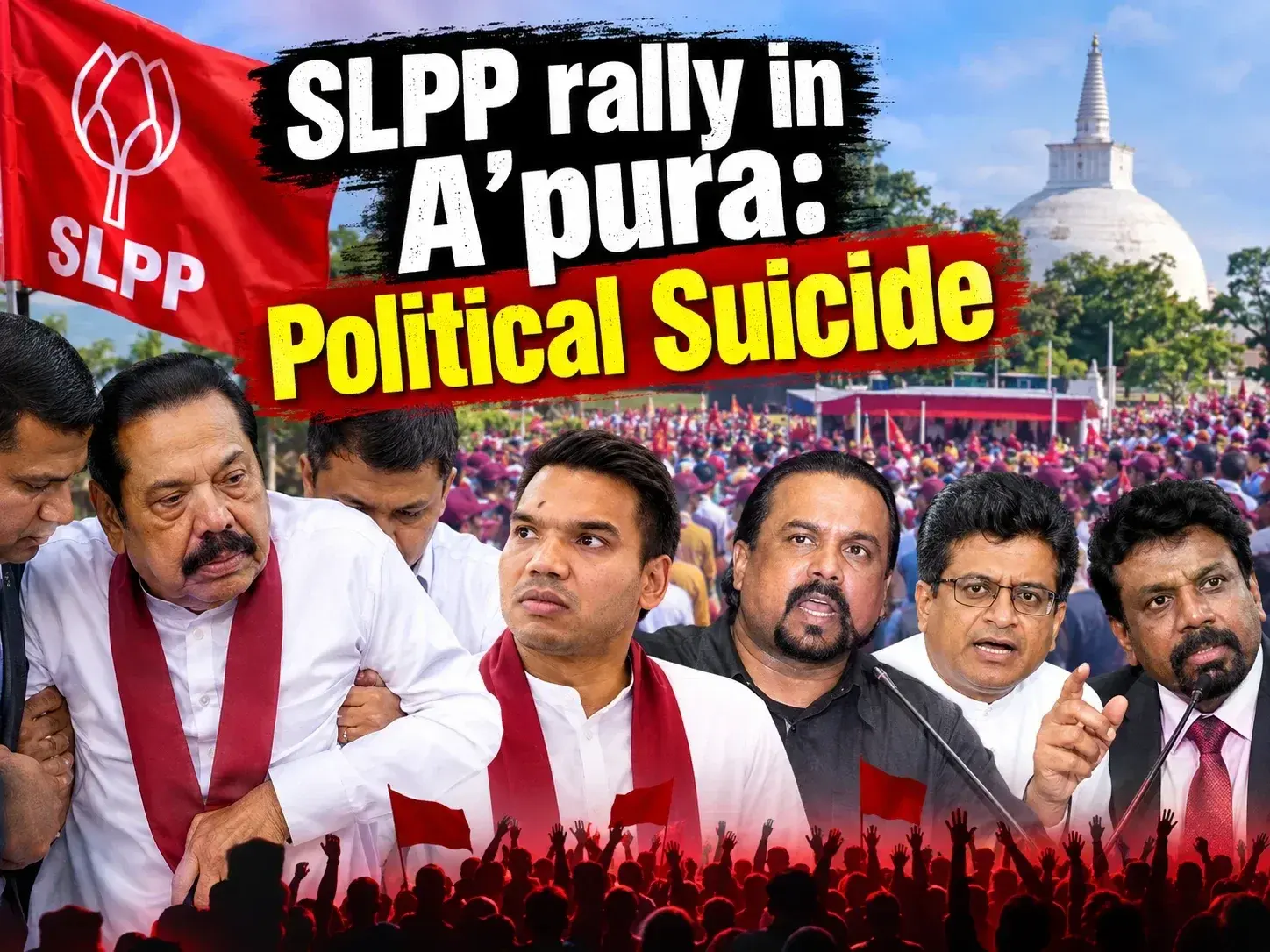
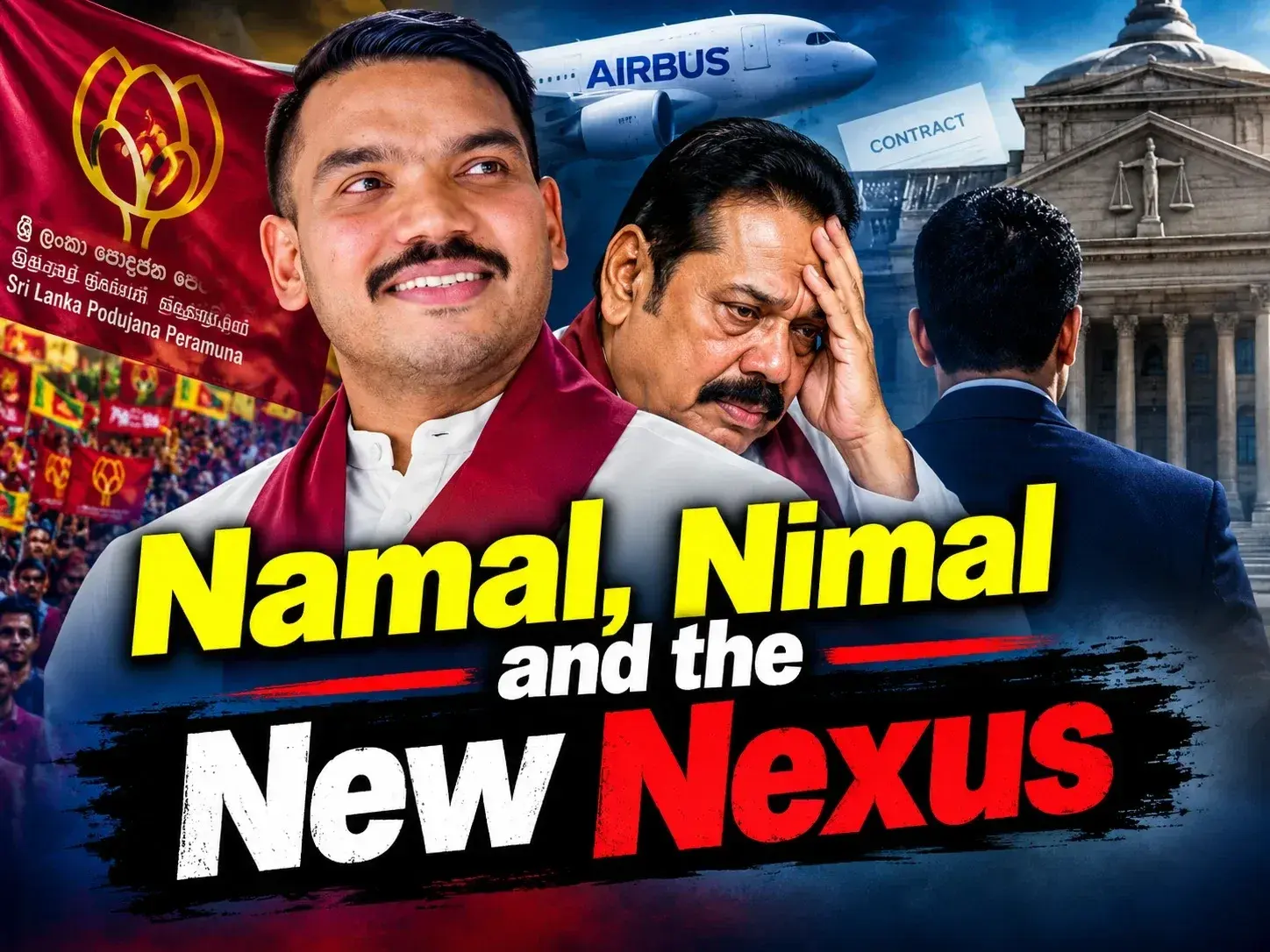
The SLPP is of course more preoccupied with the arrests of its de facto leader Namal Rajapaksa, and his mother Shiranthi Rajapaksa. Still, their activists were having a field day on social media playing the ‘Sinhala Buddhist’ card, claiming that the government was attempting to ‘destroy’ Buddhism by incarcerating Gnanasara Thero.
Discipline among Buddhist monks has become a major issue in recent times. Many monks, often with strong political affiliations, act with impunity and immunity knowing well that the long arm of the law will hesitate to reach out against them because of the saffron robe they wear. Gnanasara Thero is arguably the worst example of this. Yet, he has been allowed to continue in this manner, untamed and uncontrolled, because of his strong political affiliations. In this respect, the Mahanayake Theros must also share some of the blame for not acting more decisively and in a timely manner. If they did so, he wouldn’t be the problem he is today.
Gnanasara Thero is not the sole example either. The case of Pallegama Hemarathana Thero, former chief priest of the ‘Atamasthana’ in Anuradhapura, is another who is being accused of molesting an underage girl. The monk is indeed entitled to the presumption of innocence unless he is proven guilty in a court of law, but it is no secret that it took a lot of persuasion to remove him from his substantive position as chief priest, when that step should have been taken at the first hint of trouble.
There are monks who were found to have committed indecent conduct in other countries such as Japan and more recently in Australia. In Sri Lanka, several monks were allegedly used to traffic narcotics. The last category was disciplined forthwith because they were monks who were being used, with no power or influence. Others however flourish, including one who claims he has attained ‘arahat’ hood, while running a thriving business in the heart of Colombo!
Political parties run scared of acting against errant Buddhist monks lest they be accused of ‘destroying’ Buddhism. The current hullabaloo about Gnanasara Thero is precisely this. Even a government of the National Peoples’ Power, which pledged to uphold the rule of law, has to think twice, when it is enforcing the law against errant monks. If it were any other party in power, the monks would go scot-free.
Public opinion however appears to be shifting. The recent cases against Gnanasara Thero and Hemarathana Thero indicated that the average Buddhist abhors the type of conduct these monks have been accused of and does not endorse them. It is time political parties realised this, or they too will be left in the lurch. The hierarchy within the clergy must ask themselves how to get rid of troublemakers in robes, not how to continue keeping them in robes.
Share this story