Mirror Wall, Cover Story
Losing Jayakody and Losing Faith
By Kassapa
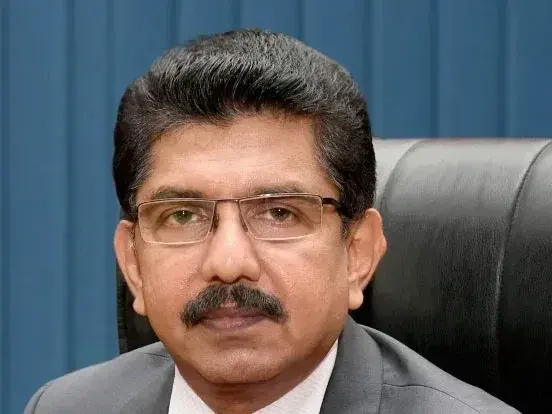
Kumara Jayakody has resigned as Energy Minister in the National Peoples’ Power (NPP) government. It is the first resignation of a minister in this government. Has it had the desired impact? Emphatically, no, it has not. In fact, it has had the opposite effect: it portrays this government as being drunk with the arrogance of power, not acting on principles of good governance but purely on political expedience, the very misdemeanour it accused its predecessors of.
The sequence of events is eerily familiar. First, there is speculation that a minister has entered into a corrupt tender deal. The opposition begins to cast aspersions on the deal and make allegations. The minister denies any wrongdoing. The opposition submits a motion of no confidence. Government MPs all defend the minister as one in Parliament and the motion is won. The minister then resigns.
The names of Keheliya Rambukwella and Kumara Jayakody can be readily interchanged in the above scenario. The only difference is that when allegations against Rambukwella surfaced, then President Ranil Wickremesinghe shifted him from the Health portfolio to the Environment portfolio, ostensibly to facilitate an unencumbered investigation. In Jayakody’s case, he retained the Energy Ministry until his resignation.
Many hoped that when allegations against Jayakody first emerged, he would offer to resign or be told by President Anura Kumara Dissanayake to either step down or be sacked. That way, the NPP could come out of the ‘coal scandal’ without having their reputation blackened. Moreover, they could have claimed the moral high ground saying that they practice what they preach and have zero tolerance of corruption. Alas, that was not to be.
It is learnt that this is indeed what Dissanayake himself wanted. He did not wish the ‘squeaky clean’ image of his government tarnished. However, although he is Head of State, Head of Government and Commander in Chief of the Armed Forces, it does not appear as if Dissanayake has the final say when it comes to affairs of the NPP. The high command of the party headquarters at Pelawatte govern by consensus. There were many who still believed Jayakody when he said he was innocent and said he should not step down at all. Others believed he should, to safeguard the party’s reputation. Opinion was sharply divided and there were reportedly some tense moments in the discussion. The compromise that was worked out for Jayakody to resign after surviving the motion of no confidence, a la Keheliya.
The NPP has also taken a parting shot. At the conclusion of the debate on the no confidence motion against Jayakody, it announced the appointment of a Special Presidential Commission of Inquiry. This will inquire into all coal related tenders from 2009 onwards. The party sees this as clever political strategy. Now, not only Jayakody but many of his predecessors who are in the opposition and made the most noise about him, will also be under the microscope. It was the NPP’s way of saying, ‘what you can do by making accusations, we can do even better’.
What is the political fallout of all this? Until this scandal and after one and half years in power, the NPP had demonstrated that they are not whiz kids at governance. They had bungled on many issues. Their spokespersons had a habit of undermining whatever little the government achieved, leaving a few such as Dissanayake to clean up the mess. Nevertheless, a majority of the public conceded that they were not corrupt.
That was even after the Ranwala saga. Ashoka Ranwala, appointed as Speaker, was reluctantly dragged out of the Speaker’s chair days after he failed to substantiate his claim that he had a doctorate. He too fired a parting shot, saying he was only resigning to save the government from embarrassment and that he would present his credentials ‘soon’. That was almost one and a half years ago. The credentials haven’t been provided yet. Still, most people appreciated Dissanayake’s firm stance on the issue, insisting that Ranwala, a ‘hardcore’ party man who had served the party through thick and thin, should resign.
That was over what might be called an alleged moral misdemeanour, not an alleged financial fraud that has the cost the government millions or billions of rupees. Yet, when it came to Jayakody, action was not so swift and Dissanayake was found to be wavering and vacillating and being subjected to pressure by the party hierarchy.
Post-Jayakody, where does the government, NPP and Dissanayake find themselves? They may have won the motion of no confidence but they have lost the confidence of the people who believed they are not a corrupt government. That is an irreparable loss of goodwill, earned after decades of criticising the two-party system and speaking of a ‘seventy-six year curse’.
Voters who conceded that the NPP were not brilliant in government but said that they were still better than the others because, ‘at least they are not corrupt’ no longer say so. Many prominent personalities who publicly endorsed the NPP on social media have now withdrawn that endorsement. So, the NPP is incurring a huge cost, just for retaining Jayakody as minister for a few more weeks. That is not smart politics at all.
It can of course be argued that nothing has been proven yet and Jayakody is entitled to the presumption of innocence. Indeed, he is. Then, both the right and also the smart course of action of action would be to resign forthwith saying he would allow himself to be scrutinised fully and return to the Ministry once he is cleared. That way, he would take the wind out of the opposition’s sails, save the NPP’s reputation and emerge from the whole saga looking good. Such political astuteness is often lost for one reason: when intoxicated with the arrogance of power.
With Ranwala, the NPP lost him but retained its political chastity by acting reasonably quickly. With Jayakody, the NPP lost him too but also lost its political virginity which, once lost, cannot be recovered.