Latest News
Three studies to track Lanka’s plastic trail
Plastic waste is a growing challenge for Sri Lanka’s food sector, yet important gaps remain in understanding where and how single-use plastics are used, how they move through food value chains, and where interventions could have the greatest impact.
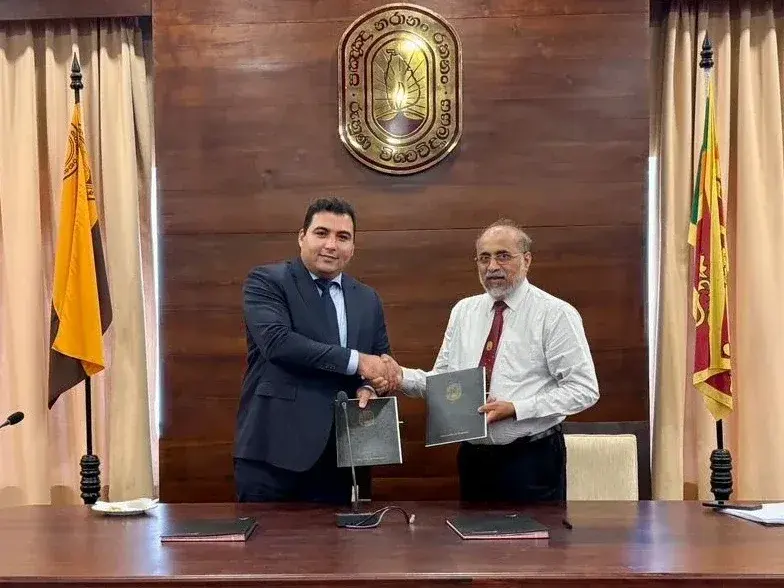
Through the European Union-funded CIRCULAR project, new research will help address these gaps by generating evidence to inform policy, business practices and more sustainable choices. Three research grants totalling €110,000 will support university-led studies by research teams from the Faculty of Agriculture at the University of Ruhuna, and the Faculty of Medicine and Faculty of Computing at the University of Kelaniya.
Together, the studies will examine the use, flow and impacts of single-use plastics (SUPs) across selected food and beverage value chains in the Colombo and Galle Districts. The research will also seek to identify practical opportunities to reduce plastic use, promote more sustainable alternatives and strengthen circular economy practices.
At present, available data on plastic waste in Sri Lanka, particularly single-use plastics, do not provide sufficient detail on the sectors, sources and types of plastics involved. This limits the ability of policymakers, businesses and other stakeholders to pinpoint where plastic use can be reduced most effectively and to assess which interventions could deliver the greatest impact. The new research will help provide a more detailed understanding of these patterns, supporting more targeted and evidence-based action.
The three research teams will use a combination of data collection, waste-flow mapping, environmental and public health assessments, and life-cycle approaches to examine these challenges from different perspectives. The findings are expected to help identify opportunities to reduce plastic use, improve resource efficiency and promote more sustainable packaging and waste management practices.
“Through our research grant programme, we aim to generate evidence that can contribute to better policy, planning and decision-making, while also strengthening collaboration between researchers, policymakers and practitioners” said Mahmoud Gaballah, CIRCULAR Project Manager at Expertise France, speaking at the grant signing ceremony at the University of Ruhuna.
The research grants are part of the CIRCULAR project’s broader efforts to support Sri Lanka’s transition towards more sustainable production and consumption in the food sector. Alongside research and evidence generation, the project works to raise awareness, encourage behaviour change and support approaches that move away from the traditional “take, make and dispose” model towards a more circular economy.
Circular Economy in the Food Sector (CIRCULAR) project is a three-year initiative focused on reducing food loss and food waste (FLW) and Single-use plastic (SUP) waste in the Food Sector in Sri Lanka. Funded by the European Union and partially co-funded by the German Federal Ministry for Economic Cooperation and Development (BMZ), the project is jointly implemented by Expertise France (EF), the Food and Agriculture Organization (FAO) and Deutsche Gesellschaft für Internationale Zusammenarbeit (GIZ) GmbH.
By strengthening the evidence base on single-use plastics, the research is expected to provide a stronger foundation for practical action, helping decision-makers, businesses and other stakeholders better understand where change is needed and how more sustainable solutions can be put into practice.
RELATED NEWS
View all
Latest News
Seat belts compulsory for all expressway passengers from Sept. 20
Sep 15, 2026

Latest News
Police step up checks for drug-impaired and drunk drivers
Sep 15, 2026

Latest News
Sri Lanka plans child-protection clearance for public-sector recruits
Sep 15, 2026

Latest News
Rumesh Tharanga returns after winning Ultimate Championship javelin title
Sep 15, 2026