Mirror Wall, Cover Story
Wanted Urgently: A Leader for the Opposition
By Kassapa
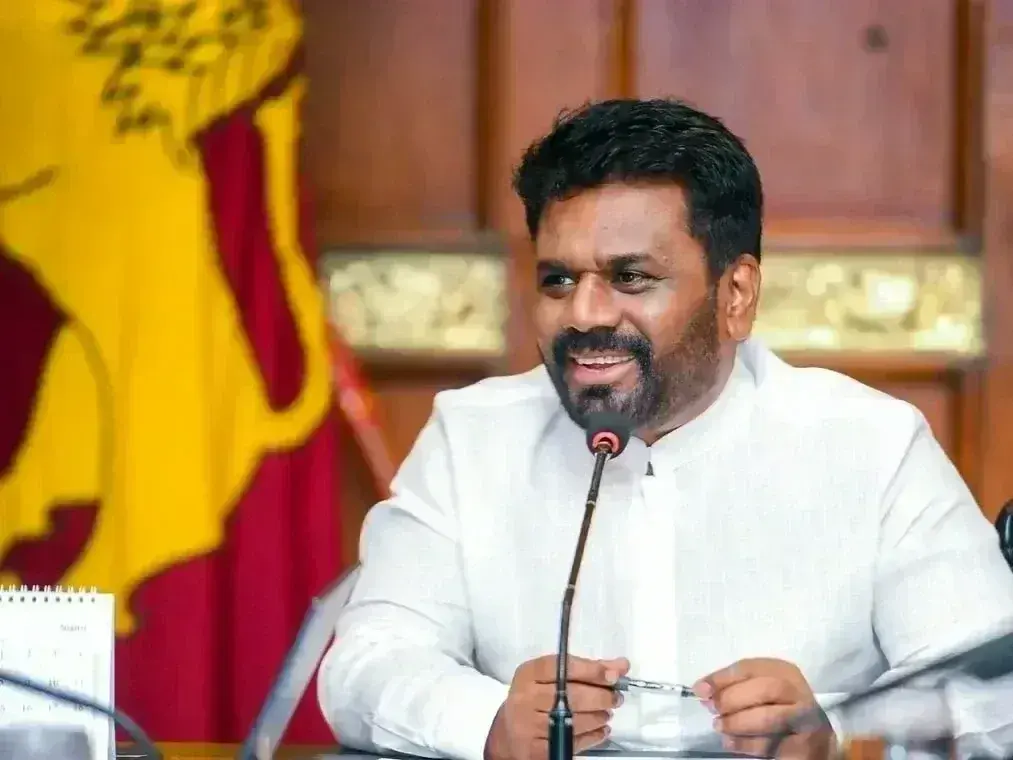
The 2024 presidential and general elections brought about a seismic change in the Sri Lankan political landscape. The leftist Jathika Jana Balavegaya (JJB), dominated by the previously proscribed Janatha Vimukthi Peramuna (JVP) rose to power, defeating the ‘traditional’ political establishment. Anura Kumara Dissanayake became the ninth Executive President of Sri Lanka and the JJB secured a two-thirds majority in Parliament.
It was the culmination of a decade of political upheaval that saw a departure from the ‘two-party’ model where two major political parties, the right-of-centre United National Party (UNP) and the left-of-centre Sri Lanka Freedom Party (SLFP) enjoyed power alternatively.
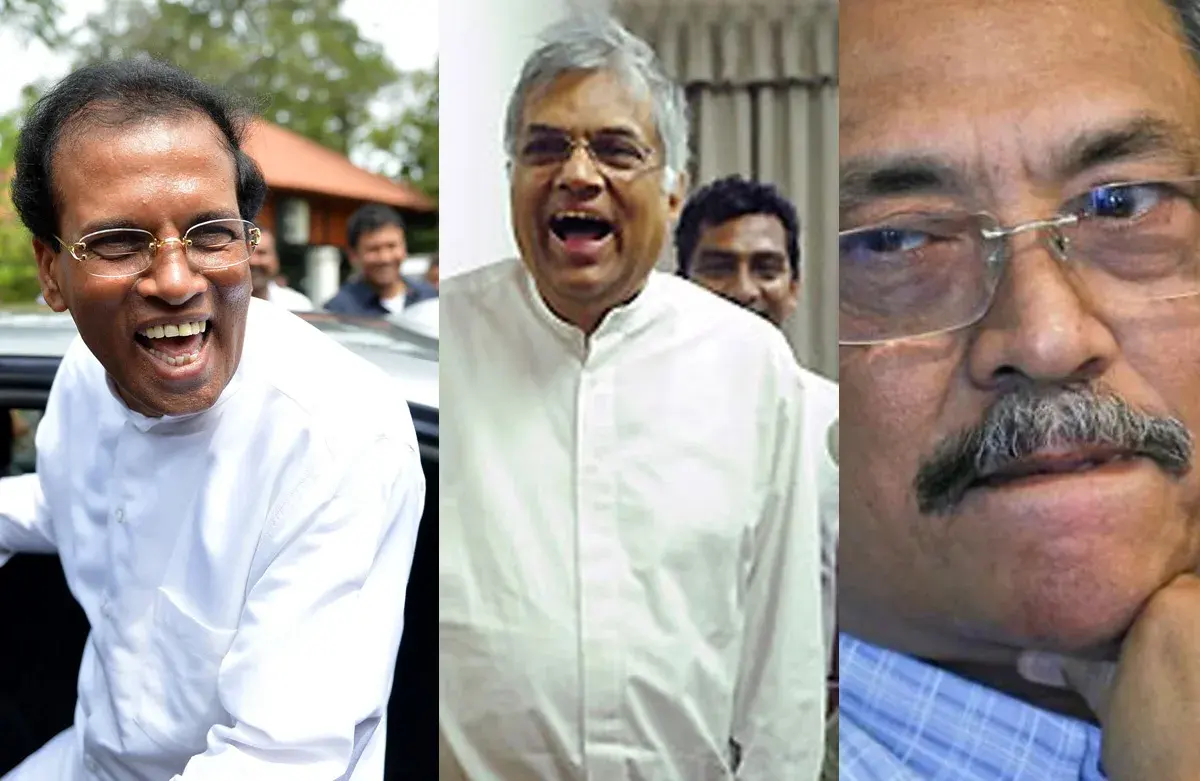
The decline of the SLFP occurred first. The credit for that must go to Maithripala Sirisena. He valued the party’s leadership more than the Executive Presidency of the country and attempted to gain control of it at a time when the heart and soul of its grassroots activists remained with Mahinda Rajapaksa. The end result was a fragmented, incompetent ghost of a SLFP and Rajapaksa forming his own political outfit, the Sri Lanka Podujana Peramuna (SLPP).
The fall of the UNP was more gradual. It began when Ranil Wickremesinghe assumed leadership of the party after D. B. Wijetunge retired. Wickremesinghe too was hellbent on retaining the UNP leadership at whatever cost despite repeated election losses. His only successes in gaining power through elections, in 2001 and in 2015, was when he formed opportunistic alliances that ended in disaster on both occasions. Sick and tired this intra-party dictatorship and seeing no prospects of real power, the vast majority of stalwarts in the UNP defected in early 2020 to form the Samagi Jana Balavegaya (SJB) under Sajith Premadasa.
By August 2020, the established SLFP-UNP two-party system had been replaced by their proxies, the SLPP and the SJB. The results of the 2020 general election reflect this. The main parties returned were the SLPP and the SJB, polling 59 and 23 per cent respectively. The decline of the UNP and SLFP were evident in their vote, an abysmal 2 per cent and 0.5 per cent respectively. Waiting in the wings all this time was the JVP, by then re-incarnated as the JJB. No one still took them seriously as it struggled to pass that ‘3 per cent’ vote, a benchmark which was used to lampoon them.
Then, the ‘aragalaya’ happened. Brought about by the sheer incompetence and ignorance of Gotabaya Rajapaksa, a novice to national politics, the economic crisis and bankruptcy, interspersed with reports of rampant corruption in the Rajapaksa regimes, it transformed public resentment into anger and hatred towards the two-party system, by then largely represented by the SLPP and the SJB.
The quirks of the Constitution plus a series of manipulative manoeuvres meant that at the end of the ‘aragalaya’ Wickremesinghe became President but that was only the calm before the storm. He was never what the people wanted and in the two years that he was at the helm, he did nothing to endear himself to the masses, apart from the Colombo elite. The real verdict of the people came as a tsunami of support for the JJB in 2024.
To date, it is fair to say that the performance of the JJB has been below expectations. On the plus side it has proved that it is not corrupt and a slow but steady change in political culture is emerging. The corrupt and the criminal are being pursued; some are already in jail, other are on the way there. Thankfully, the JJB’s stance on the economy has been pragmatic rather than philosophically leaning to the left.
On the minus side, the JJB is yet to fulfil its key promises such as abolishing the Executive Presidency, setting up an Independent Prosecutor’s Office, repealing the Prevention of Terrorism Act (PTA) and the Online Safety Act (OSA). Their silence on these issues is ominous. Many of its ministers and MPs conduct themselves poorly in public, speak absolute nonsense at times and are being mercilessly ridiculed on social media. The glaring lack of personalities who are both competent and charismatic in the JJB has been glaringly exposed with the exception of Dissanayake, Prime Minister Harini Amarasuriya and maybe just a couple of other ministers.
The JJB has not ushered in the utopia they promised. Nevertheless, as the recent local government elections demonstrate, they are still the preferred political party of a majority of voters. They have also placed themselves as firm favourites in the left-of-centre niche in politics. Barring any sensational unforeseen circumstances, they are here to stay for their full five-year term and, if the opposition remains as fragmented at the end of that period, possibly even ten.
What of the opposition? The UNP and SLFP are both in political comas. When their life supports in the form of Wickremesinghe and Sirisena are eventually removed from the political arena by whatever means, they will die with the infighting that will ensue. Their slice of the vote is so minimal now that it will be irrelevant anyway.
The SLPP is still for all intents and purposes the Rajapaksa party. The big question is whether Namal Rajapaksa will be able to survive the series of indictments that are coming his way. If he ends up in prison, a distinct possibility, that could mark the end of the SLPP. However, at 39 years, he is still very young and Sri Lankans have this habit forgiving and forgetting. That is what he will be relying on to return to power someday.
The SJB is struggling. It is realising that the reason for its formation- that Wickremesinghe couldn’t win elections- holds true for its own leader, Sajith Premadasa. He, like Wickremesinghe, will not let go of the SJB leadership after losing every major election since 2020. Some members are discussing this but no one has had the courage to challenge Premadasa, knowing that if they do, they will be doomed if Premadasa remains at the helm of the SJB after such a confrontation.
So, the right-of-centre corner of politics has a large vacuum: a vacancy for a real leader. A leader who is not tainted by corruption, has the skill to communicate well and attract voters and is able to unite opposition forces that are in disarray now.
To be able to challenge the JJB at the next election, that leader must emerge soon so that he or she has the time to plan for the next five years. There is no such leader in the horizon and that vacancy remains. That is the tragedy of Sri Lankan politics right now.