Current Affairs
Circumstances push Trump and Xi to seek mutual accommodation
A number of meetings are planned this year
By P.K.Balachandran
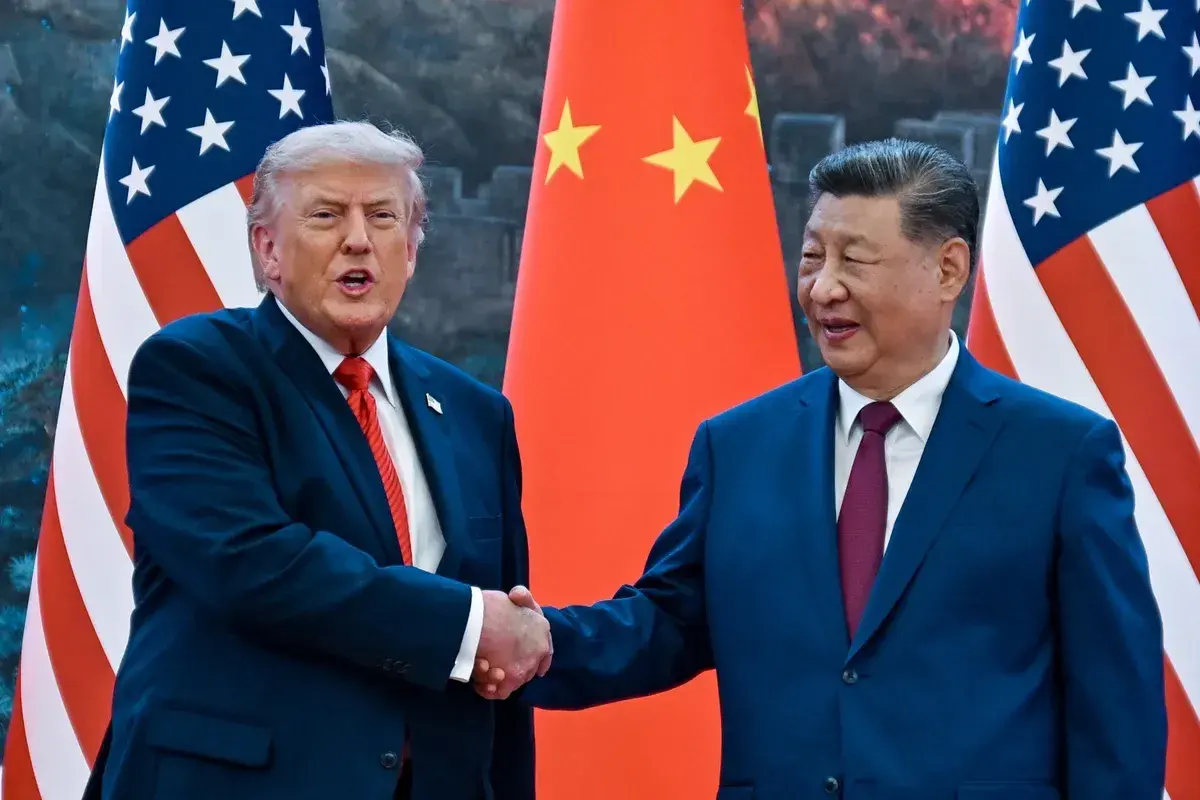
Circumstances are pushing US President Donald Trump and his Chinese counterpart, Xi Jinping to seek mutual accommodation to get out of sticky situation at home and abroad.
With both the US and China facing domestic and external problems they have not been able to solve, there is a palpable eagerness to strike deals that could reduce anxieties.
Trump has been unable to subdue Iran despite using America’s military might. The war and the continuing stalemate over the Strait of Hormuz have caused economic problems at home and embarrassment abroad.
According to the “Economist”, the war in Iran has disrupted energy markets, pushing petrol prices higher and driving up inflation in the US. Consumer prices rose by 3.8% in April from a year earlier, the fastest pace since 2023. Consumer confidence slipped in May as households worried about rising costs. Economic growth has weakened. The GDP expanded at an annualised rate of 1.6% in the first quarter, revised down from an initial estimate of 2%
On the other hand, Chinese President Xi is facing economic stagnation triggered by the tariff war with the US and complicated by low domestic consumption. China finished 2025 with a world record trade surplus of $1.19 trillion. But the surplus reflects weak spending by Chinese households, which increases the Chinese economy’s dependence on foreign buyers for its domestic production. Therefore, Chinese policy circles now think that the economy’s reliance on manufacturing investment and exports is politically and economically unsustainable.
Therefore, both the US and China feel the need to resolve their differences to the extent possible through meetings and summits.
After the Xi-Trump summit in May in Beijing, Xi is to pay a visit to the US in September. Trump said that Xi asked him to take part in the Asia-Pacific Economic Cooperation summit in Shenzhen in November and that Xi wanted to attend the G20 summit in Miami in December.
“Both sides should work together to make thorough preparations, create a favourable atmosphere, and achieve more substantive outcomes for the interactions and exchanges between the two heads of state,” Chinese Foreign Minister Wang Yi said.
While expectations are not high that the two sides will reach major deals to resolve their big differences, there is hope that continued meetings between the leaders could help reduce the risk of miscalculation.
Sino-US Military Talks
On June 2, “China Daily” reported that the Chinese and US militaries held a working group meeting of the Military Maritime Consultative Agreement (MMCA) in Hawaii. The two sides had candid and constructive exchanges on the current China-US air and maritime safety and security situation, evaluated the execution of the Rules of Behaviour for Safety of Air and Maritime Encounters and discussed measures to improve China-US military maritime safety and security.
The forum “provides for discussions between operators focused on reducing the risk of unsafe and unprofessional encounters”, according to the US readout.
Tariff Reduction Discussed
On Thursday, the Chinese Ministry of Commerce announced that the Chinese and US teams have agreed in principle to discuss, under the trade council, a reciprocal tariff reduction framework arrangement on products of equivalent scale and worth $30 billion or more on each side.
“Whether it is military communication or progress in the economic and trade fields, both demonstrate the shared willingness of China and the United States to translate the outcomes of the US leader's visit to China into concrete actions and tangible results,” China Daily said.
Hegseth and Rubio Tone Down Rhetoric
At the annual Shangri-La Dialogue regional security forum between May 29 and 31 in Singapore, US Defence Secretary Pete Hegseth softened his rhetoric on China in his keynote speech.
At a Senate Foreign Relations Committee hearing on Tuesday, Rubio said both countries must communicate to “de-escalate potential points of conflict.” Rubio downplayed Chinese support for Iran, saying Beijing has not offered any help to Tehran that has impeded US operations against Iran despite their strategic relationship.
Taiwan Opposition’s Overtures to Beijing
Cheng Li-wun, Chairwoman of Taiwan’s largest opposition party, the Kuomintang (KMT) told “South China Morning Post” that, as per the 1992 agreement, both Taiwan and Mainland China sides recognise there is only One China, but each can have its own interpretation of what China stands for.
“As long as the 1992 consensus is accepted, the two sides can initiate comprehensive dialogue and exchange. To be honest, achieving peace and stability across the strait is not nearly as difficult as many imagine. However, if a government – like the DPP [Democratic Progressive Party] since taking power – blindly follows the “two-state theory”, pursues de-Sinicisation and refuses to recognise the 1992 consensus, the situation will deteriorate rapidly, leading to the tensions we see today. Taiwan’s mainstream public opinion clearly favours peace and exchange over war. Therefore, by returning to the 1992 consensus, ample room for development will immediately open up,” Cheng said.
Xi Jinping had warned Trump that mishandling the Taiwan question – the most important issue in bilateral relations – could lead to confrontation or even conflict between China and the US.
But Trump has indicated that he might not go ahead with his $14 billion arms deal with Taiwan. Neither side wants the Taiwan issue to destabilise bilateral ties.
China to Buy 200 Boeing Aircraft
US Treasury Secretary Scott Bessent has claimed that China is “very interested” in additional Boeing plane purchases, an issue the Trump administration plans to press when President Xi visits the United States in September.
“They agreed to 200 aeroplanes during the visit. We will see if they commit to a larger number when Xi Jinping arrives in Washington,” Bessent said in his budget request testimony to the Senate Finance Committee.
Sourabh Gupta, a Resident Senior Fellow at the Institute for China-America Studies, highlighted that Boeing purchases were “expressly tied” to the continuity of supply of engines and parts for China’s flagship C919 passenger jet.
“Once there is sufficient trust on assurance of flow, the number of Boeing jet purchases could reach up to an additional 500-550 more,” he predicted.
Work on Board of Trade Begins
The US Trade Representative’s office announced a public comment process regarding the newly created US-China Board of Trade – a mechanism to manage bilateral trade between the world’s two biggest economies.
“The United States and China will consider tariff modifications on imports of an equal value of non-sensitive goods from each side, while monitoring and evaluating outcomes over time,” the USTR said in a statement.
“Critical minerals is one of the key industries that we’re focused on,” Trade Secretary Scott Bessent stressed. He also said that the US raised its long-term concerns over state subsidies during Trump’s visit to Beijing, maintaining its push to press the Chinese to open their economy.
These conciliatory moves are taking place despite the continuing tension in West Asia over the opening of the Strait of Hormuz.
END
RELATED NEWS
View all

Current Affairs
Sri Lankan Presidential pardons- the good and the bad
Sep 11, 2026
Current Affairs
The pros and cons of joining BRICS- the dilemma of Pakistan and Bangladesh
Sep 09, 2026

Current Affairs
Disaster in Nepal gets embroiled in geopolitics.
Sep 08, 2026
Current Affairs
Why Mecca Pact, and what does it imply for its members, Israel and India?
Aug 18, 2026