Current Affairs
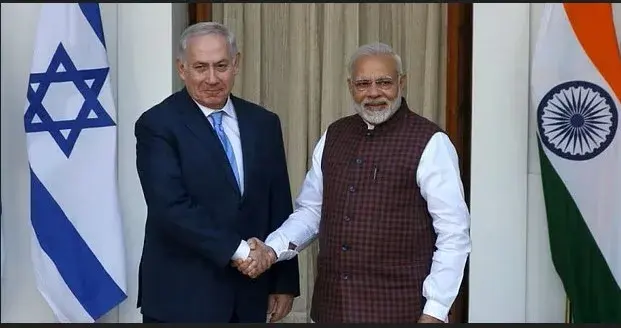
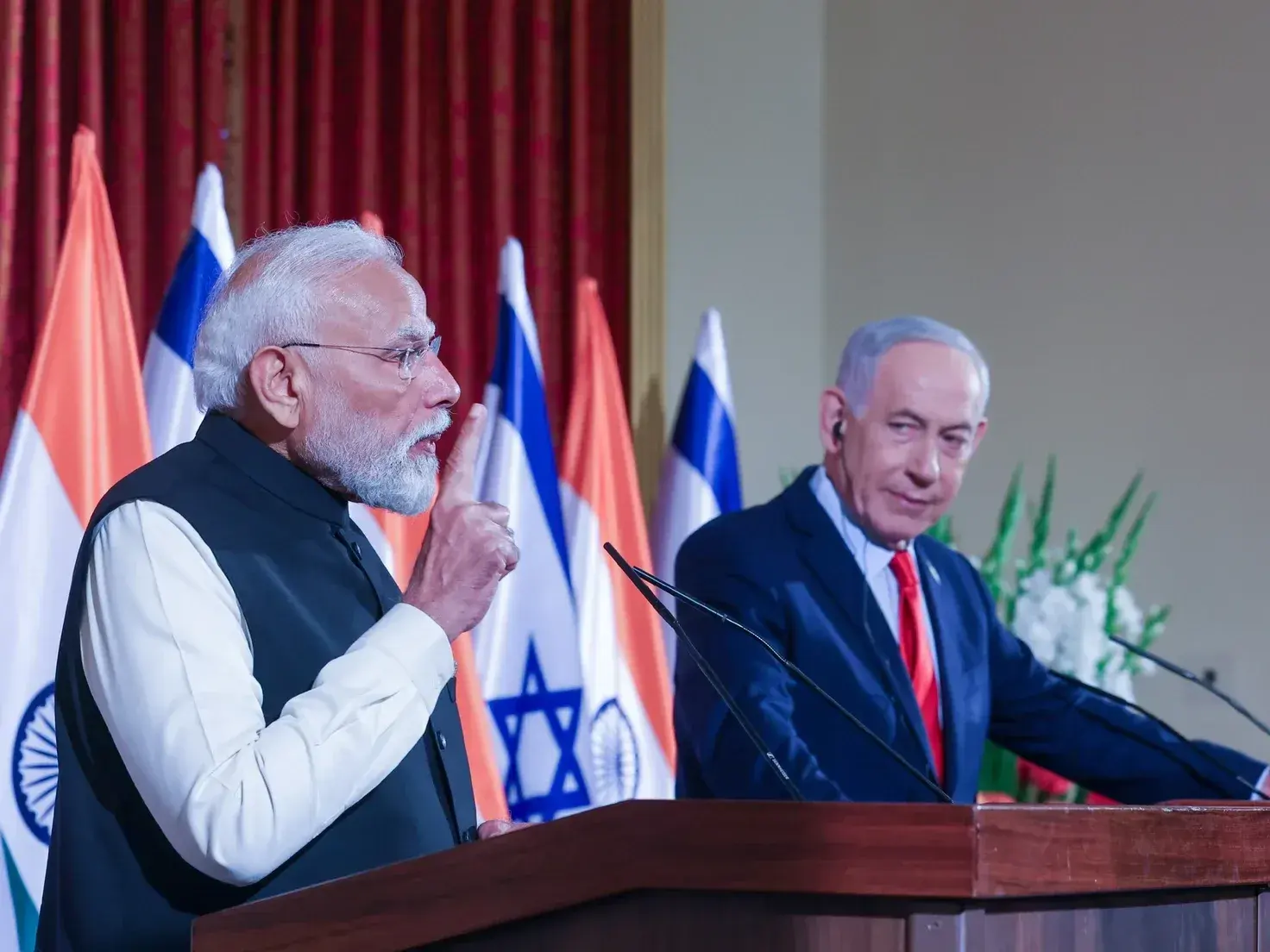
Modi cultivates Netanyahu to bypass troublesome Trump
By P.K.Balachandran
Colombo, February 25 - Indian Prime Minister Narendra Modi’s visit to Israel on February 25 and 26, should be seen in the context of the current international strategic environment which is very challenging for India.
The US, with which India had been building a strong relationship since the 1990s, has decisively turned against India in President Donald Trump’s second term. The US is now single-mindedly circumscribing India’s freedom to pursue its interests, slapping sanctions for non-compliance at the drop of a hat.
Israel, on the other hand, gives all that Modi wants to implement his foreign and domestic agendas, and that, without asking questions or attaching any conditions. For example, while the US forbids India from buying oil from Russia, Israel has done nothing of that kind. While the US is frowning on Indian investments in Iran, Israel seems unconcerned, even though it is virtually at war with Iran.
Given Trump’s tariffs on Indian goods and the grossly unequal US-India framework agreement on tariffs, certain sectors of India’s economy are at risk, exacerbating the already strained overall economic situation. The Indian economy has not lived up to the promises made by Modi over the last decade. Investment is sagging, and unemployment is increasing. The political opposition is becoming more strident by the day.
In view of these pressures, there is a pressing need for Modi to make a show of strength by keeping up the military pressure on Pakistan and use strong arm methods to keep the potentially troublesome Muslim minority in check and snoop on and use investigative agencies to rein in the opposition parties.
Both can be done with the help of Israel, which is seen by the Indian ruling class as a role model, given the way it has ruthlessly subdued the Arabs in Gaza and the West Bank and kept the political opposition in the doghouse.
The other advantage in cultivating Israel is that the India-Israel relationship will not antagonise the US. The US has given Israel elbow room to pursue its interests and indulge in any action it deems fit in pursuit of its goals. That will come in handy to Israel in its bid to cultivate close relations with India.
The other strong plank in India-Israel relations is the fact that Zionism and Modi’s ideology of Hindutva have similar worldviews. Both see Muslims as intruders. The Zionist opposition to Islam and the strong-arm methods Zionist Israel has been using against the Arabs can be replicated in India.
Further, the national security State that Modi has assiduously created since coming to power in 2014, needs Israeli snooping equipment like Pegasus, which was allegedly used against opposition leaders and top journalists some time back.
Growing Military Ties
India has turned to Israeli firms for aircraft, sensors, and weapons that now sit at the centre of several major modernisation efforts. Over the past two years, New Delhi has moved forward on tanker aircraft conversions, advanced radar installations, precision-guided munitions, and joint production ventures that embed Israeli technology directly into Indian platforms. Today, Israeli systems help power Indian fighter jets, extend their range, and improve strike accuracy.
According to www.military.com, India’s current fleet of Russian-built Il-78 tankers is ageing and becoming costly to maintain. To address this gap, the Indian Air Force is moving toward acquiring converted Boeing 767 aircraft that can serve as Multi-Mission Tanker Transport planes, the website said. This work is expected to be handled by Israel Aerospace Industries, which specialises in converting commercial jets for military refuelling roles.
The proposed deal covers six aircraft and is valued at roughly US$ 900 million. These tankers would allow Indian fighters such as the Rafale and Su-30MKI to remain airborne longer and operate farther from base, a critical capability in any extended air campaign.
Israel Aerospace Industries has also indicated that it can meet New Delhi’s “Make in India” requirement by doing part of the work in India itself.
Israeli technology is already embedded inside Indian fighters. India’s domestically built Tejas light combat aircraft incorporates Israeli avionics, including advanced radar and electronic warfare components, www.military.com says. These upgrades bring the jet closer to the capabilities of modern Western fighters. The Israel Aerospace Industries and Indian firm DCX Systems recently announced a joint venture focused on advanced aerospace electronics and radar technologies.
History of Arms Procurement
It was in the early 2000s that India became one of Israel’s largest buyers of defence equipment. But it was in 2014, when Modi came to power, that India’s ties with Israel witnessed a sharp upturn; the hesitancy of the past was shed once and for all, Al Jazeera noted.
In July 2017, Modi visited Israel, becoming the first Indian prime minister to visit the country. A year later, in January 2018, Netanyahu also visited New Delhi. In 2021, under Modi, the Indian Air Force participated in a multilateral air force exercise called Blue Flag-2021 in Israel.
Israeli defence companies like Elbit Systems and Rafael Advanced Defence Systems (which is also an Israeli company) have also established partnerships with Indian firms, such as Adani Group and Tata Advanced Systems.
India and Israel established diplomatic relations only in 1992, but defence ties existed when before that, albeit clandestinely. During the 1962 India-China war and the 1965, and the 1971 wars against Pakistan over Bangladesh, Israel secretly supplied military equipment to India. Help came even during the war in Kargil in 1999, but India had already established diplomatic ties in 1992.
When war broke out between India and China in 1962, the then Israeli Prime Minister David Ben-Gurion wrote to Nehru, offering his sympathies and weapons. India accepted Israeli weapons and munitions, but requested that the ships supplying them not bear Israeli flags, so as not to antagonise New Delhi’s Arab allies.
Through India’s external intelligence agency, the Research and Analysis Wing (RAW), the country began the process of procuring Israeli arms via Liechtenstein. Israeli Prime Minister Golda Meir wrote to Indira, seeking diplomatic recognition for Israel in return, but India demurred. But Delhi said he would respect India’s decision on the matter.
In 1999, Israel helped India during the Kargil war when its troops were trying to force out Pakistan’s military and Kashmiri rebels who had occupied strategic positions on the Indian side of the de facto border between them, known as the Line of Control or LoC. Israel aided India militarily by supplying laser-guided bomb kits and missiles, Al Jazeera said.
Economic Ties Advance
Trade relations between India and Israel have also been strengthened under the Modi government. India is currently Israel’s second-largest trading partner in Asia, after China.
According to India’s Ministry of External Affairs, trade jumped from $200m in 1992 to $6.5bn in 2024. India’s main exports to Israel include pearls, precious stones, automotive diesel, chemicals, machinery, and electrical equipment, among others, while imports include petroleum, chemical machinery and transport equipment, etc.
The two countries had signed a Bilateral Investment Treaty (BIT) last September. Israeli companies have sought to hire more employees from India in recent years. After Israel suspended work permits for thousands of Palestinians following the October 2023 attack by Hamas, Israel hired thousands of Indians to work in their place.
There is, of course, a danger that India’s relations with the Arab world and Iran will be adversely affected by the increasing and openly paraded ties with Israel.
But India does not envisage a destructive fallout because the Arab and Islamic worlds have also been equivocal in this matter and none the worse for it. This is a world of multi-alignment and strategic autonomy. Countries have been pushed into experimenting with these and developing resilience, thanks to Trump’s disruptive second term as President of the United States.
END
RELATED NEWS
View all

Current Affairs
Sri Lankan Presidential pardons- the good and the bad
Sep 11, 2026
Current Affairs
The pros and cons of joining BRICS- the dilemma of Pakistan and Bangladesh
Sep 09, 2026
Current Affairs
Disaster in Nepal gets embroiled in geopolitics.
Sep 08, 2026
Current Affairs
Why Mecca Pact, and what does it imply for its members, Israel and India?
Aug 18, 2026