Cover Story
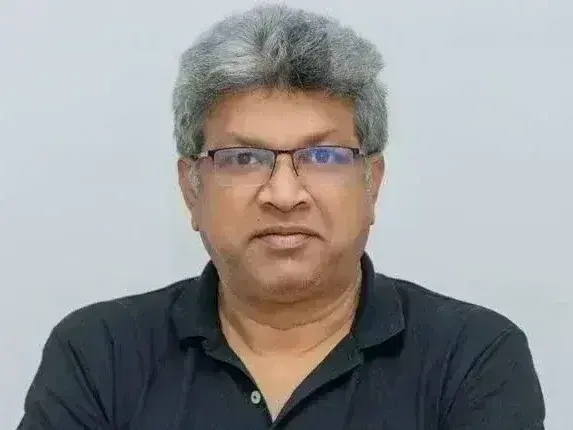
The President must withdraw the emergency because it sends out a wrong message to citizens- Professor Uyangoda
A political pro, Wickremesinghe has clocked up nearly half a century in politics. Yet, his critics have continued to speak of his disconnect with the peopleover the years. ‘Everyone should tell the new President that this is not the way to handle Sri Lanka’, says Professor Uyangoda. He explains that Wickremesinghe is on the wrong path and the people must have the courage to warn him that it’s not the way to govern the country. ‘He is simply making the situation worse for the country, the people and for himself. Even if he does not listen to the people we have a duty to tell him to think seriously about the consequences of what he is doing. Otherwise Sri Lankans will be watching the country go into a major crisis. The people have a duty to tell not only him but other politicians too that what they are doing at the moment is very wrong’.
Wickremesinghe has been in parliament and a partner in government since 1977. It has been a time when there have been authoritarian drifts in Sri Lankan politics and governance and democracy was undermined. Governments have been responsible for serious human rights violations, even taken the country in the direction of a civil war. ‘The President had even in the recent past tried to demonstrate that he was a reformed politician’, explains Professor Uyangoda. ‘He took part in campaigns for restoration of democracy, human rights and minority rights. There was a period in his political career where he presented himself as a liberal democrat and a protector of the rights of the people. That was despite his past close association with Jayewardeneand Premadasa projects of militarized authoritarianism and grave human right violations’. The assault on the aragalaya activists deepened an already yawning trust deficit and the shaky political setting. Opponents of Wickremesinghe see him as having become president by default. He polled a paltry 19, 241 votes at the last parliamentary election not that long ago in 2020 and lost his parliamentary seat. It was an election at which he also led his political party, the United National Party and the oldest in the country, to a resounding defeat. The only eligibility the party had to be represented in parliament was its entitlement to one seat on the national list and after months of friction among party members Wickremesinghe was nominated for the seat. If elections are a litmus test of a politician’s popularity,they have been Wickremesinghe’s nemesis. He has stood for and lost two presidential elections. He has been prime minister six times out of which he was elected only twice. Wickremesinghe is seen as just having got lucky this time too. In his policy speech at last week’s ceremonial opening of parliament, Wickremesinghe described how his long- term planning for the country is not for his betterment but for that of the younger generation. ‘I clearly know that I will not eat the fruit of the treewhich I plant’, he said. ‘In my view and regrettably the President has been planting seeds for an uncertain future for the country’, says Professor Uyangoda. ‘For political stability it is very important that any government leader listens to what the citizens say, not to refuse to hear them and expect citizens to accept what the leader thinks is correct for the country without questioning. Sri Lankan society has been able to unsettle the very authoritarian government of Mr. Rajapaksa. There was an unprecedented mobilization of citizens peacefully. The history of the past four months cannot be easily forgotten nor can it be rewritten by branding theseactivists as fascists and terrorists’.Professor Uyangoda explains how Sri Lankans have demonstrated their political awareness by not toleratingcorruption and malpractice in government, arbitrary exercise of political power and unaccountable government. ‘They want reform. That’s what they have been demanding but the President does not seem to understand the point that citizens have made in their thousands when they came to Colombo’, he says referring to the 9th of July when an unprecedented swell of people converged in Galle Face to pressure former President Gotabaya Rajapaksa to step down.
Wickremesinghe has said he will abolish the executive presidency and has spoken of constitutional reform. But Sri Lankans are challenging him to walk the talk because of his penchant for reneging on his words. Professor Uyangoda is sceptical about the executive presidency. ‘I am not sure the President will abolish the office of executive presidency nor the executive presidency because he will be looking to consolidate his position’. He is scathing of the 22nd amendment which was approved by the Cabinet of Ministers after Wickremesinghe was sworn in. ‘The draft of the Wijedasa Rajapaksa amendment is an eyewash, a trick to deceive the people to say that a new constitution will be brought in’.Wickremesinghe has said he will restore the 19thamendment which will bring back much needed transparency and accountability to government with the introduction of checks and balances through a constitutional council and independent commissions. Professor Uyangoda has a dim view of the potentialfor the 19th A to be restored. ‘I don’t expect the current parliament to do that. It is dominated by the Sri LankaPodujana Peramuna and the Rajapaksa family was elected in 2020 not to bring democracy back to Sri Lanka but to enhance the powers of the executive president to create a very autocratic, authoritarian system of government. I am not sure that the people who voted for the 20th amendment will have any commitment to change the nature of the present Sri Lanka constitution’.
He points out that any president backed by the SLPP and the Rajapaksa family will not be keen to introduce major changes to the constitution that could be aimed at re democratizing Sri Lanka. Only a new parliament with a majority of political parties that will openly commit themselves to restore a parliamentary democracy with checks and balances and will ensure civil, political and minority rights will be able to do so. Such a new parliament will be able to introduce a new constitution for the re- democratisation of Sri Lanka.
‘People must agitate for a fresh parliamentary election’, says the Professor. ‘People must put pressure on the opposition parties to form a broad democratic alliance to get the majority in the next parliament and to commit themselves to change the Sri Lanka constitution in the direction of restoring parliamentary democracy and accountable governance with appropriate and updated checks and balances. It must be a government that will seriously pursue a policy to end corrupt governance in Sri Lanka’.
Political corruption has been one of the major contributory factors for Sri Lanka’s present crisis. Wickremesinghe however has not been talking about ending corruption. ‘He won’t be able to do that as long as he is in power with the support of the Rajapaksa family and the SLPP’.
According to Professor Uyangoda, the peoples’ message to the government should be very brief. ‘The people have spoken loudly in the past four to five months. Not only the government but opposition political parties will have to listen to what the people are saying. If the opposition parties don’t listen seriously to what the people have said so loudly and try to make use of the sentiments expressed by the people for them to come to political power it will not help either them or the country. From the President to the smallest party, they will have to seriously take into account the criticism that people have made about politics, political class and political culture and also the political hopes they have expressed. Any government or political party defying people’s expectations and hopes for a better political future will find it difficult to handle the deep seated discontent and anger of the Sri Lankan people. They will also find it very difficult to remain relevant to the hopes and aspirations of new generation of the youth for meaningful change’.RELATED NEWS
View all