Point of View, Counterpoint Political Desk, Cover Story
Raging battle over no-confidence motion and intl. concern over proposed security legislation
By Counterpoint Political Desk
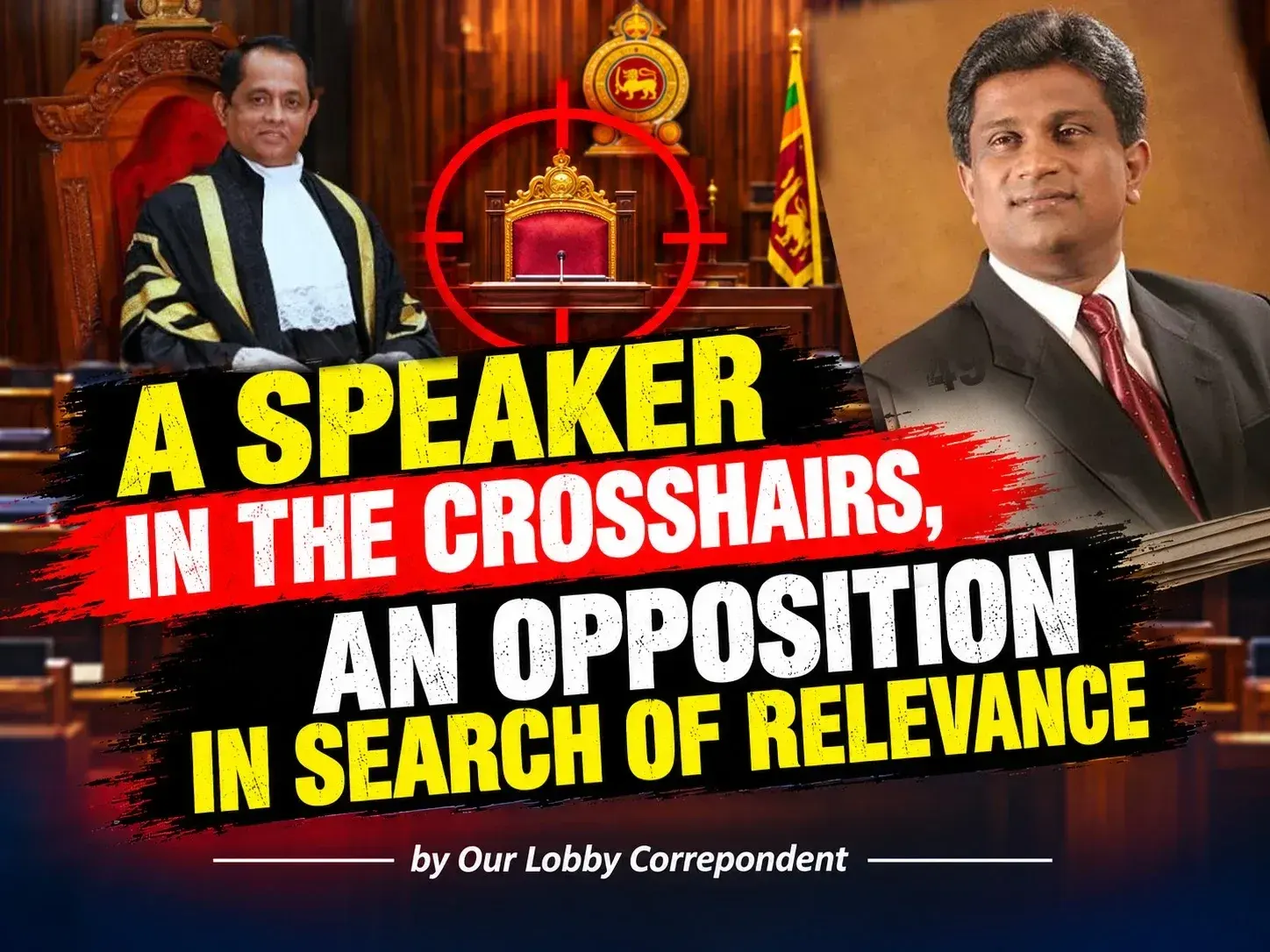
Another news-packed week is coming to an end. The Buddhist monks’ Satyagraha has been suspended and the government and the Opposition are clashing over a no-confidence motion against Speaker Dr. Jagath Wickramaratne. Minister and Leader of the House Bimal Rathnayake has caused quite a stir by declaring that the no-faith motion cannot be taken up for debate in its current form as it is violative of the parliamentary Standing Orders, and some parts of it are even sub judice.
Rathnayake has said the Opposition failed to revise and resubmit the motion in accordance with Standing Orders by the October 28 deadline. The government has instead scheduled an adjournment debate, much to the resentment of the Opposition, which has refused to revise the motion, insisting that it is now in the Order Book, and the government cannot prevent it from being taken up for debate. The government says it is prepared to allocate time for the motion before the 2027 Budget debate if the Opposition submits a revised version. This is widely seen as a government ploy to have the motion revised on its own terms, leaving out or watering down the sections that are too embarrassing for it and the Speaker. The government is apparently trying to postpone the debate on the no-confidence motion until the conclusion of the passage of Budget 2027.
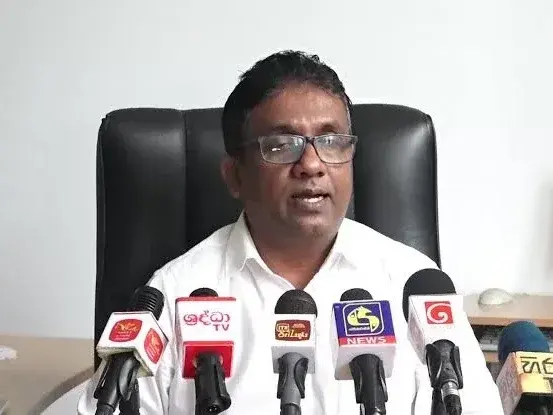
Speaking to the media, SJB MP Ajith C. Perera, one of the prime movers behind the no-confidence motion, has accused the government of high-handed action to abort the motion on some flimsy pretext as it cannot face the very serious allegations, numbering 50, against the Speaker. A motion that has been entered in the Order Book cannot be arbitrarily put on hold on any grounds, he has said, threatening to take up the allegations contained in the motion, one by one, outside Parliament over more than 50 days.
International concerns over proposed security legislation
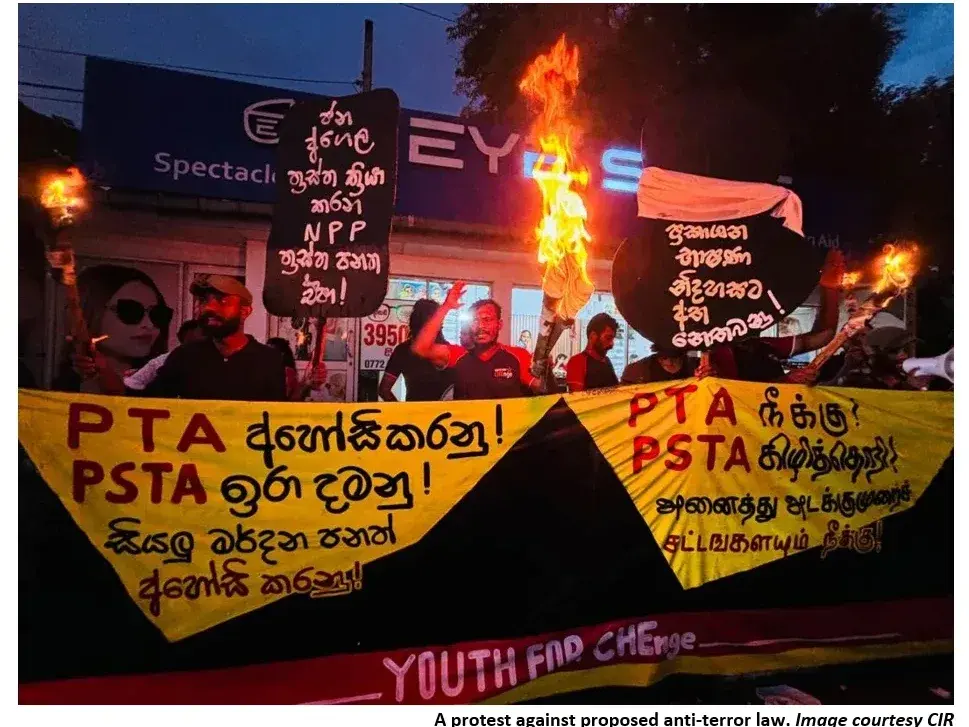
The Protection of the State from Terrorism Bill (PSTB) and Organized Crime Bill (OCB) have attracted much criticism. These proposed laws, if enacted, could tarnish Sri Lanka’s image internationally as they are riddled with repressive provisions.
The main criticism of the PSTB is that it retains much of the repressive framework of the Prevention of Terrorism Act (PTA) it is intended to replace. Its broad and vague definition of terrorism could criminalise legitimate dissent, protests, trade union action and media activity. Besides, it permits prolonged detention on executive orders, with inadequate judicial oversight, potentially allowing
suspects to be held for up to two years before indictment. Critics also object to extensive arrest and search powers granted to the armed forces, restrictions on freedom of expression and association, excessive presidential powers to proscribe organisations, and inadequate safeguards against torture, arbitrary detention and abuse of authority. Among the international critics of the two Bills are the The UN Human Rights Office (OHCHR), the Human Rights Watch, the Amnesty International, the Transparency International, and the UN Human Rights Commission (UNHCR). PAFFREL has also written to the President questioning provisions in the proposed legislation.
Opposition Leader Sajith Premadasa has separately warned that the legislation could jeopardize Sri Lanka’s GSP+ trade concessions. The possibility of such an eventuality cannot be ruled out given growing international criticism of the two Bills.
New Human Rights Commission appointed
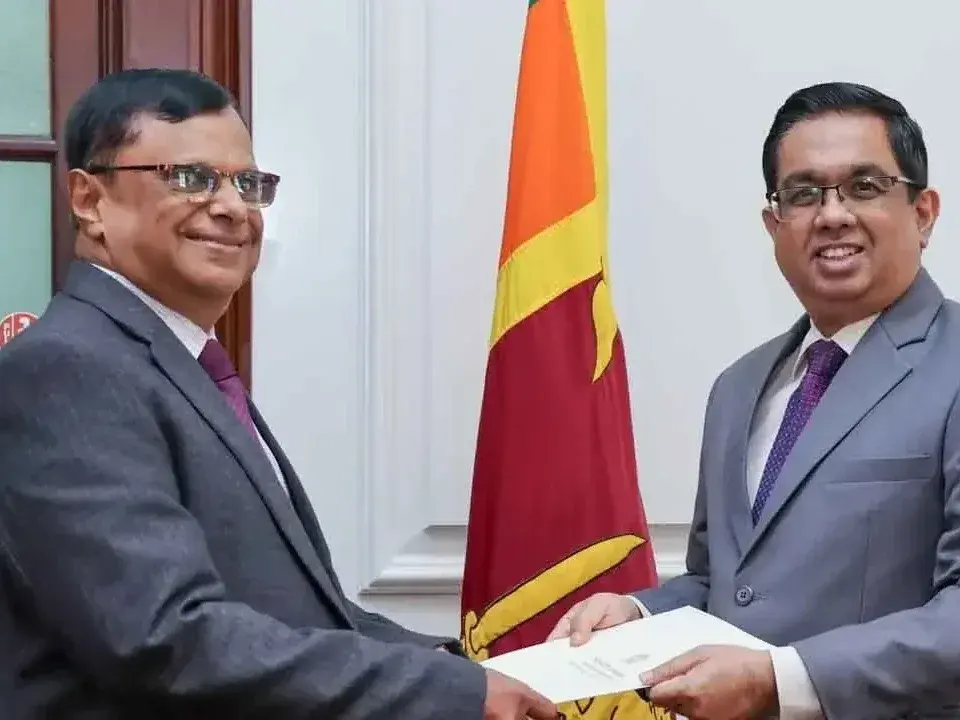
While the government is drawing heavy criticism for trying to introduce repressive laws to suppress democratic dissent under the pretext of protecting the state against terrorism and combating crime, President Anura Kumara Dissanayake has appointed retired Supreme Court judge Vijith Malalgoda as Chairman of the Human Rights Commission of Sri Lanka (HRCSL). S. Y. M. Gomes, former diplomat A.L.A. Azeez, Dr S.S.S.B.D.H. Jayawardena and Professor T. Jayasingam have been appointed as members. The appointments fill vacancies arising from the expiry of the previous members' terms.
The outgoing HRCSL commissioners have earned public plaudits for their good work, and one can only hope that the new commissioners will emulate their predecessors and the commission will continue to play a pivotal role in safeguarding the human rights of the public.
UNP introduces new membership categories
The UNP has introduced two new membership structures, Millennium UNP and Gen Z UNP, to accommodate younger generations. Party Chairman and former minister Wajira Abeywardena has said the first category represents people aged 35-40, while the second comprises those born after 2000.
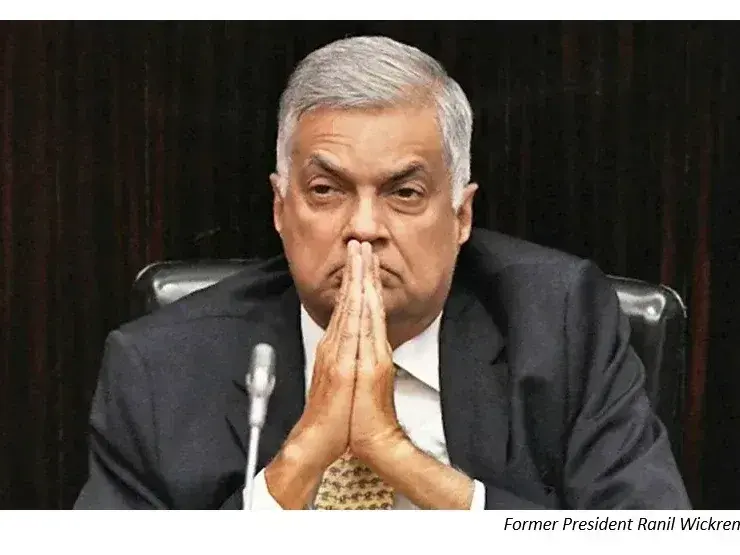
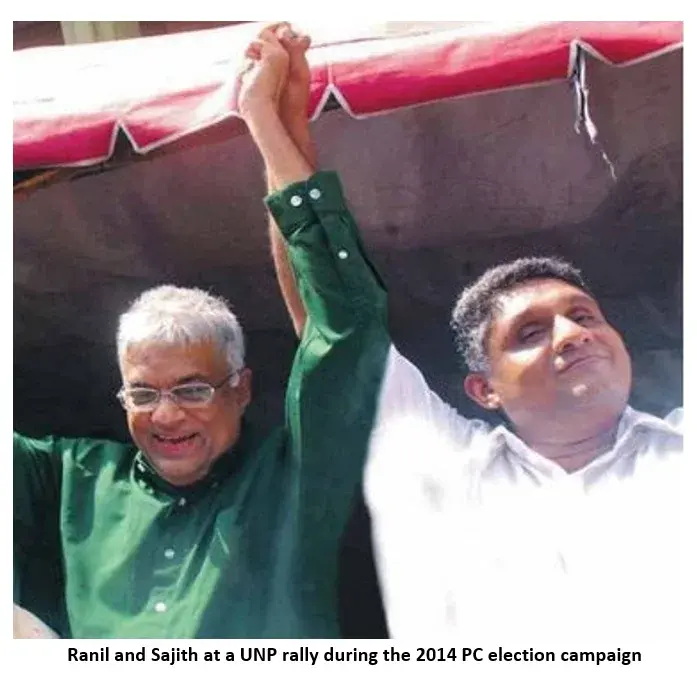
Former President Ranil Wickremesinghe, addressing the party's Working Committee, recently reportedly said that a UNP-SJB combination alone would not guarantee electoral success and that a broader political restructuring was necessary. He has stressed the need to strengthen and unite the Opposition to act as a countervailing force against the powerful NPP government, which he accuses of suppressing democracy and working towards establishing a one-party system.
Corruption investigations involving political figures
The Commission to Investigate Allegations of Bribery or Corruption (CIABOC) has sought to overturn the bail granted to three suspects, including Rakitha Rajapakshe, son of former Justice Minister Wijeyadasa Rajapakshe, and Charith Abeysinghe.
The Colombo High Court has fixed the applications for February 9, 2027. Several bank accounts belonging to Rakitha have also been frozen amid the investigation.
Meanwhile, further evidence in the money-laundering case against Yoshitha Rajapaksa, involving alleged expenditure of more than Rs. 73 million on five properties, will be recorded on November 12.
Other political developments
Budget 2027, presented to the Panduwasnuwara Pradeshiya Sabha, controlled by the NPP, has been defeated. This is a comedown for the ruling party. Meanwhile, 1,391,830 applicants deemed ineligible for Aswesuma benefits have been given an opportunity to appeal. The government has also denied reports that benefits have been suspended for nearly 1.4 million existing recipients.
In another development, Cardinal Malcolm Ranjith has raised environmental concerns over the Muthurajawela wetland and the Negombo Lagoon with the President's Office, prompting instructions to officials to take remedial measures. A presidential advisory committee has also been appointed to oversee development activities in the Anuradhapura Sacred City and the development of the sacred city is under the microscope, with some critics arguing that the proposed development plan is likely to undermine the Buddhist character of the ancient city. The government has denied the allegation.
Curses, verses and pardons
The monks who walked from Kandy to Colombo launched their Satyagraha at Viharamahadevi Park, Colombo, on Oct. 16, amid a flurry of court orders and disturbances. Some who joined them performed a large ritual at the site and recited a vas kaviya, a verse calling down a curse on the President and the government. The recording was shared again and again online, and the organisers insisted the ritual had been timed with proper astrological calculations, so results were guaranteed.
As the curse verse gained publicity, government supporters joined the fray and mounted fierce counterattacks on its originators. Efforts to circulate seth kavi, verses of blessing meant to shield the government from misfortune, via YouTube soon turned into what may be described as a full-blown exorcism battle online.
With the two sides slinging mud at each other unchecked, the Mahanayake Theras stepped in once more to limit the damage to religion and culture. In a letter to the protesting monks, the prelates asked for the satyagraha to be called off, promising to take the matter up with the government. The monks agreed and left the park, but the YouTube war rages on.
One monk who came for talks admitted he had composed the viral curse verse. In his view, it was victory enough that he had brought self-professed materialists, the people running the country, to the point of believing in curses.
Poetry as a political instrument
Political poetry, which has been part of Sri Lankan literature, dates back to times immemorial. The first political poem that attracted public attention at the end of the colonial rule was recited during the 1947 Budget debate. Moratuwa MP Someweera Chandrasiri attacked the Budget in rhyme. The gist of his complaint is that the figures failed to match the speech, the people were suffering, and the Budget was nothing but a heap of numbers. “IS this how the country should be run?” he asked in his poem.
World literature is full of political poems, and three of them addressing different aspects of power, tyranny and political upheavals come to mind. They are The Masque of Anarchy written by Percy Bysshe Shelley in response to the Peterloo Massacre in England (1819); it condemns political oppression and calls upon ordinary people to resist tyranny through peaceful mass action. The second poem is Ozymandias by Percy Bysshe Shelley (1818). Through the ruins of a once-mighty king's statue in a desert, it illustrates the impermanence of political power and the eventual downfall of arrogant rulers. This is of particular relevance to Sri Lanka, where rulers try to immortalise their names on plaques commemorating the opening of development projects financed with public funds. The third one is the The Second Coming by W. B. Yeats (1919). This was written in the aftermath of the First World War,
portraying a civilisation descending into chaos, with established political and social orders collapsing and extremism gaining ground. Shelley's The Masque of Anarchy is particularly notable in this context because it directly criticizes government oppression and stresses the people's right to resist it.
Old timers may recall that parliamentary versifying grew far nastier under Prime Minister S.W.R.D. Bandaranaike. A quarrel between his camp and a famous temple produced obscene verses, circulated as anonymous leaflets, aimed at Sirimavo Bandaranaike. They were reportedly produced at the direction of the temple's chief incumbent, and the then Health Minister Vimala Wijewardene. The scandal came to light through the celebrated court testimony of P. Mallalgoda.
Those leaflets ended in tragedy. Mallalgoda later published a book on the episode, How Vimala Wijewardene Used Anonymous Leaflets to Attack Prime Minister Bandaranaike. The book sold like hot cakes. The next poetic scandal to capture the public's attention is the Vas kaviya now in the news.
The pardon question
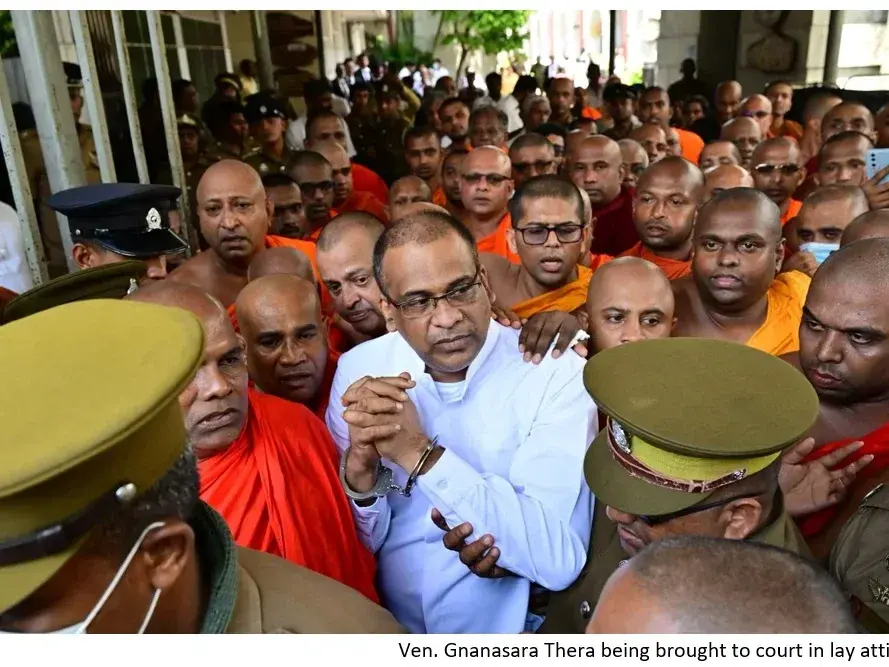
The political row between the government and its political rivals and critics has since escalated into rituals, exorcisms and black magic. Even government figures, who professed not to take such things seriously, seemed embarrassed. Ven. Ulapane Sumangala, one of the campaign's organisers, warned that the Satyagraha would resume if Ven. Galagoda Aththe Gnanasara was not pardoned, and that they were ready to face any opposition from the government.
Appeals are pouring in for the government to reinstate the pardon granted to Ven. Gnanasara by former President Maithripala Sirisena.
Meanwhile, the Supreme Court recently annulled a presidential pardon issued under Ranil Wickremesinghe. Speaking for the government, Minister Lal Kantha said it was considering removing the President's constitutional power of pardon, which he said had been abused to free political allies. A decision would come soon, he said, adding that the practice was undemocratic and that politicians should not meddle in judicial proceedings.
Namal behind bars
SLPP National Organiser and MP Namal Rajapaksa remains in remand prison. After roughly two months on remand, he uses his trips to Parliament to meet party MPs and issue instructions on strengthening grassroots organisation. He has told SLPP National Convener D.V. Chanaka to organise local-level meetings, in consultation with General Secretary Sagara Kariyawasam and other senior members, and has urged that the planned major rally in Matara be held as early as December.
Despite the harsh prison conditions, Namal keeps to a regular daily timetable, according to his associates. He shares the vegetarian meals sent from home with his fellow inmates. About 15 men are packed into a room that comfortably holds seven or eight, and they pass the time swapping funny anecdotes, old stories and other tales.
Share this story
RELATED NEWS
View all
Point of View
Game of chicken between govt. and protesting monks continues
Oct 25, 2026
Point of View
Why Bali’s fuel queues should worry Sri Lanka
Oct 19, 2026
Point of View
Protesting monks’ challenge: Govt. picks up the gauntlet
Oct 17, 2026
Point of View
Robe-sarong controversy eclipses all other issues
Oct 10, 2026